
Building a photorealistic or stylized Three.js landscape directly inside a browser viewport is one of the most rewarding frontiers of modern creative coding. From sprawling procedural mountain ranges to 16km² open-world WebGPU voxel terrains, web-based 3D environments have evolved from simple flat planes into cinematic spatial experiences with volumetric clouds, realistic water reflections, and dynamic day/night cycles.
Whether you are seeking creative inspiration or engineering your own procedural world, this comprehensive guide surveys the most impressive Three.js landscape showcases, breaks down their core rendering architectures, and provides actionable code recipes to help you build your own.
What is a Three.js Landscape? Core Architectural Building Blocks
In Three.js and WebGL/WebGPU graphics programming, a landscape is an interactive, three-dimensional digital terrain or natural environment. Unlike static 3D models exported from Blender or Maya, production-grade web landscapes typically rely on procedural generation and GPU-driven rendering techniques:
- Heightmap & PlaneGeometry Displacement: Transforming 2D grayscale textures into 3D mountain elevations by displacing vertices along the Z or Y axis.
- Procedural Simplex & Perlin Noise (FBM): Generating organic, non-repeating ridgelines, valleys, and canyons algorithmically on the fly without heavy asset downloads.
- Multi-Texture Splatting & Triplanar Mapping: Seamlessly blending grass, soil, steep cliff rock, and snowy peaks based on surface slope angle and height thresholds.
- Volumetric Fog & Atmospheric Scattering: Creating visual depth, aerial perspective, and ambient mood through exponential distance fog or Raymarching shaders.
- Level of Detail (LOD) & WebGPU Instancing: Ensuring steady 60–120 FPS performance across mobile devices and high-end desktop GPUs by subdividing geometry near the camera while simplifying distant horizons.
Best Three.js Landscape Showcases (Live Demos & Source Code)
Here are the top curated Three.js landscape projects, featuring interactive live demonstrations, procedural generation pipelines, and open-source implementations.
1. Landscape Generator 2.0 with Full Day & Night Cycle
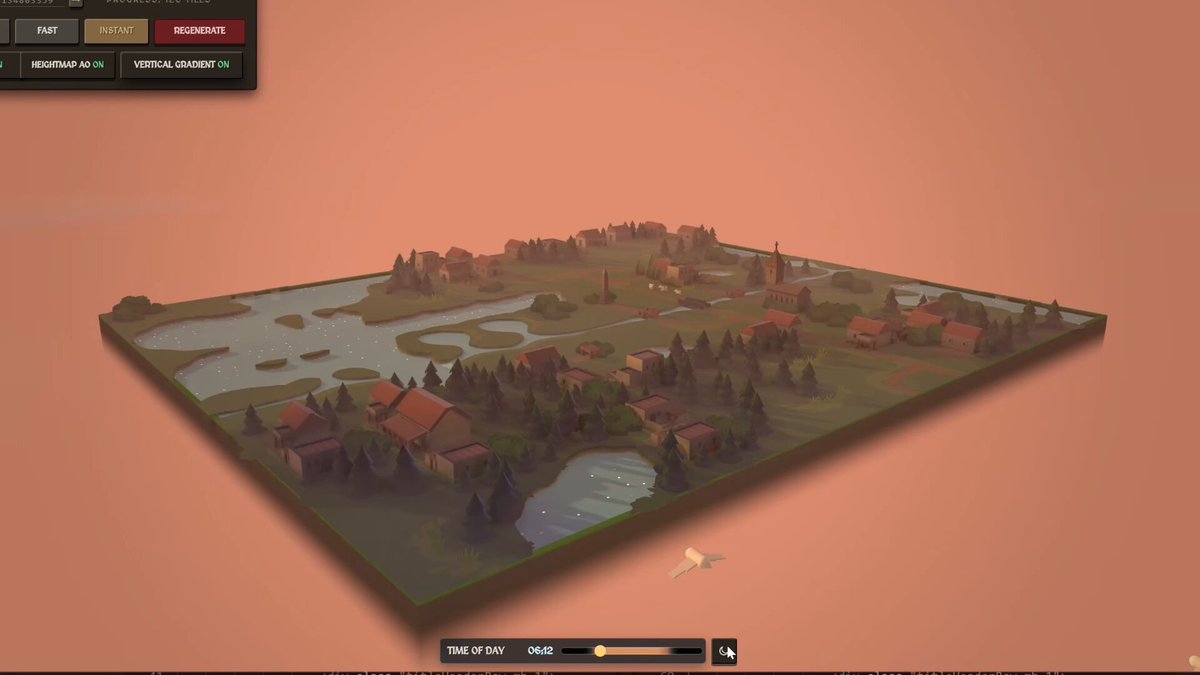
- Creator: Creative Coder
- Live Demo & Details: Explore Landscape Generator 2.0 Showcase
- Core Stack: Three.js, Custom GLSL Shaders, Procedural Height Fog, Dynamic Sun Directional Light
Landscape Generator 2.0 allows users to manipulate procedural terrain parameters in real time. Featuring smooth diurnal transitions from golden dawn to starry midnight, the generator pairs customized height fog with multi-octave noise displacement, producing naturalistic ridge lines and ambient depth.
2. 16km² Massive WebGPU Voxel Landscape & Cached HLOD
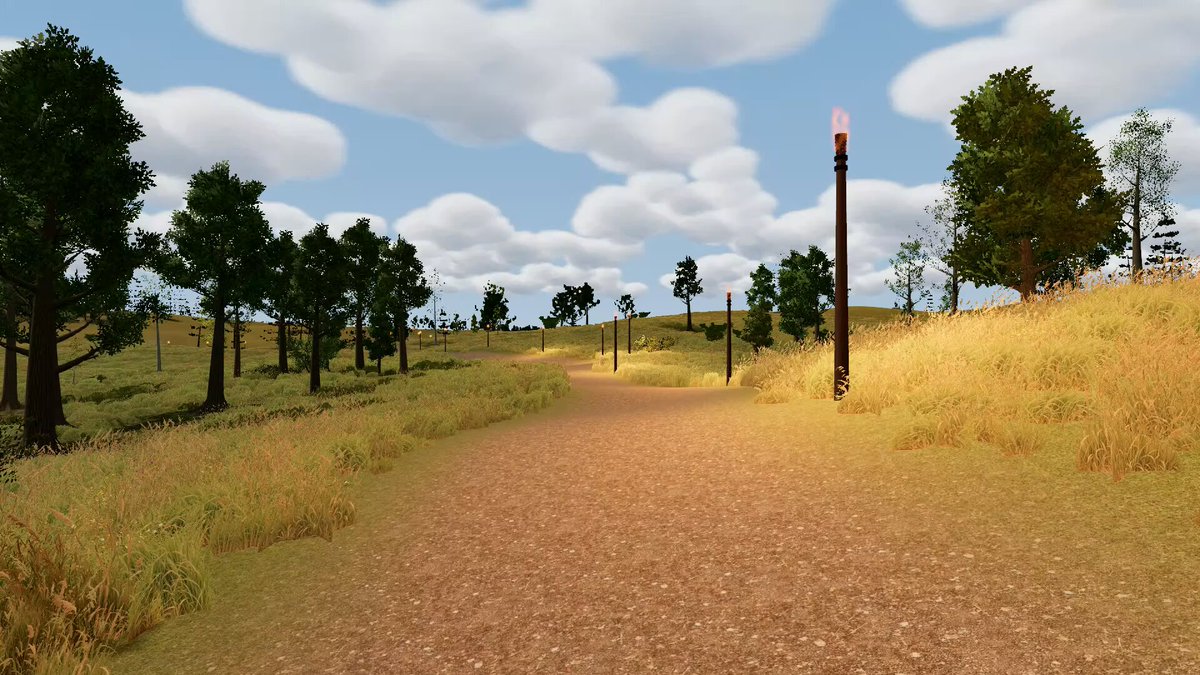
- Creator: SamG-Coder
- Open Source Repository: GitHub - BakedVoxelLighting
- Live Demo & Details: Explore 16km² WebGPU Landscape
- Core Stack: WebGPU, Three.js, Voxel Baking, Hierarchical LOD (HLOD), Paged GPU Uploads
Rendering a vast 16km² open-world terrain inside a browser used to be impossible. By coupling raw WebGPU compute pipelines with voxel baking, cached HLOD, and asynchronous GPU uploads, this showcase enables smooth day and night terrain exploration across hundreds of millions of voxels with zero stutter.
3. Procedural River Valley & Expedition Boat Scene
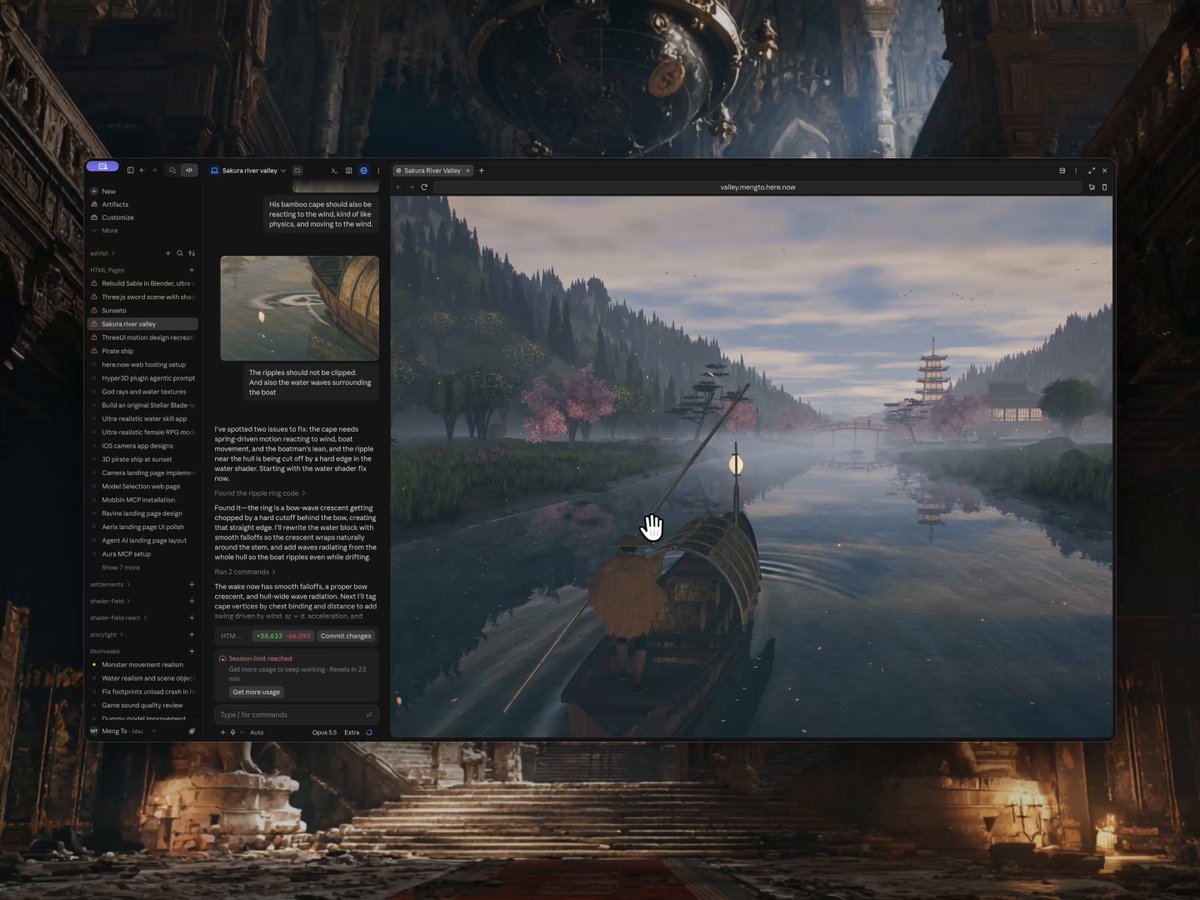
- Creator: Meng To (@MengTo)
- Live Interactive Experience: Valley Mengto Live Site
- Details & Breakdown: Explore River Valley Landscape
- Core Stack: Three.js, Claude Opus 5.5, Physical Water Reflections, Dynamic Day/Night Lighting
Featuring lush riverbanks, traditional Japanese mountain slopes, and dynamic weather, this interactive boat expedition demonstrates how LLM prompt engineering can assemble complex botanical foliage, water shaders, and camera interpolation into an emotional Three.js landscape narrative.
4. Mountain Ranges, Stylized Trees & Atmospheric Fog
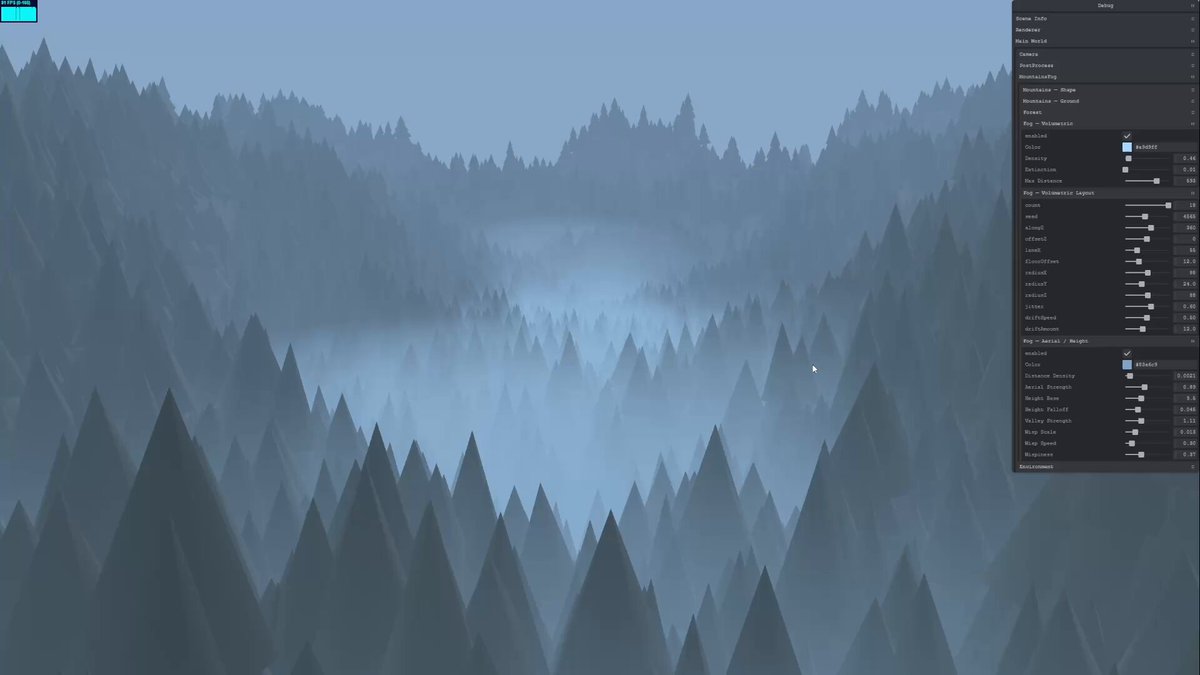
- Creator: Creative Technologist
- Details & Shader Breakdown: Explore Mountains & Fog Showcase
- Core Stack: Three.js, Custom Fragment Shader Fog, Instanced Mesh Trees
Atmospheric fog transforms flat geometry into a breathing spatial landscape. This project highlights a lightweight post-processing fog technique inspired by classic demoscene effects, rendering rolling mountain chains and pine forests with an exquisite, dreamy silhouette.
5. Continuous Procedural Landscape Generation
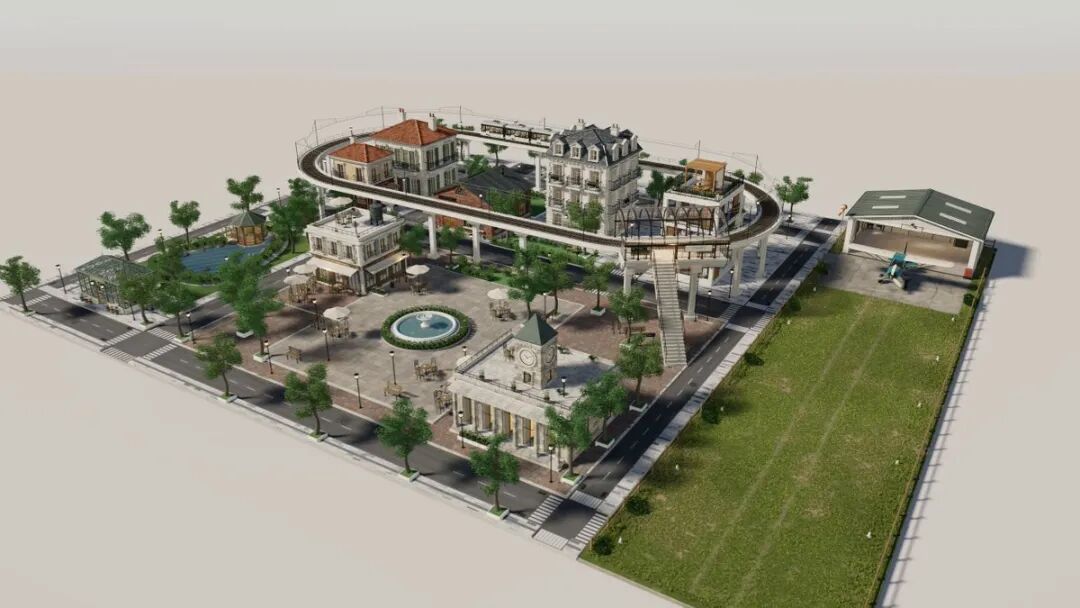
- Creator: Mohamed (@zavrenn)
- Details & Architectural Guide: Explore Procedural Landscape Showcase
- Core Stack: Three.js, Procedural Noise, Dynamic Mesh Chunking
Synthesizing continuous infinite terrains without hitching requires intelligent spatial chunking. As the camera travels forward, new terrain segments stream in while trailing chunks are recycled into memory pools, establishing a rock-solid foundation for 3D flight simulators and open-world exploration games.
Step-by-Step: How to Build a Basic Three.js Landscape
Ready to build your first procedural landscape? Here is the foundational architecture using standard Three.js and simplex noise:
Step 1: Create a High-Density Plane Geometry
import * as THREE from 'three';

// Create a 200x200 plane with 128x128 subdivisions
const width = 200;
const height = 200;
const segments = 128;

const geometry = new THREE.PlaneGeometry(width, height, segments, segments);
geometry.rotateX(-Math.PI / 2); // Lay flat on the horizontal ground
Step 2: Displace Vertices with Multi-Octave Noise
import { createNoise2D } from 'simplex-noise';

const noise2D = createNoise2D();
const positionAttribute = geometry.attributes.position;

for (let i = 0; i < positionAttribute.count; i++) {
  const x = positionAttribute.getX(i);
  const z = positionAttribute.getZ(i);

  // Fractal Brownian Motion (FBM) - combine multiple octaves
  let elevation = 0;
  elevation += noise2D(x * 0.01, z * 0.01) * 20.0; // Base mountain
  elevation += noise2D(x * 0.03, z * 0.03) * 7.0;  // Rolling hills
  elevation += noise2D(x * 0.08, z * 0.08) * 1.5;  // Rocky detail

  // Flatten low regions for rivers or lakes
  if (elevation < 0) elevation *= 0.2;

  positionAttribute.setY(i, elevation);
}

// Recompute normal vectors to ensure realistic light shading
geometry.computeVertexNormals();
Step 3: Apply Slope-Based Shading & Atmospheric Fog
// Add atmospheric distance fog
const scene = new THREE.Scene();
scene.fog = new THREE.FogExp2(0x93c5fd, 0.008); // Soft sky blue fog

// Create terrain material with PBR roughness
const material = new THREE.MeshStandardMaterial({
  color: 0x4d7c0f,      // Meadow green
  roughness: 0.85,
  metalness: 0.1,
  flatShading: false,
});

const terrainMesh = new THREE.Mesh(geometry, material);
terrainMesh.receiveShadow = true;
scene.add(terrainMesh);
Essential Libraries & Tools for Three.js Landscapes
- three-mesh-bvh: Fast Bounding Volume Hierarchy for raycasting, character ground clamping, and terrain collision detection at 120 FPS.
- Three.js Shading Language (TSL) & WebGPU: Node-based shader authoring for procedural multi-texture splatting, compute-shader water caustics, and wind simulations.
- Simplex Noise: Ultra-fast JavaScript simplex noise generator for real-time procedural heightmaps.
- NASA SRTM & USGS Elevation Data: Real-world elevation heightmaps for recreating iconic real-world landscapes like Mount Fuji, the Grand Canyon, or the Swiss Alps.
Explore More Three.js Landscape Demos on ThreeJSAI
Curious to explore more interactive 3D environments, mountain simulations, and creative coding experiments?
Check out our complete curated gallery of 3D Landscapes & Terrains on ThreeJSAI featuring over 90+ award-winning showcases with live playable demos and full GitHub source code repositories.