
Garrett Johnson merges a WebGPU path tracer into three-gpu-pathtracer
By @garrettkjohnson • Curated • 614 likes on X
 Open Live Demo ↗
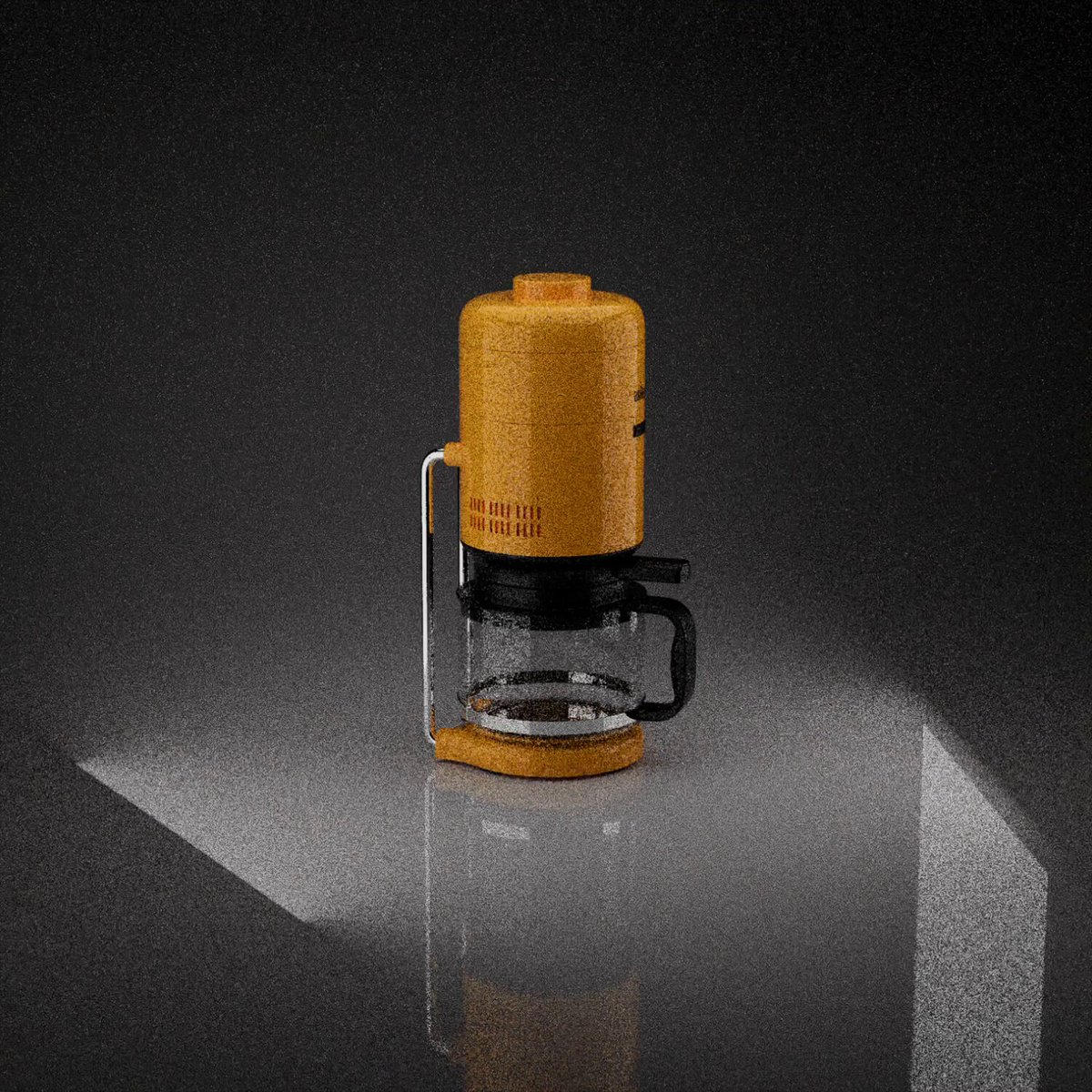
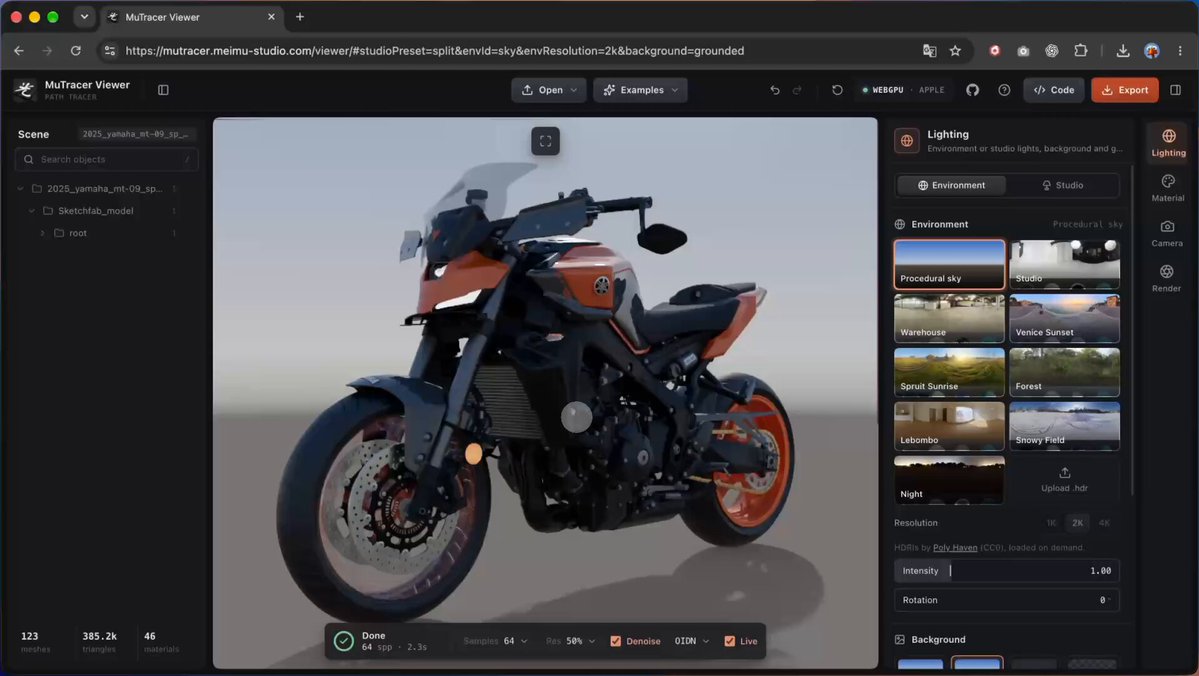
Garrett Johnson merged the WebGPUPathTracer branch of his open-source three-gpu-pathtracer, with upscaling and denoising support. The PBR path tracing demo renders physically based materials progressively in the browser on WebGPU.
More from @garrettkjohnson
Other projects by Garrett Johnson
More WebGPU Examples
Projects curated around the same time in this topic
 8 Likes
Mirrash7 Builds a Kinect-style Motion Game Running on WebGPU
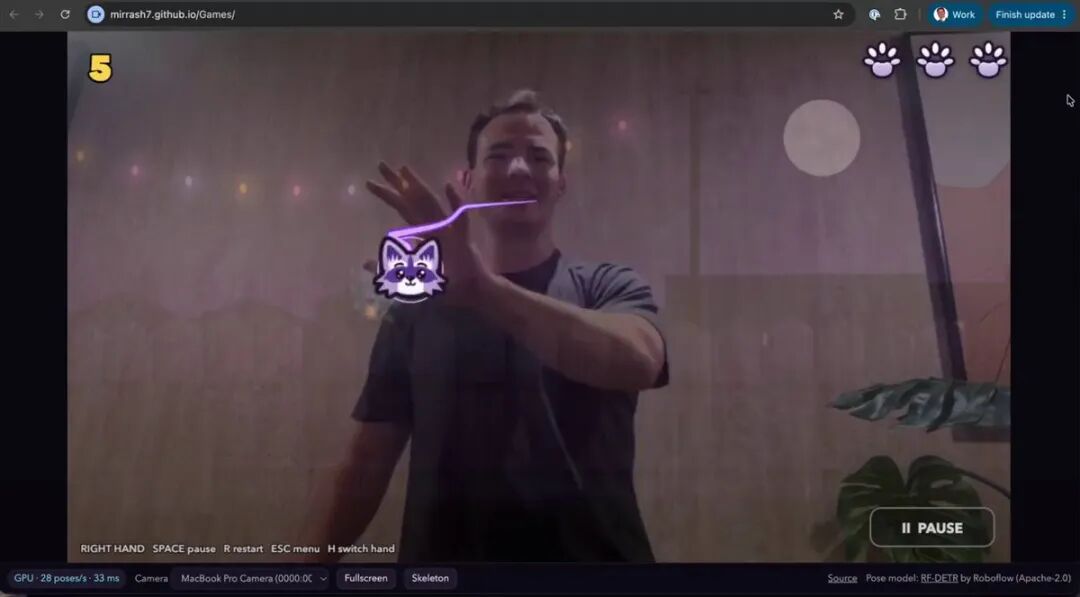
Game developer @mirrash7 crafted a browser-native Kinect-style motion adventure game. Utilizing the lightweight vision model RF-DETR running client-side on WebGPU compute kernels, it achieves real-time 30 FPS skeletal motion tracking via webcam without external sensors, backed by a global multiplayer leaderboard. 💡 **Highlight:** Peripheral-free web motion gaming: no drivers or downloads needed, controlling the 3D world with your natural body movements.
 40 Likes
Ben Houston's fidelity suite compares three-gpu-pathtracer and Blender
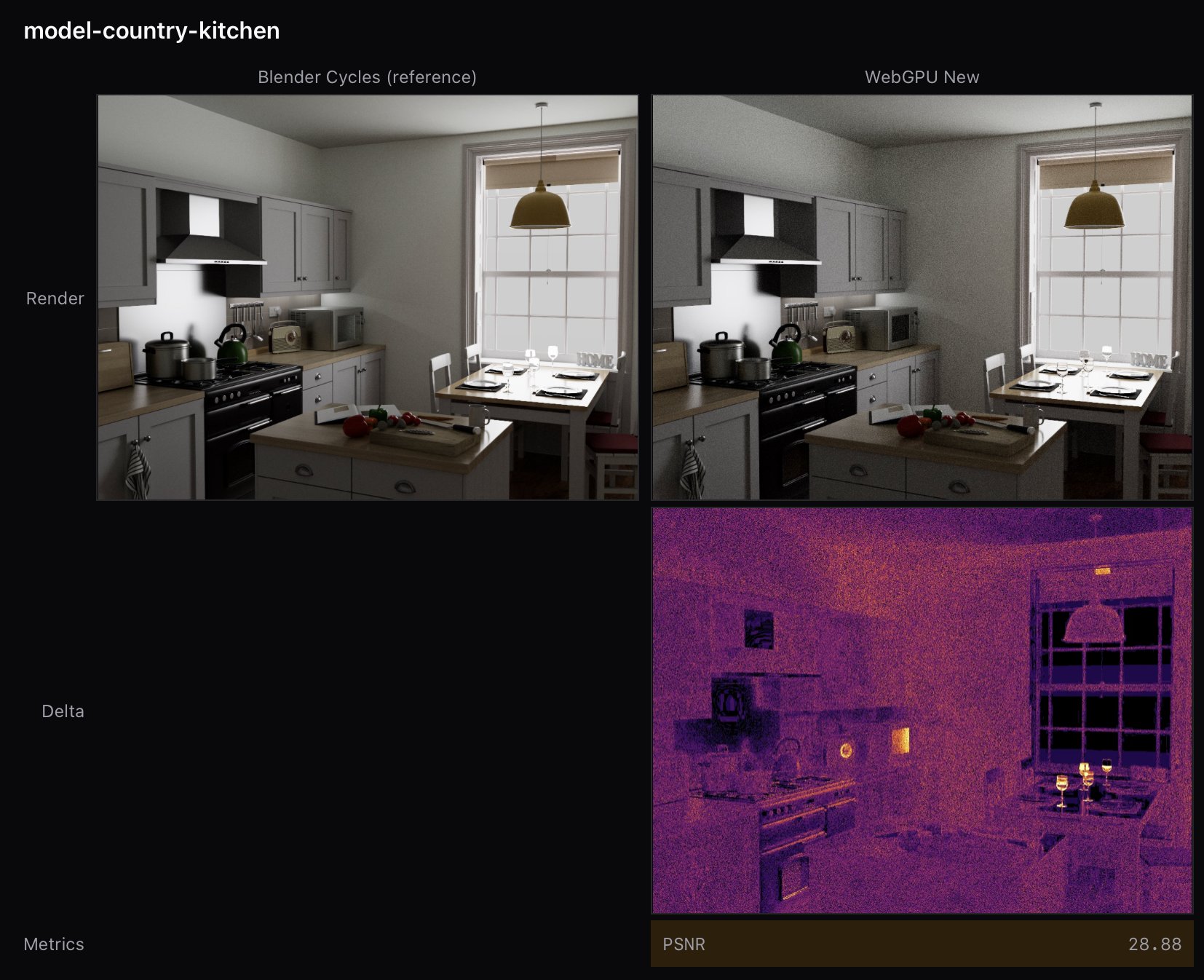
Ben Houston started a fidelity test suite that compares Garrett Johnson's three-gpu-pathtracer against Blender renders, for both the legacy WebGL and the new WebGPU renderers. The project is open source; the page notes it has moved to a new home.
 35 Likes
Akella turns Kyiv air raid siren logs into a 3D visualization
Celebrated creative coding expert Yuri Artyukh (akella) transformed historical air raid siren alert logs from Kyiv into a poignant interactive Web3D data visualization. Engineered with Three.js and WebGPU, it graphs siren data as physical bowling pins that users can topple interactively, imbuing raw statistics with tactile emotional resonance. 💡 **Highlight:** Transforming sobering real-world conflict data into thought-provoking 3D spatial art, showcasing the profound human dimension of creative coding.
 4 Likes
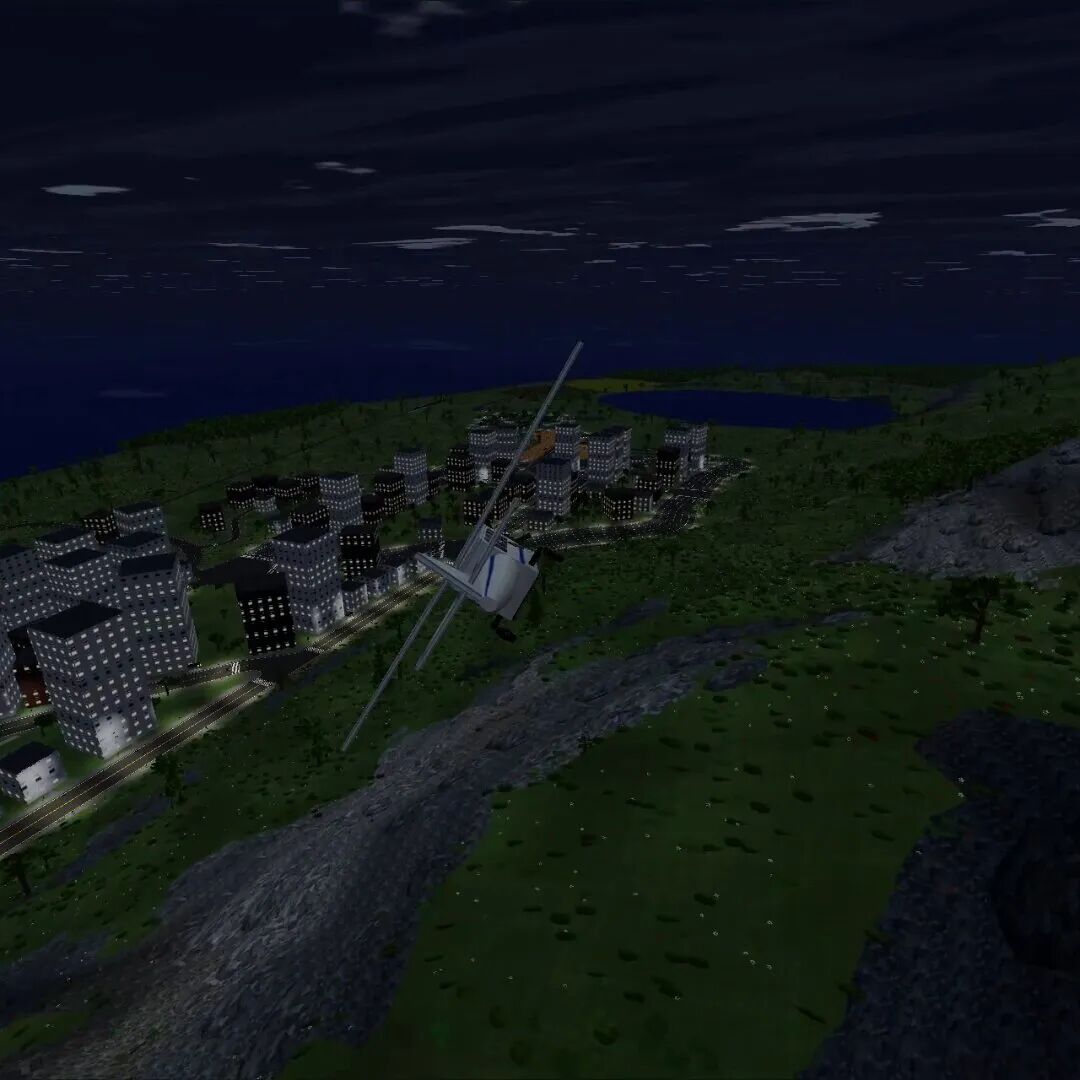
TopoWeaver fixes nighttime LOD pop-in on large WebGPU cities
The TopoWeaver team demonstrated their automated fix for nighttime Level of Detail (LOD) pop-in anomalies across large-scale building meshes. Combining error telemetry with server-side AI diagnostics, the system optimized WebGPU geometry culling passes and pushed fixes straight to production. 💡 **Highlight:** Autonomous AI diagnostic monitoring paired with WebGPU large-scale architectural LOD pipelines, fortifying digital twin stability.
 44 Likes
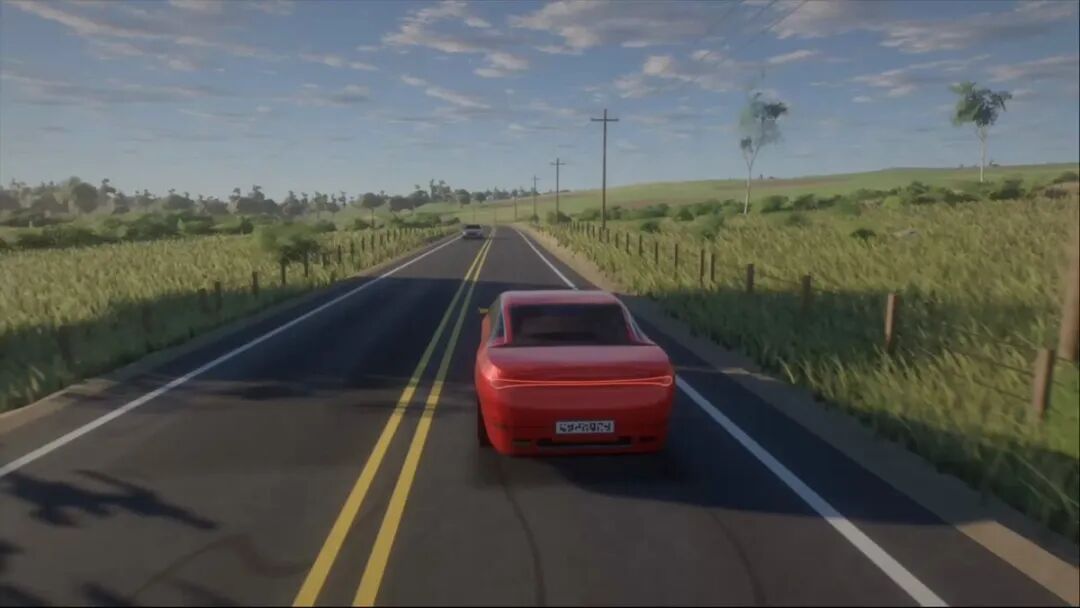
Gregg Tavares releases WebGPU Driving, an endless highway drive
Computer graphics luminary Gregg Tavares releases WebGPU Driving, an open-source browser experience powered by raw WebGPU compute pipelines. Sitting in an automated cockpit, viewers unwind as autonomous spline navigation glides through an endlessly generated procedural highway landscape, illustrating WebGPU's seamless capacity for procedural geometry streaming and trajectory computation.
 555 Likes
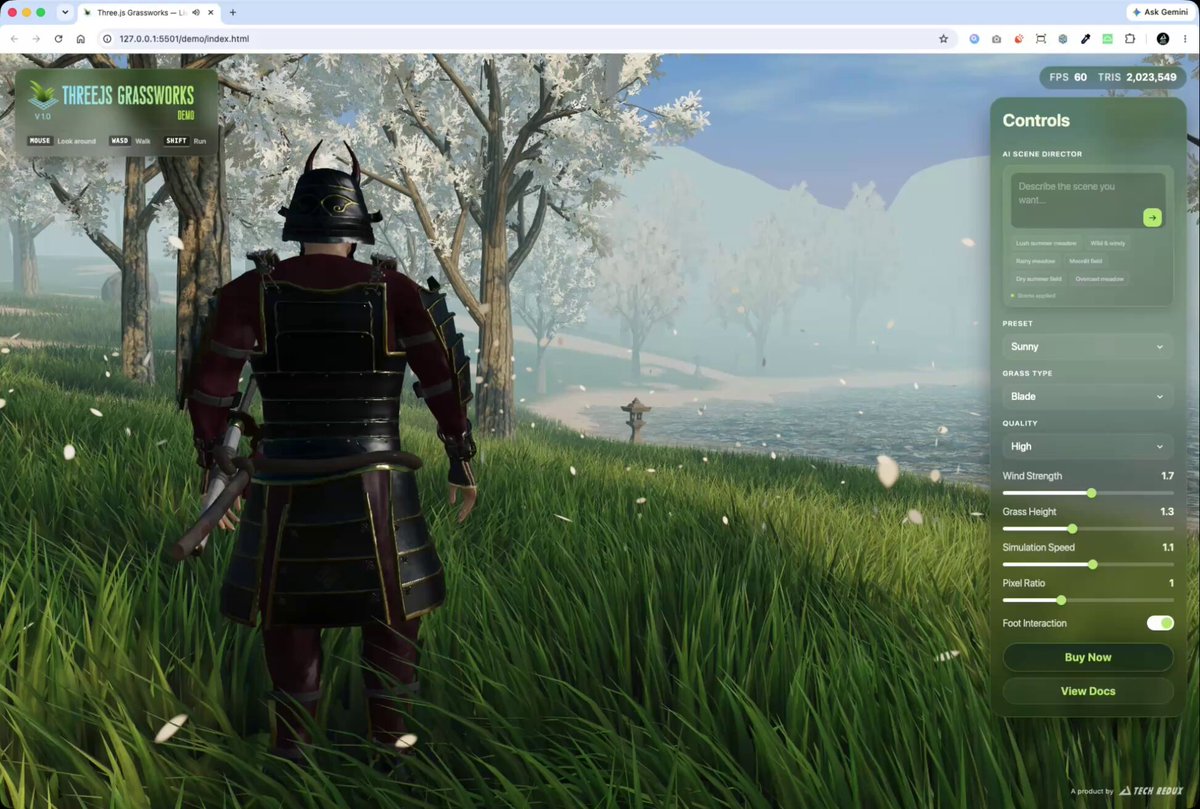
Bilal Khan's Three.js Grassworks gets an AI scene director
Bilal Khan built an AI scene director on top of his Three.js Grassworks demo: you type a simple prompt and it changes a whole set of scene and grass parameters to match, and he says it is fast. Grassworks itself is his production-ready grass system for Three.js and WebGPU, with a live demo.
 413 Likes
PixiJS 3D Closed Beta Signup Is Now Open
PixiJS 3D closed beta signup is now open 2D and 3D in one place, the PixiJS way! Fast by default. WebGPU first with WebGL fallback. Drop in 3D like it was always there. Closed beta for the next couple of weeks, then open source! Register https://pixijs.com/3d
 367 Likes
PlayCanvas launches SuperSplat Editor 3.0 on WebGPU
PlayCanvas officially launched SuperSplat Editor 3.0, transitioning its open-source 3D Gaussian Splatting suite entirely to WebGPU. Delivering substantial VRAM reductions and fluid framerates on point cloud datasets exceeding tens of millions of splats, it sets an industrial benchmark for browser-based neural asset editing.
Related Three.js Examples
More projects that share this one's topics
 543 Likes
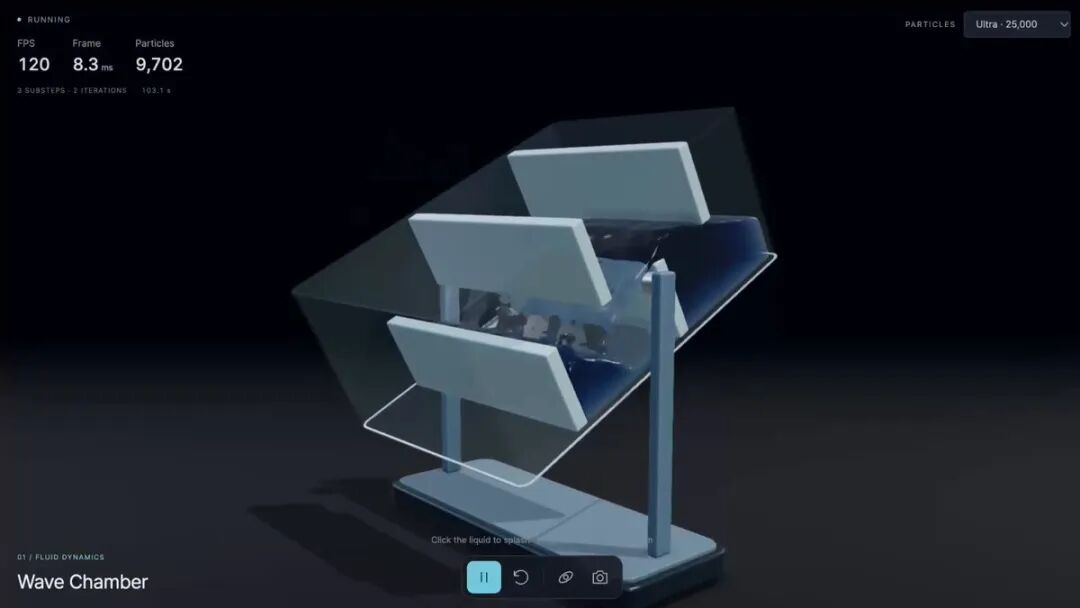
Dan Greenheck Open-sources Three.js Particle Fluids for WebGPU
Dan Greenheck open-sources Three.js Particle Fluids, an exceptional WebGPU-accelerated physics engine. Harnessing native compute shaders, it delivers real-time SPH fluid dynamics, rigid-body collisions, soft-body viscoelastic solvers, and dynamic cloth tearing in the browser, complete with live interactive demos and full source code on GitHub.
 654 Likes
Open-Source WebGPU Physically-Based Path Tracer
My WebGPU path tracer is open source! Physically based rendering, running right in your browser. MIT licensed. - WebGPU compute shader path tracing, with WebGL 2 fallback - Two-level BVH built using parallel Web Workers, based on TinyBVH. A 4.6M-triangle scene's BVH builds in
 18 Likes
Codrops reimagines a 3D cinema seat selector
Codrops reimagined an interactive 3D cinema seat selector: selecting a seat triggers a smooth camera fly-through to preview screen visibility and audio perspectives. Real-time projector lightmaps cast from an open-source Blender animation illuminate the auditorium. 💡 **Highlight:** A legendary web demo reborn in WebGPU and TSL, dramatically elevating ticketing UI into an atmospheric preview experience.
 42 Likes
Volumetric Fog, an official Three.js WebGPU example
Volumetric Fog is one of the official Three.js examples, rendered with the WebGPU renderer and post-processing. The three.js account featured it in a round-up of new and improved examples, and the full source is in the three.js repository on GitHub.