
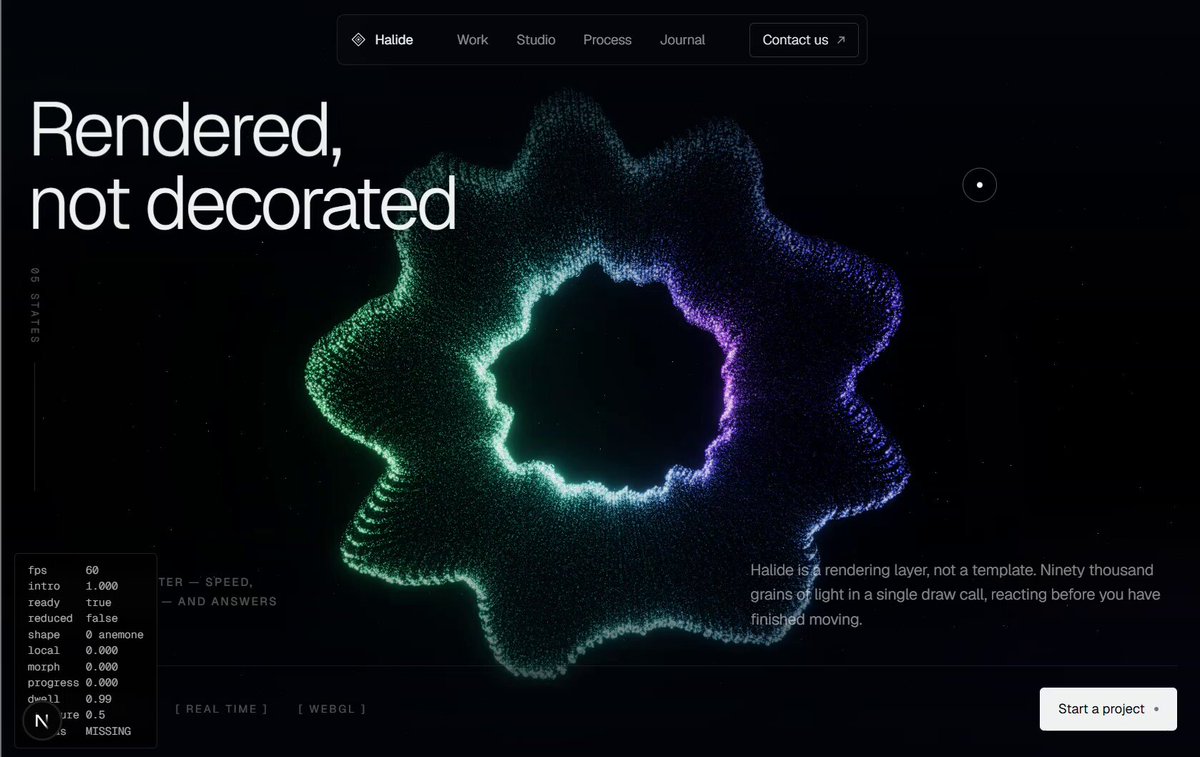
Rendering 90,000 Interactive Particles in the Browser Used in 3D
Curated 3D Web Creative Coding project by @himanshubuildss • 2026-09-08
3D Graphics & Rendering Pipeline
Optimized WebGL 2.0 graphics pipeline with realistic physical light calculations, HDR environment mapping, and anti-aliased geometry rendering.
Physics & Dynamic Simulation
Procedural mathematical vertex displacement, interactive particle animations, and procedural geometry generated at runtime.
Real-time Performance & Polish
60+ FPS browser execution with instanced rendering, memory-managed geometry buffers, and seamless responsive viewport scaling across desktop and mobile devices.
Aesthetic & Creation Overview
Rendering 90,000 interactive particles in the browser used to melt GPUs. Now, it is the standard for high-end web design.
Here is how to engineer a premium, real-time WebGL rendering layer that morphs seamlessly and reacts instantly to scroll and mouse movement.
I used
Technical Tags & Categories
Developer Architecture & AI Prompt Engineering Guide
To study or reproduce this 3D web experience with modern AI coding assistants (Claude Code, Cursor, Codex):
# Recommended AI Prompt Template:
"Create an interactive Three.js 3D web experience based on 'Rendering 90,000 Interactive Particles in the Browser Used in 3D'. Implement an antialiased WebGLRenderer with tone mapping, an OrbitControls camera with smooth damping, dynamic lighting with soft shadow mapping, and responsive resize handling. Optimize with InstancedMesh and clean render loops."
- DevTools Shader & Draw Call Inspection: Press F12 on the demo page to inspect WebGL draw calls, shader programs, and buffer allocations.
- Creator Devlogs: Follow @himanshubuildss on X for ongoing 3D graphics updates, procedural workflows, and code snippets.
Related 3D Showcases
Explore more interactive Three.js experiments, WebGL shaders, and creative coding
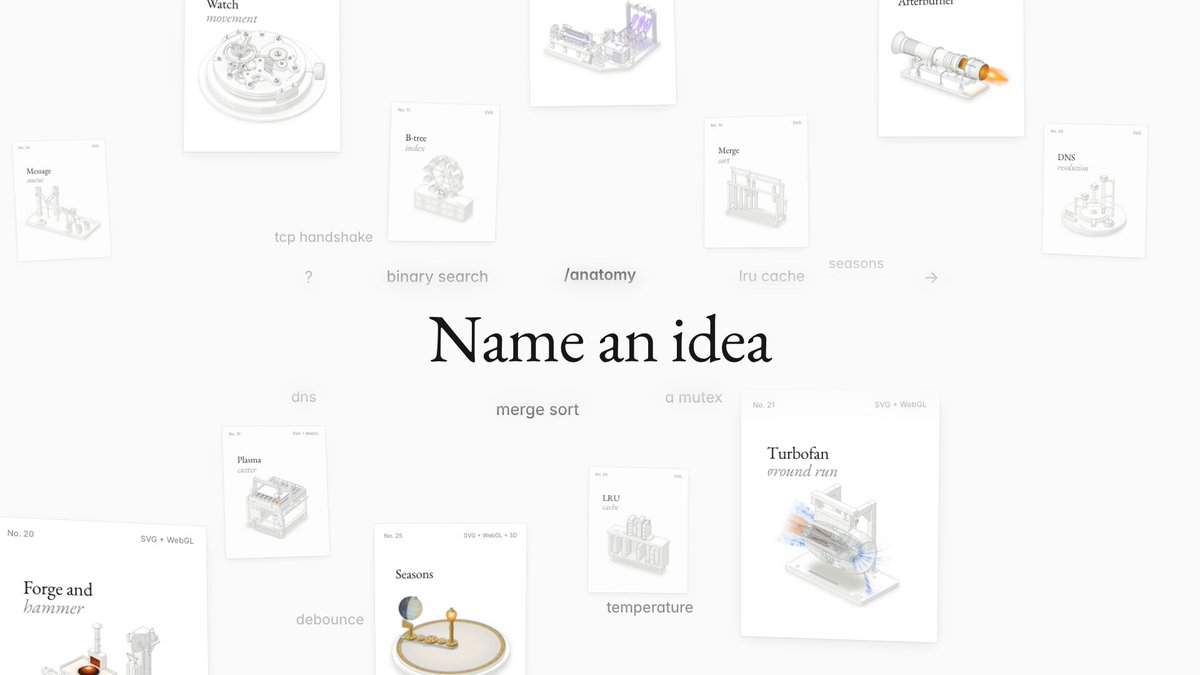
Introducing Anatomy
Introducing Anatomy Describe a machine in one line. Claude brings it to life. - Interactive isometric wireframes you can rotate, inspect and explore - WebGL shaders for fire, water, plasma and more - Real 3D motion, with individual parts that rotate and move Install it as an
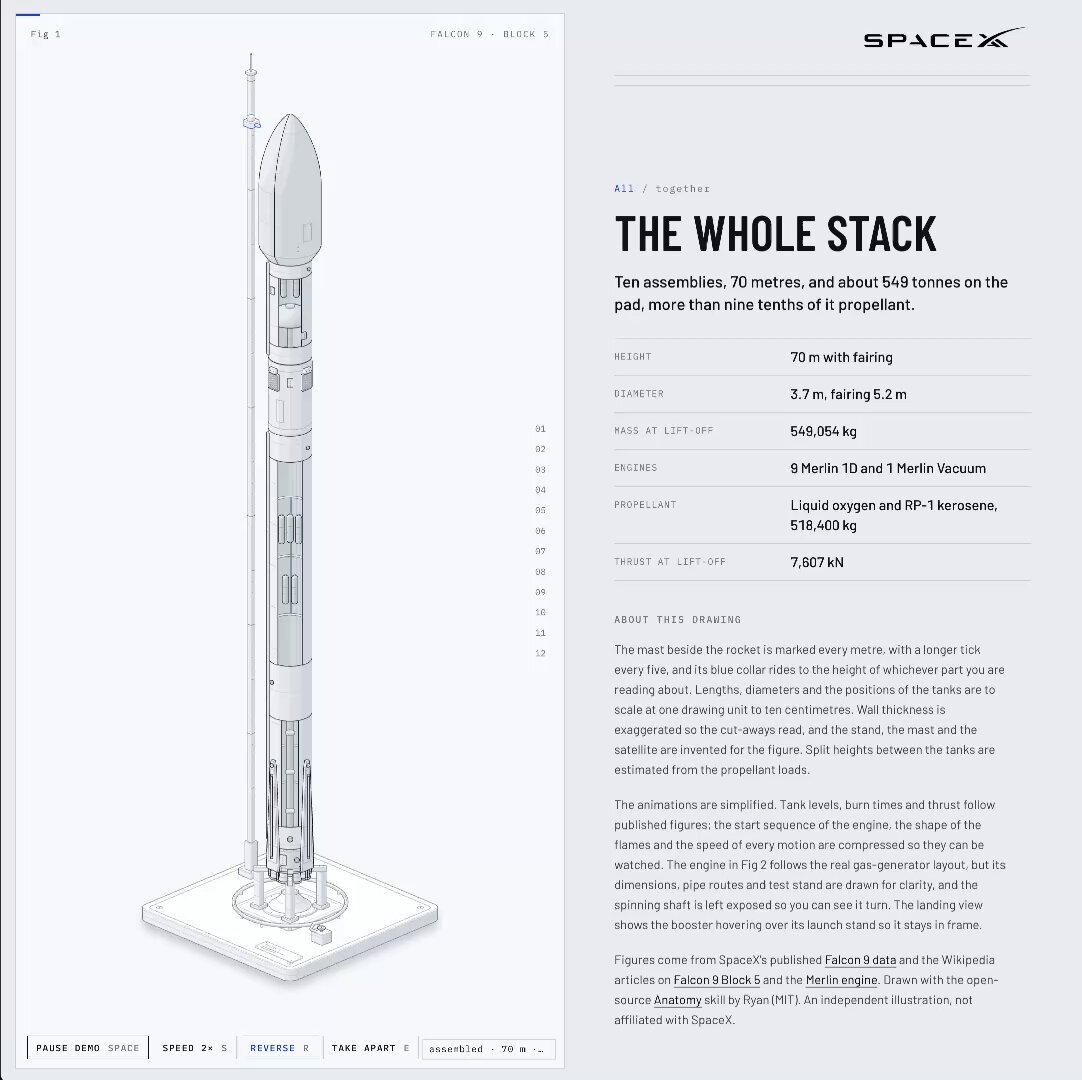
Interactive Isometric Wireframe Animation with Opus 5.5
Opus 5.5 + /anatomy skill is insane for motion animation • Interactive isometric wireframes you can rotate, inspect and explore • WebGL shaders for fire, water, plasma and more • Real 3D motion, with individual parts that rotate send to Claude: https://skills.wheresryan.sh/anatomy
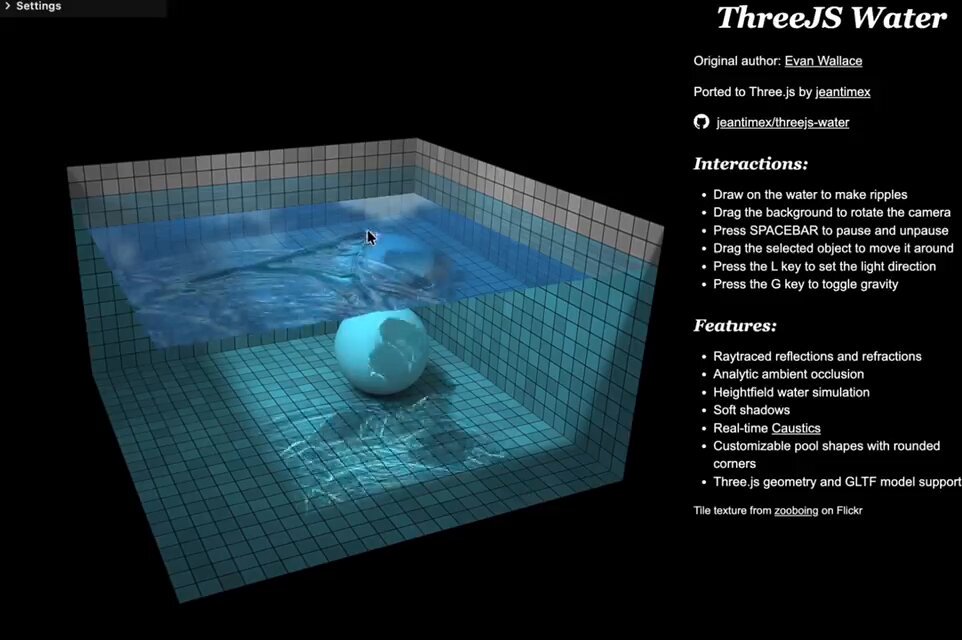
Yong Su Released a Three.js Port of Evan
Yong Su released a Three.js port of Evan Wallace's WebGL Water demo, featuring ray-traced reflections, refractions, caustics, and interactive objects. Try it here: https://80.lv/articles/real-time-water-simulation-with-three-js
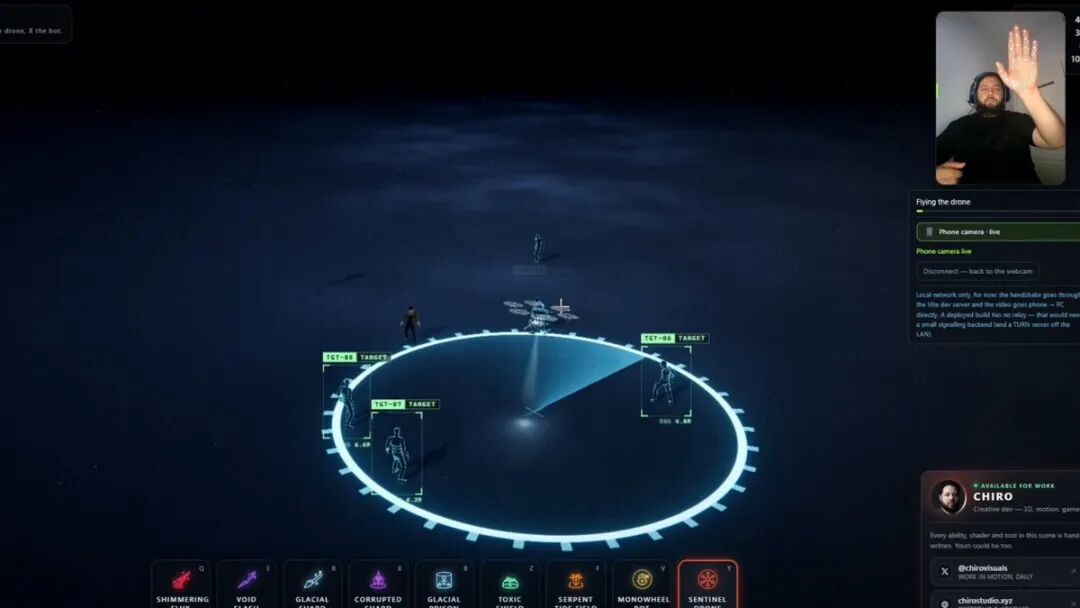
Developer Chiro Visuals Releases Elemental Sandbox Under the in 3D
Developer Chiro Visuals releases Elemental Sandbox under the MIT license, an open-source visual playground built in Three.js featuring nine elemental magic particle systems. Deeply integrating Google MediaPipe for real-time webcam hand tracking, users cast spells, aim elemental blasts, and switch magic affinities through intuitive hand gestures (open palm, closed fist, directional points). A textbook integration of computer vision kinematics and WebGL particle shaders.