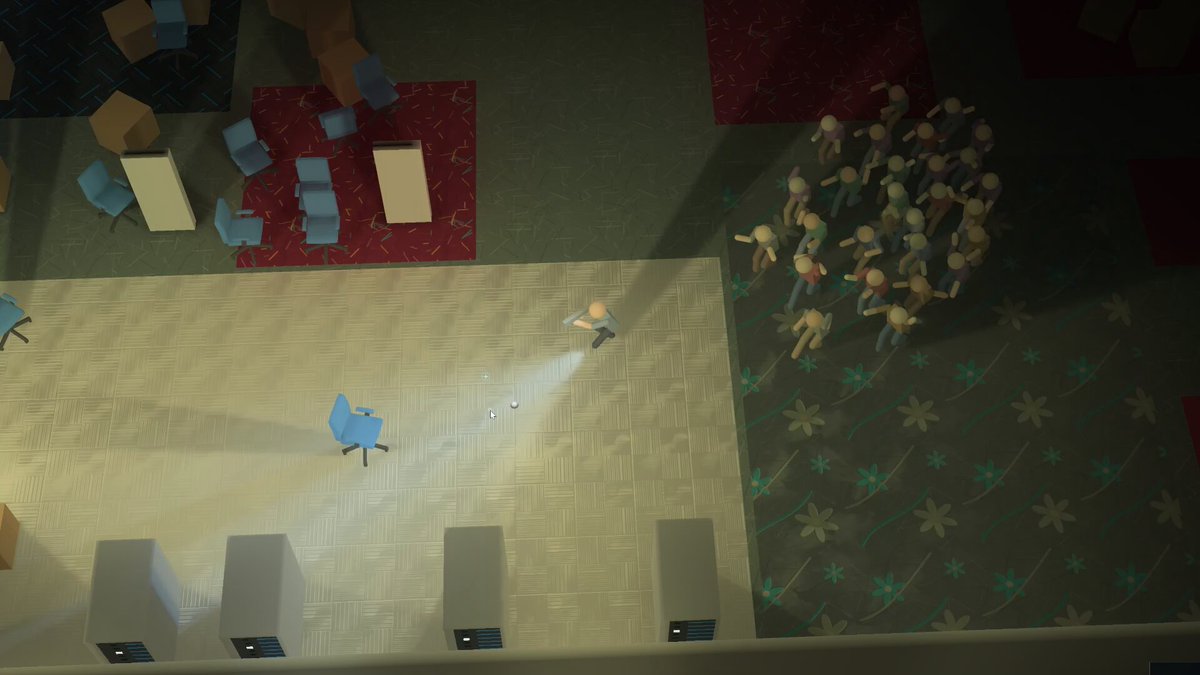
Servasyy_ai - WebGPU Action Game Prototype in Three.js
Curated 3D Web Creative Coding project by @servasyy_ai • 2026-08-03
3D Graphics & Rendering Pipeline
State-of-the-art WebGPU rendering engine delivering high compute shader throughput, reduced CPU overhead, and native multi-pass buffer rendering.
Physics & Dynamic Simulation
Interactive real-time physics engine integration featuring collision detection, rigid body kinematics, and smooth motion damping.
Real-time Performance & Polish
60+ FPS browser execution with instanced rendering, memory-managed geometry buffers, and seamless responsive viewport scaling across desktop and mobile devices.
Aesthetic & Creation Overview
A complete browser-based action game prototype combining Three.js with modern WebGPU rendering. Integrating RVO2 crowd avoidance, A* pathfinding, active ragdoll physics, and projectile shooting mechanics, it leverages next-gen graphics pipelines for fluid performance and complex gameplay systems.
Developer Architecture & AI Prompt Engineering Guide
To study or reproduce this 3D web experience with modern AI coding assistants (Claude Code, Cursor, Codex):
# Recommended AI Prompt Template:
"Create an interactive Three.js 3D web experience based on 'Servasyy_ai - WebGPU Action Game Prototype in Three.js'. Implement an antialiased WebGLRenderer with tone mapping, an OrbitControls camera with smooth damping, dynamic lighting with soft shadow mapping, and responsive resize handling. Optimize with InstancedMesh and clean render loops."
- DevTools Shader & Draw Call Inspection: Press F12 on the demo page to inspect WebGL draw calls, shader programs, and buffer allocations.
- Creator Devlogs: Follow @servasyy_ai on X for ongoing 3D graphics updates, procedural workflows, and code snippets.
Related 3D Showcases
Explore more interactive Three.js experiments, WebGL shaders, and creative coding

Japanese Developer Explores Nvidia's Motionbricks Generative Motion Framework in 3D
A Japanese developer explores NVIDIA's MotionBricks generative motion framework running client-side in the browser. Powered entirely by WebGPU, an on-device lightweight neural network computes full-body skeletal locomotion in real time based on keyboard inputs. Unlike pre-baked animation clips, each step and center-of-mass shift exhibits procedural randomness and physical momentum, producing remarkably fluid transitions. 💡 **Highlight:** Executing frontier generative AI motion models natively via WebGPU opens vast horizons for web gaming and virtual avatars.
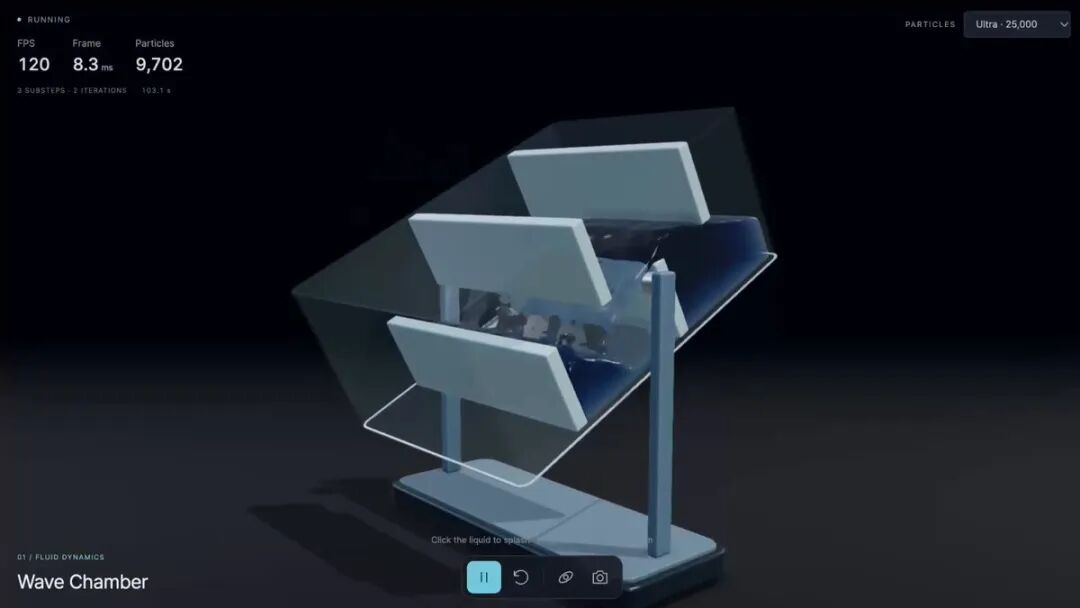
Dan Greenheck Open-sources Three.js Particle Fluids, an Exceptional
Dan Greenheck open-sources Three.js Particle Fluids, an exceptional WebGPU-accelerated physics engine. Harnessing native compute shaders, it delivers real-time SPH fluid dynamics, rigid-body collisions, soft-body viscoelastic solvers, and dynamic cloth tearing in the browser, complete with live interactive demos and full source code on GitHub.
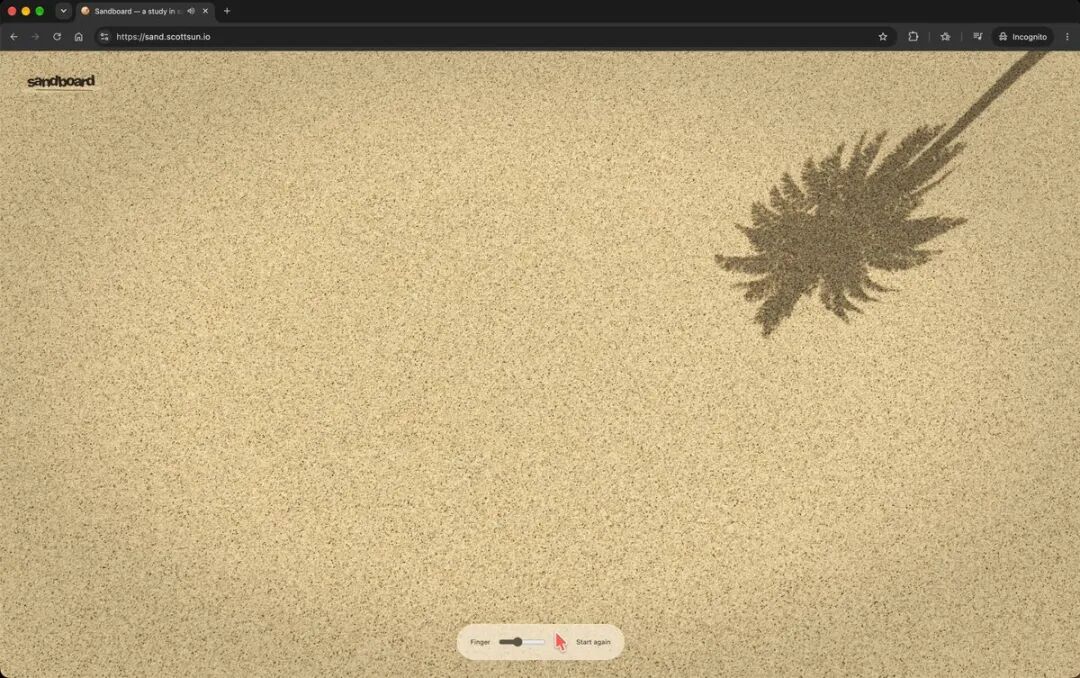
Creative Coder Scott Releases an Interactive Sand Sandbox in 3D
Creative coder Scott releases an interactive sand sandbox toy powered by Three.js and WebGPU compute shaders. Supporting responsive multi-touch gestures on mobile and tablet displays, users' fingers carve silky granular waves through dynamic sandbanks that collapse realistically according to physical friction angles. An impressive demonstration of parallel granular particle physics running smoothly on mobile hardware via WebGPU.

Smooth 3D Postcard Carousel and Card-flip Micro-interaction Built
Smooth 3D postcard carousel and card-flip micro-interaction built with WebGPU shaders, featuring soft physical contact shadows and spring damping dynamics for tactile spatial UX.