
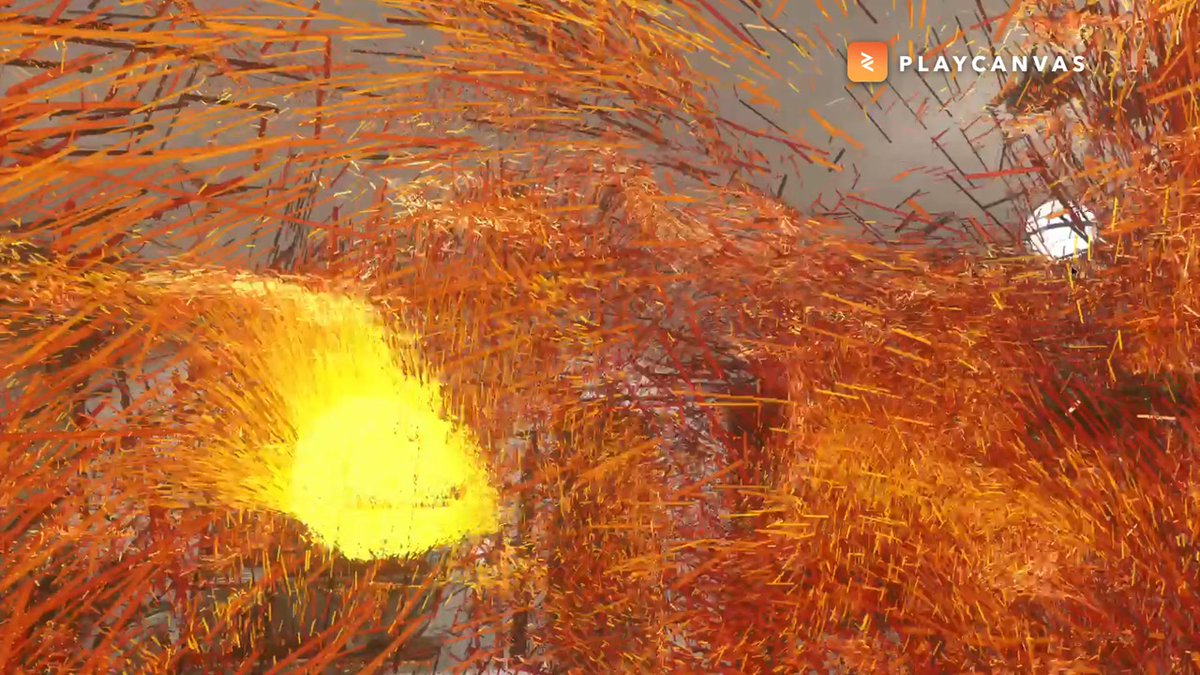
Martin Valigursky turns a Gaussian splat into 2M WebGPU particles
By @ValigurskyM • Curated • 32 likes on X
 Open Live Demo ↗
What happens when a gaussian splat becomes 2M particles? 🔥 @playcanvas spawns them from the scene’s color + depth, runs them in WebGPU compute and collides them with voxels from splat-transform. Pick a preset and wreck the room 👇 https://engine-iam7nszj6-playcanvas.vercel.app/#/gaussian-splatting/particle-blast
More from @ValigurskyM
Other projects by Martin Valigursky
 383 Likes
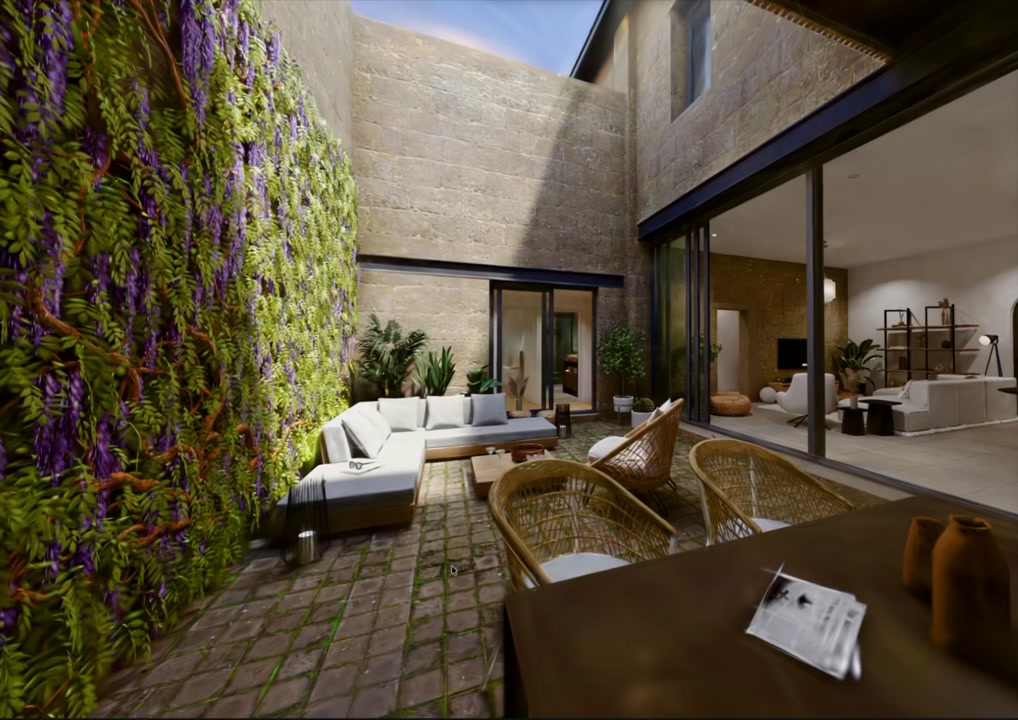
Martin Valigursky releases a Matrix digital rain shader for splats
Martin Valigursky released an open-source Matrix digital rain shader for 3D Gaussian Splatting in PlayCanvas on WebGL2 and WebGPU.
 15 Likes
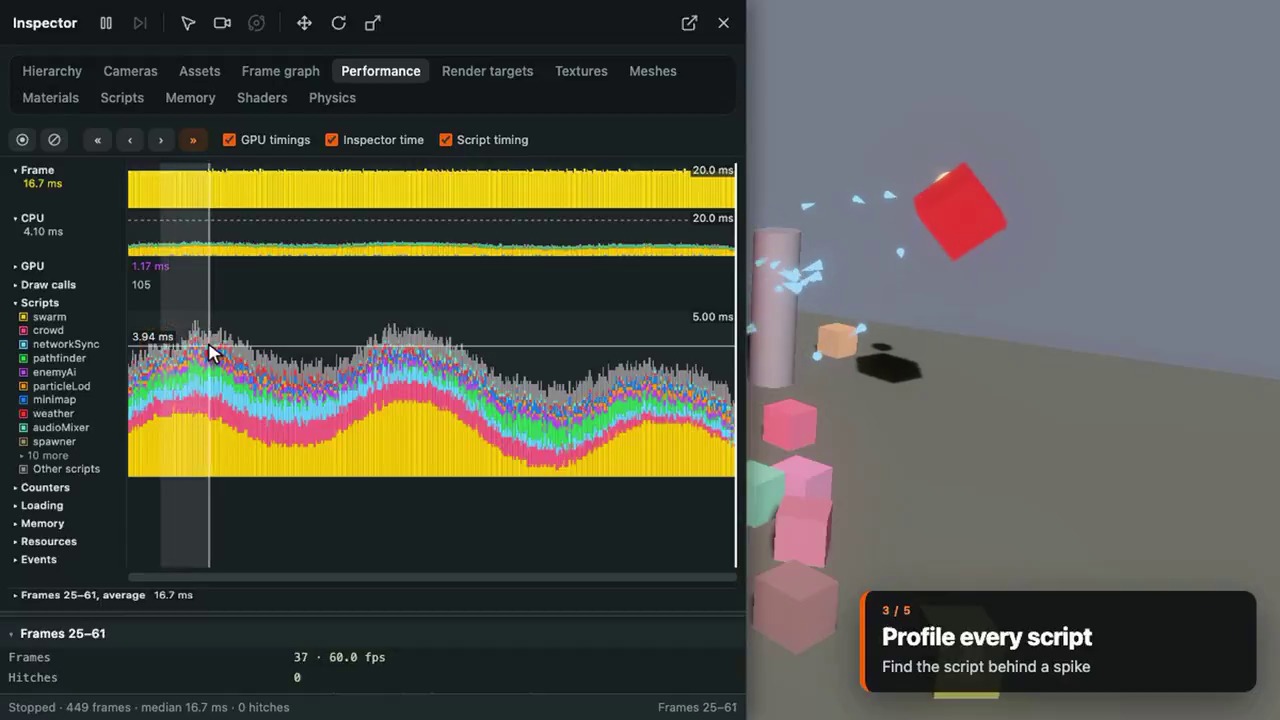
PlayCanvas adds a built-in performance profiler to its inspector
PlayCanvas VP Martin Valigursky introduces a built-in Performance Profiler inside the PlayCanvas inspector. It captures per-frame CPU and GPU timelines, tallies draw calls, tracks asset loading latencies, and renders interactive flame graphs to pinpoint script and shader bottlenecks in seconds. 💡 **Highlight:** Per-frame flame graphs and GPU workload visualization provide the missing diagnostic piece for optimizing high-end web games and 3D applications.
 36 Likes
Martin Valigursky lights planets with Gaussian splats in PlayCanvas
PlayCanvas VP Martin Valigursky demonstrates volumetric planetary lighting using Gaussian Splats. Without proxy geometry, 3DGS point sets cast directly into directional shadow depth maps while interacting with atmospheric scattering shaders to generate dramatic volumetric crepuscular rays over micro-planet terrain. 💡 **Highlight:** Integrating Gaussian Splats directly into engine shadow maps and volumetric fog marks a pivotal milestone toward production-ready 3DGS gaming.
 32 Likes
PlayCanvas adds a dynamic sky and atmosphere system in WebGPU
The PlayCanvas team introduced a dynamic sky and atmospheric system rendering diurnal day-night cycles and volumetric cloud drift in WebGPU. A unified CameraFrame pass synchronizes sun, moon, stars, and real-time environmental lighting updates across the entire scene. 💡 **Highlight:** A major graphics upgrade for PlayCanvas delivering an all-in-one dynamic weather and celestial pipeline.
More WebGPU Examples
Projects curated around the same time in this topic
 63 Likes
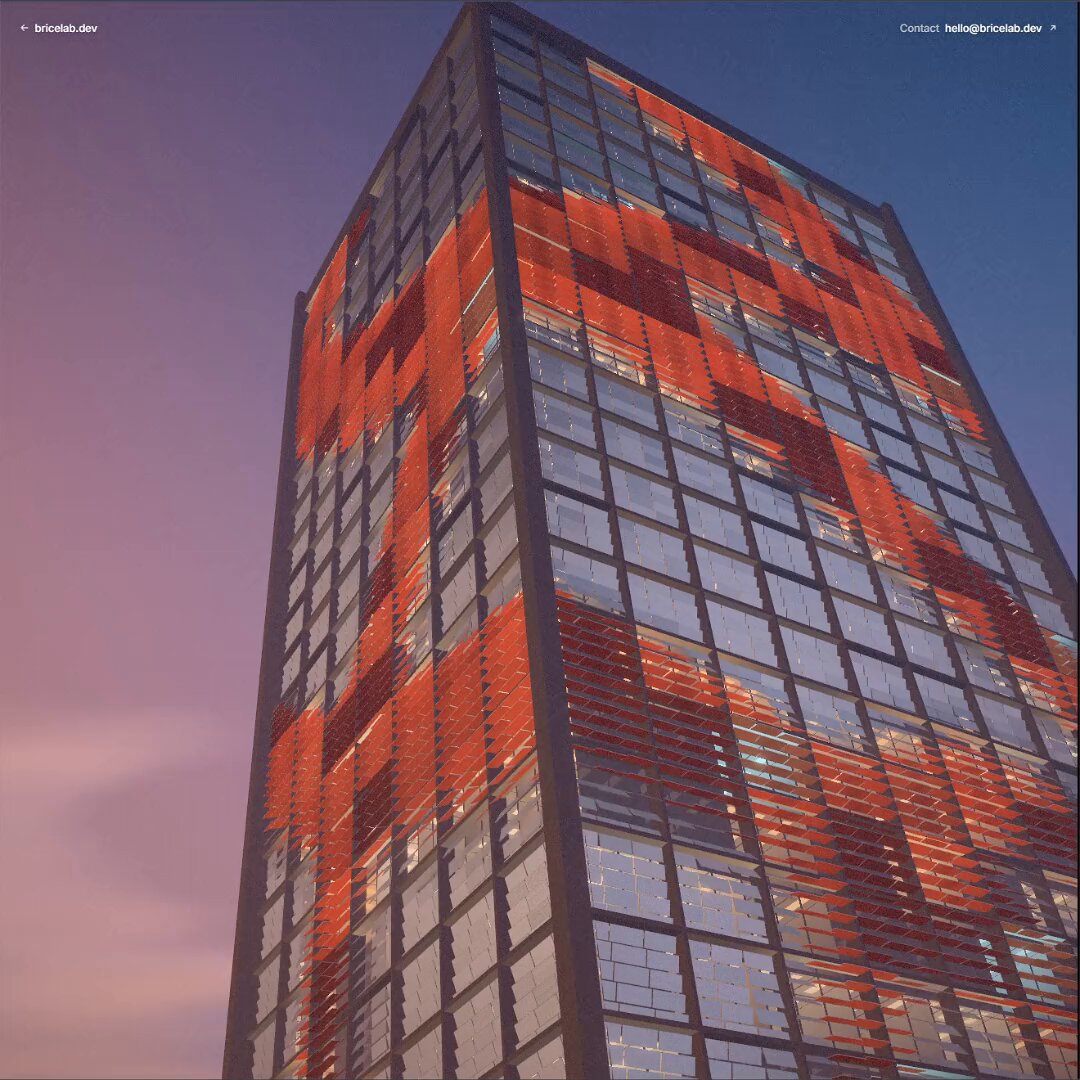
Brice experiments with Three.js and WebGPU shutters
Creative engineer Brice experiments with Three.js and WebGPU shutters, featuring reactive geometric tiles with smooth specular highlights.
 39 Likes
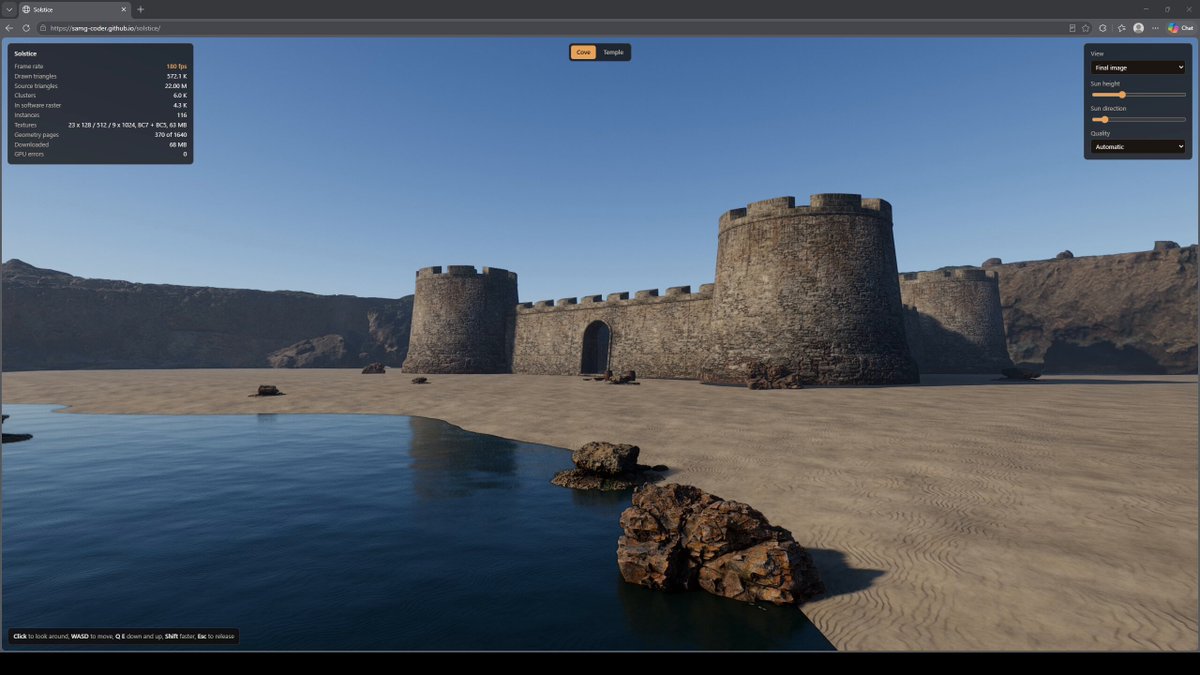
The Solstice Rust and WebGPU renderer implements continuous
Solstice, an open-source Rust and WebGPU rendering engine introducing dynamic vertex streaming to schedule and render seamless multi-level-of-detail (LOD) geometries within fixed VRAM allocations.
 15 Likes
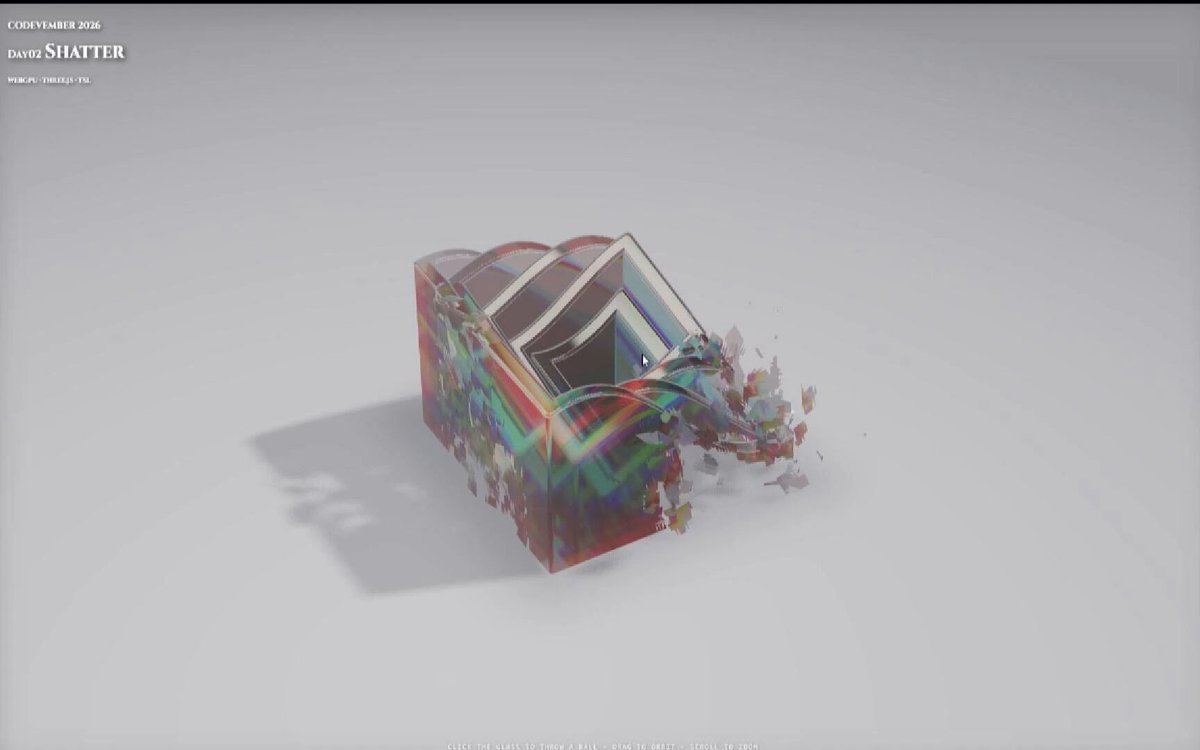
Frank Reitberger's WebGPU fracture and shockwave demo with audio
Audiovisual polygonal fracture and energy shockwave demo powered by WebGPU and WGSL, pushing raw GPU compute performance with dynamic shatter physics and synchronized audio-reactive particles.
 148 Likes
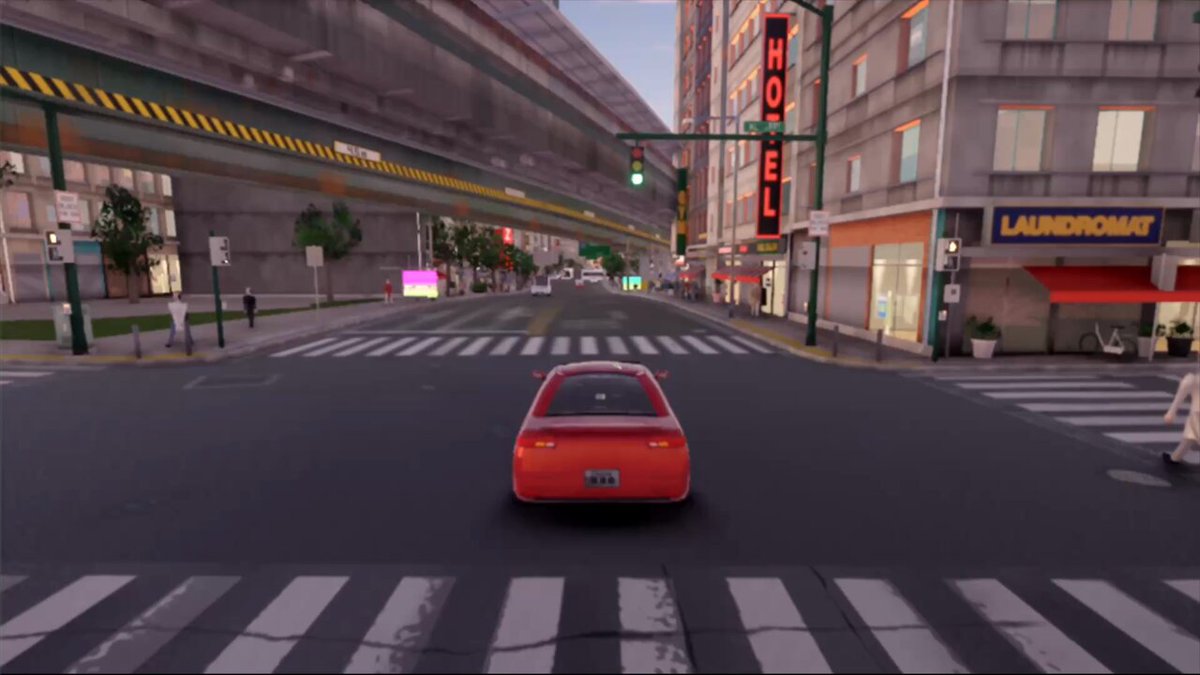
Greggman builds a zero-dependency procedural WebGPU metropolis
Zero-dependency procedural WebGPU metropolis by WebGL pioneer greggman, packing thousands of traffic vehicles, glowing tail-light trails, bridges, and weather precipitation into under 500KB of code.
 30 Likes
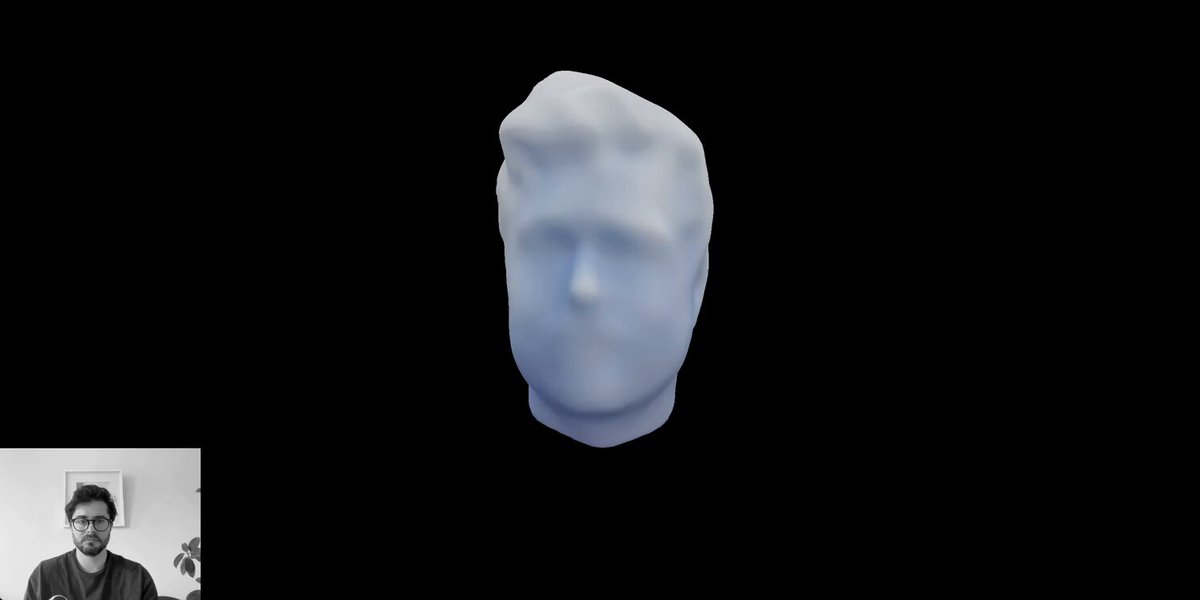
Douglas Lilliequist builds a WebGPU marching cubes portrait demo
Real-time WebGPU Marching Cubes portrait demo by Doug Lilliequist built on his custom ogpu framework, generating a 3D scalar distance field via an in-memory voxelizer and extracting smooth polygonal head meshes concurrently on the GPU with cross-section slicing. 💡 **Quick Take:** Voxelized isosurfaces meet parallelized Marching Cubes on WebGPU, demonstrating formidable real-time mesh polygonization.
 75 Likes
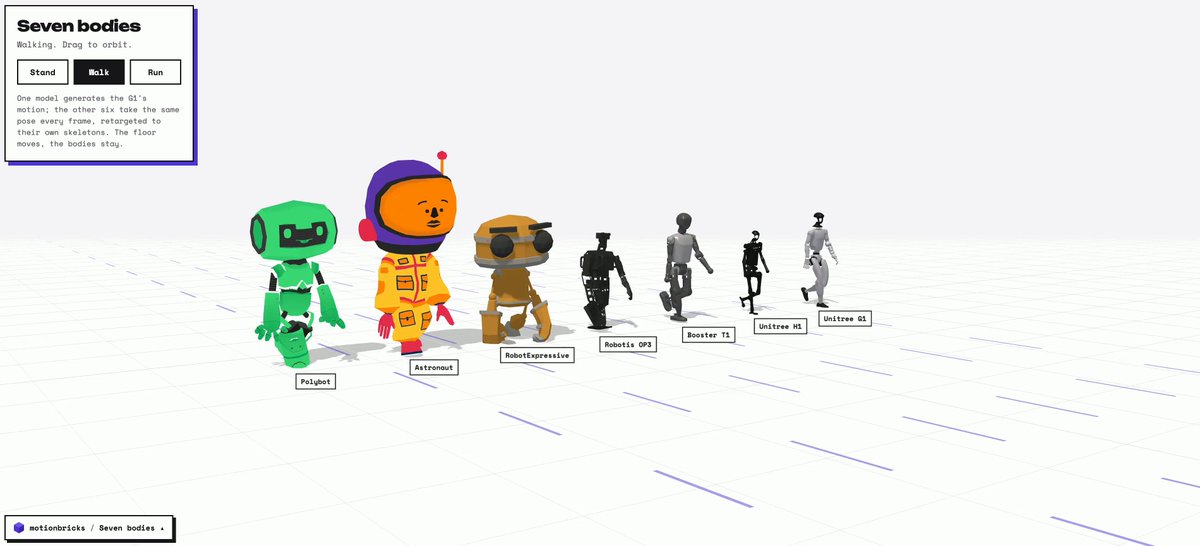
Quick example port of nvidia's motionbricks in @threejs
quick example port of nvidia's motionbricks in @threejs with webgpu Try it out - https://repalash.com/three-motionbricks/ on github - https://github.com/repalash/three-motionbricks works on mobile also with a lower bit model (tried on iphone 16 pro)
 1,005 Likes
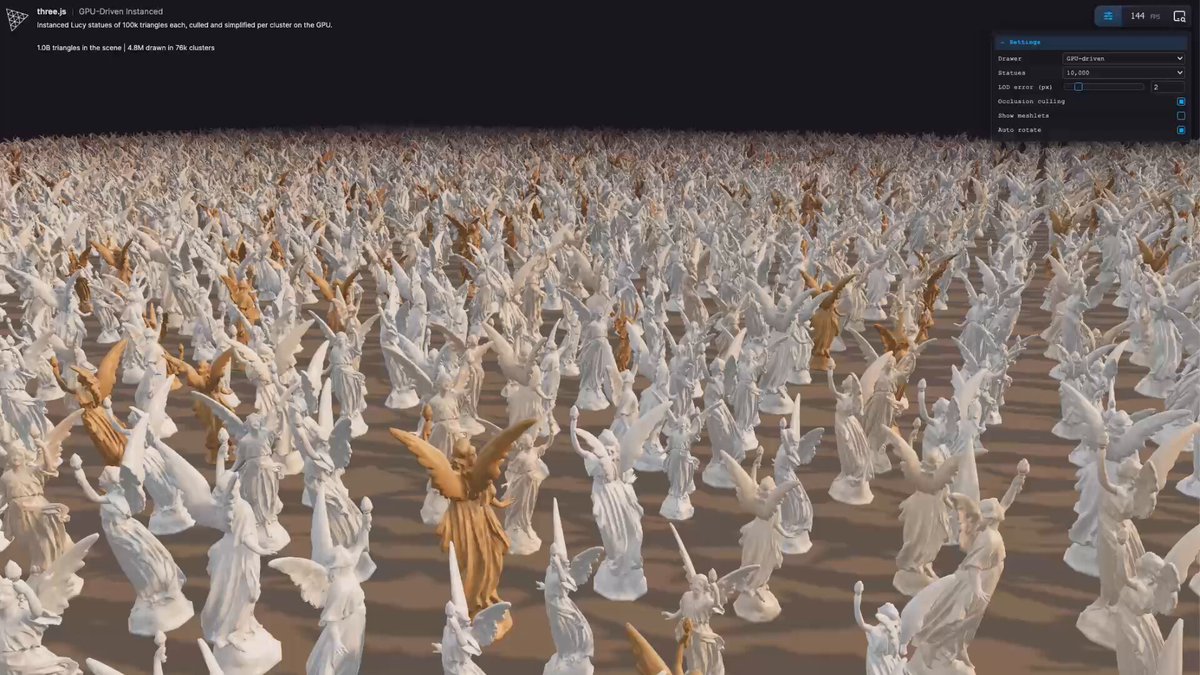
Three.js GPU Meshlet LOD Geometry System
I was wondering when Three.js was going to get something like Nanite. And then I saw the PR for a meshlet rendering pipeline was merged <24 hours ago! https://github.com/mrdoob/three.js/pull/35191 Here's a demo scene rendering 1B triangles at 150FPS. https://raw.githack.com/sunag/three.js/dev-drawer-live/examples/index.html?q=gpudriven#webgpu_gpudriven_instanced This is huge!
 358 Likes
Spark Engineering Team Introduces Spark Radix, an Experimental
WebVR pioneer Diego Marcos introduces Spark Radix, an experimental WebGPU 3D Gaussian Splatting engine architected to integrate seamlessly with Three.js. Radix bridges neural radiance representations with standard scene-graph pipelines, letting web developers render high-fidelity real-world scans directly in browsers. 💡 **Highlight:** Native Three.js compatibility drastically lowers the barrier for web developers adopting 3D Gaussian Splatting.
Related Three.js Examples
More projects that share this one's topics
 70 Likes
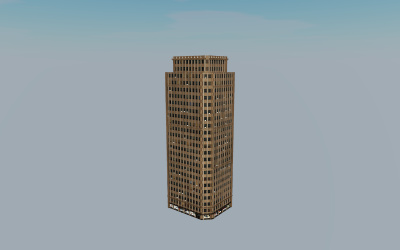
Building Generator, an official Three.js WebGPU example
The Building Generator is an official Three.js WebGPU example that procedurally generates buildings in the browser. The three.js account featured it alongside new examples such as volumetric fire and clustered lighting, and the source is on GitHub.
 56 Likes
Koimsurai renders HTML text into WebGPU with Chrome's HTML-in-Canvas
Pioneering implementation of Chrome's native HTML-in-Canvas feature by Taiwanese developer Koimsurai, rasterizing DOM text cards directly within a WebGPU canvas. Slashing main-thread CPU usage by 70%, DOM typography now dynamically reacts to gravitational field shaders, warping around celestial rings like tidal cosmic dust. 💡 **Quick Take:** The wall between HTML and WebGPU dissolves: main-thread CPU overhead drops 70% as live web typography seamlessly bends to shader gravitational fields!
 14 Likes
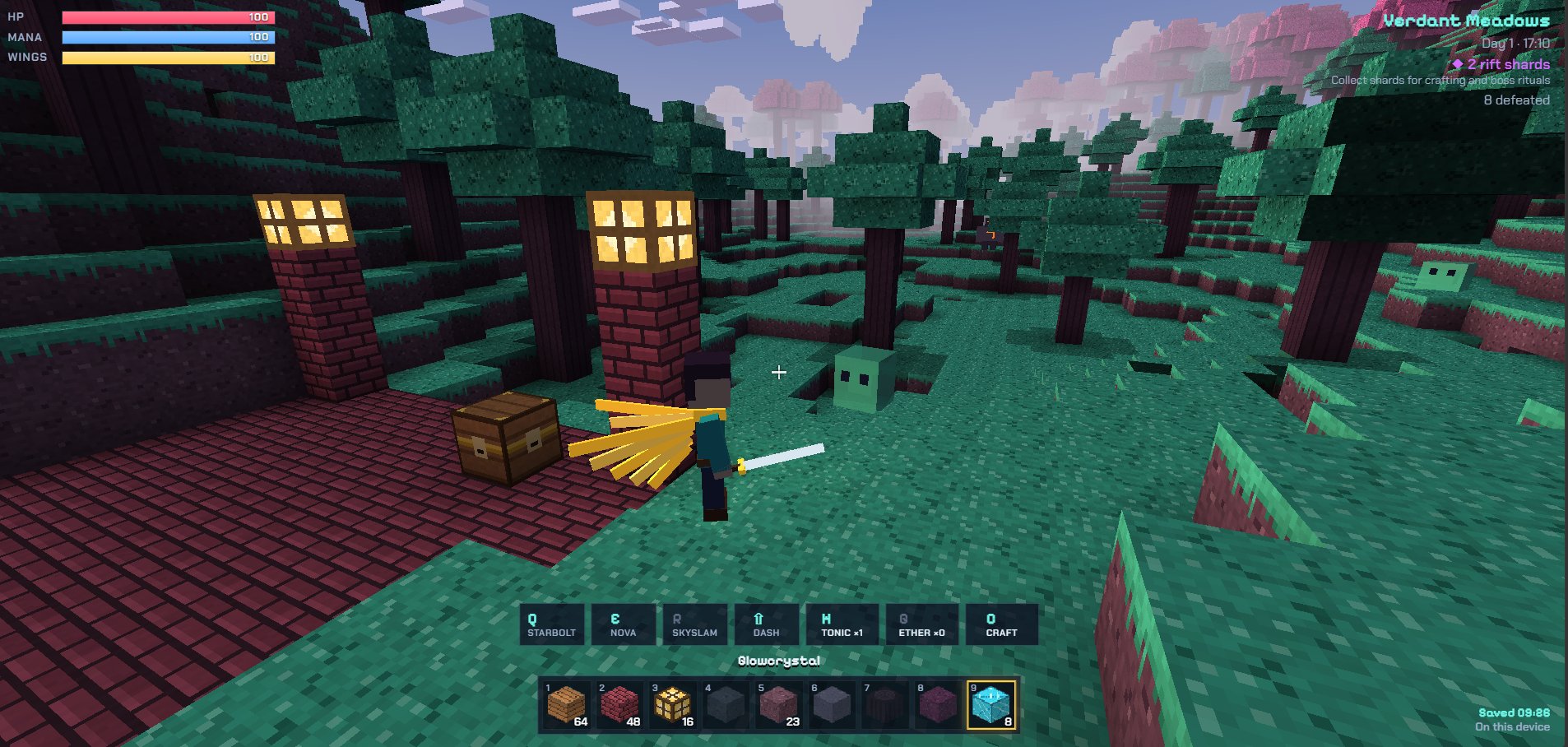
Indie Developer Hasibdreamer35 Built Skyshard, a Playable 3D
In just three hours, indie developer hasibdreamer35 built SKYSHARD, a playable 3D voxel parkour and exploration game using Three.js and AI assistants. The game features pastel skies, misty snow-capped peaks, and fluid gliding mechanics, with the full source code available on GitHub. 💡 **Highlight:** A solo dev sprints from zero to a playable voxel adventure in three hours, offering a clean open-source reference for lightweight Web3D game architecture.
 122 Likes
Luis Bizarro's photorealistic nature study in WebGPU and WGSL
Creative coder Luis Bizarro unveils a photorealistic nature rendering study driven by WebGPU and WGSL. Simulating blooming petals, wind-blown grass blades, contact shadows, and suspended airborne dust particles, the native WGSL pipeline captures the golden warmth of an afternoon garden. 💡 **Highlight:** Seamless coordination between WebGPU compute shaders and graphics pipelines simulates thousands of oscillating foliage blades with atmospheric lighting.