
Codrops Lookbook Hover Effects: 8 WebGL Hover Interactions
By @codrops • Curated • 37 likes on X
 Open Live Demo ↗
"Lookbook Hover Effects" open-sourced by Codrops, featuring 8 distinct WebGL hover interactions tailored for fashion catalogs. Moving over cards triggers fluid liquid-glass distortion, realistic paper tearing with curling peels, or cathode-ray TV static transitions, fusing GSAP easing with custom fragment shaders. 💡 **Quick Take:** Liquid glass, curling paper peels, and retro cathode-ray static: Codrops elevates e-commerce lookbook hover micro-interactions to gallery-level digital art.
More from @codrops
Other projects by Codrops
 18 Likes
Codrops reimagines a 3D cinema seat selector
Codrops reimagined an interactive 3D cinema seat selector: selecting a seat triggers a smooth camera fly-through to preview screen visibility and audio perspectives. Real-time projector lightmaps cast from an open-source Blender animation illuminate the auditorium. 💡 **Highlight:** A legendary web demo reborn in WebGPU and TSL, dramatically elevating ticketing UI into an atmospheric preview experience.
 88 Likes
Filipz's FRONTIER, a voxel wave shooter featured by Codrops
Codrops featured the work of multi-talent filipz ahead of the first Three.js Conf, including FRONTIER: waves come down and you hold the frontier in a 3D voxel shooter with a shared leaderboard. It plays in the browser.
More Three.js Shaders
Projects curated around the same time in this topic
 47 Likes
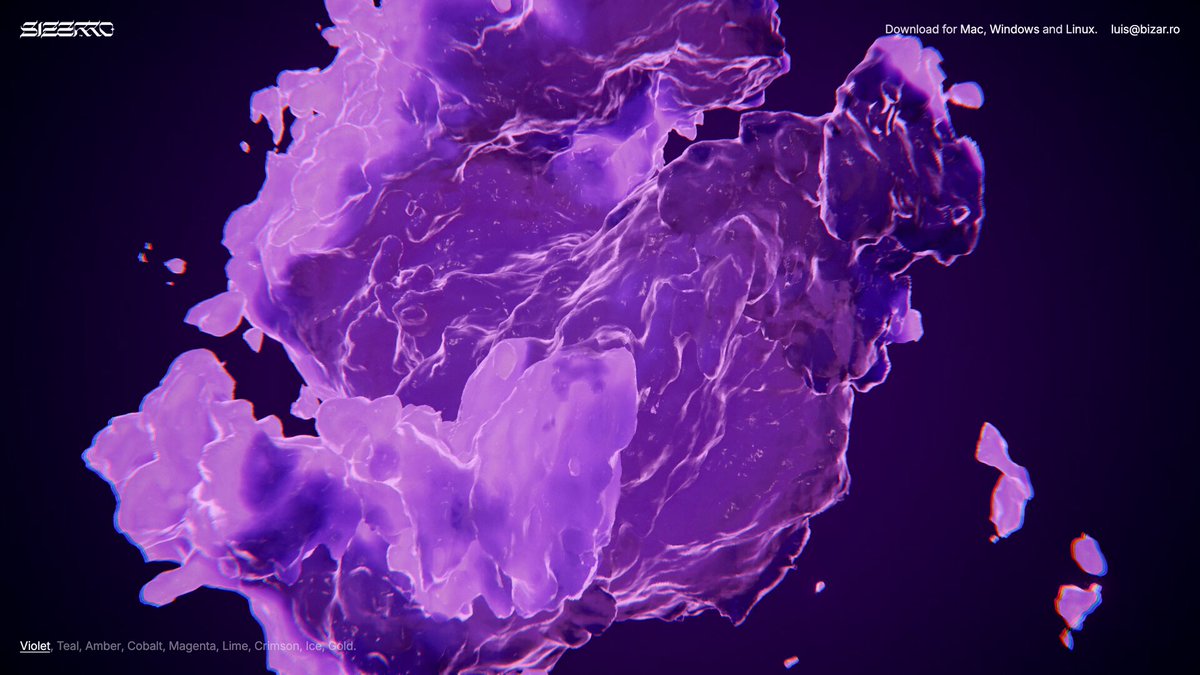
Luis Bizarro builds Gooey, a WebGPU gel with subsurface scattering
"Gooey", an interactive WebGPU and native WGSL shader experiment by Luis Bizarro, implementing realistic subsurface scattering (SSS) for a translucent, gelatinous fluid feel. Dragging the gel surface triggers spring-damped elastic deformations and tactile ripple waves. 💡 **Quick Take:** WGSL subsurface scattering meets soft-body physics, producing an irresistible, tactile jello-like interactive sensation!
 23 Likes
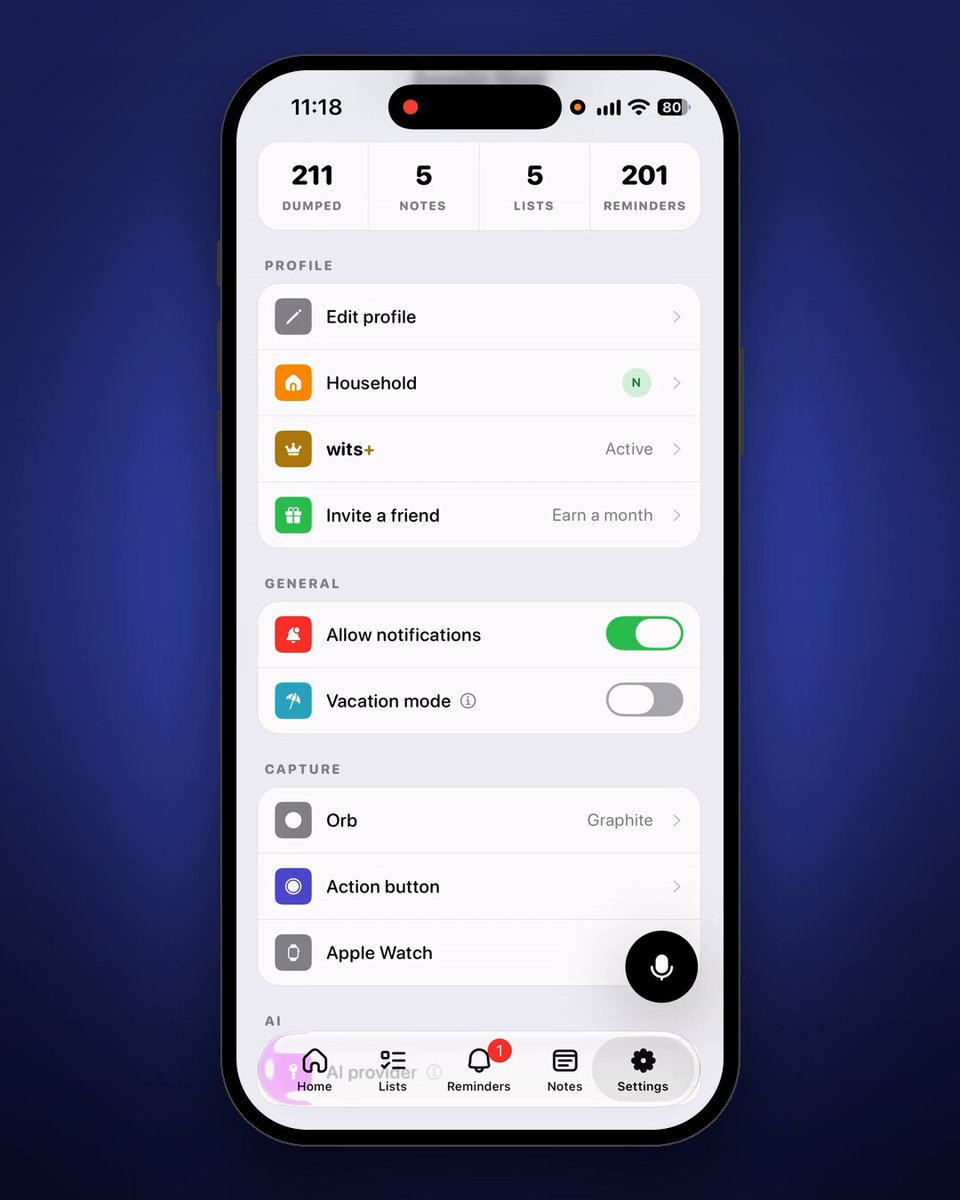
Audio-reactive Voice Orb Shader Ported From Expo Skia to WebGL
Audio-reactive Voice Orb shader ported from mobile Expo Skia directly to browser WebGL by Aswin. Responding dynamically to live microphone input, the orb pulses gently at idle, roils with speech amplitude and frequency FFTs, and glides smoothly back to rest during pauses. 💡 **Quick Take:** Bridging native Skia to WebGL, this living shader orb breathes tangible life into conversational voice interfaces.
 20 Likes
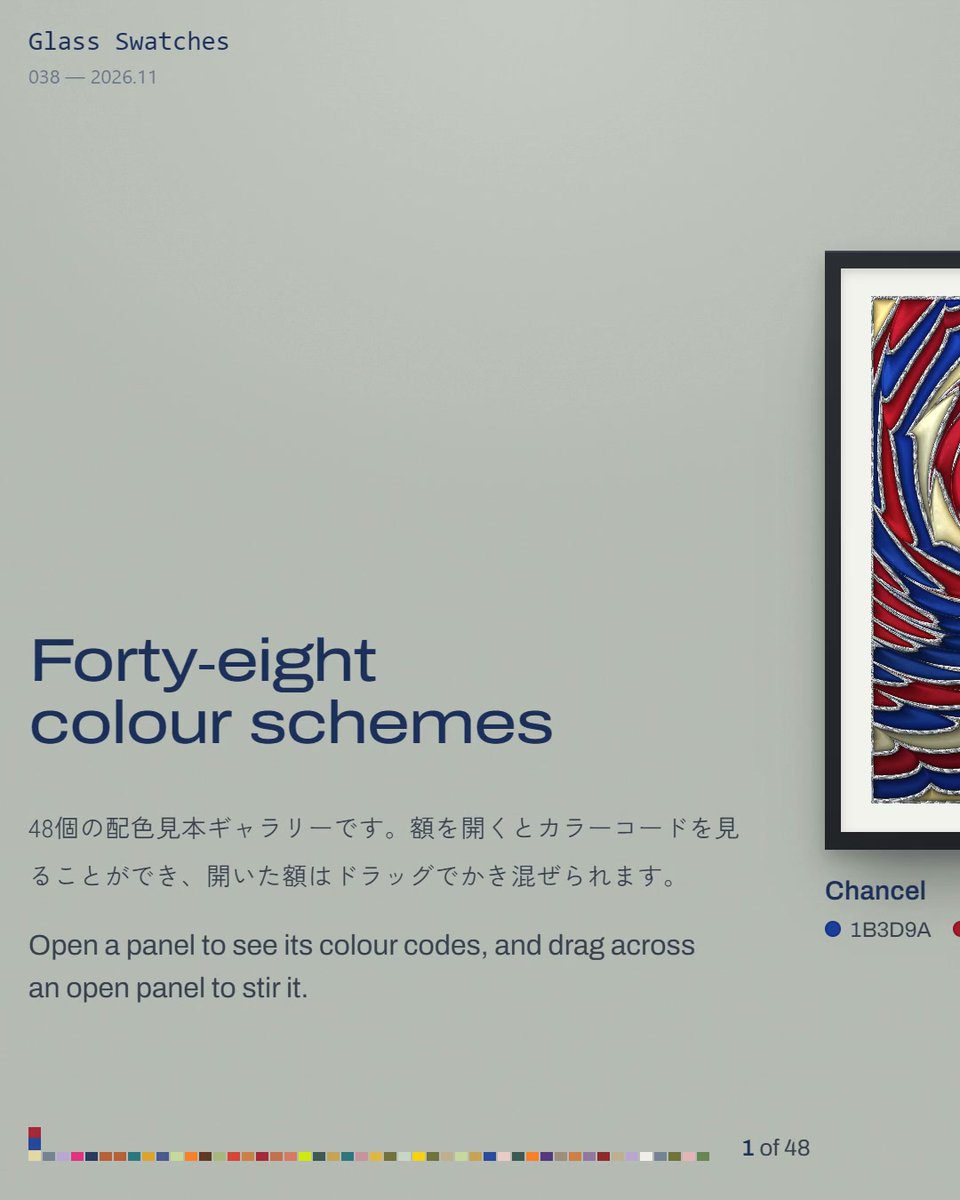
TONASY turns 48 color palettes into a WebGL 2 glass gallery
"Glass Swatches" (Motion Pieces #38) by Japanese creative developer TONASY, crafted in WebGL 2, GLSL, and TypeScript. 48 curated palettes are encapsulated within 3D glass specimen tiles, allowing users to inspect hex codes and drag cards together to mix their refractive liquid colors. 💡 **Quick Take:** 48 curated palettes preserved in WebGL 2 glass frames, blending optical refraction and color-mixing micro-interactions with refined Japanese aesthetics.
 56 Likes
Koimsurai renders HTML text into WebGPU with Chrome's HTML-in-Canvas
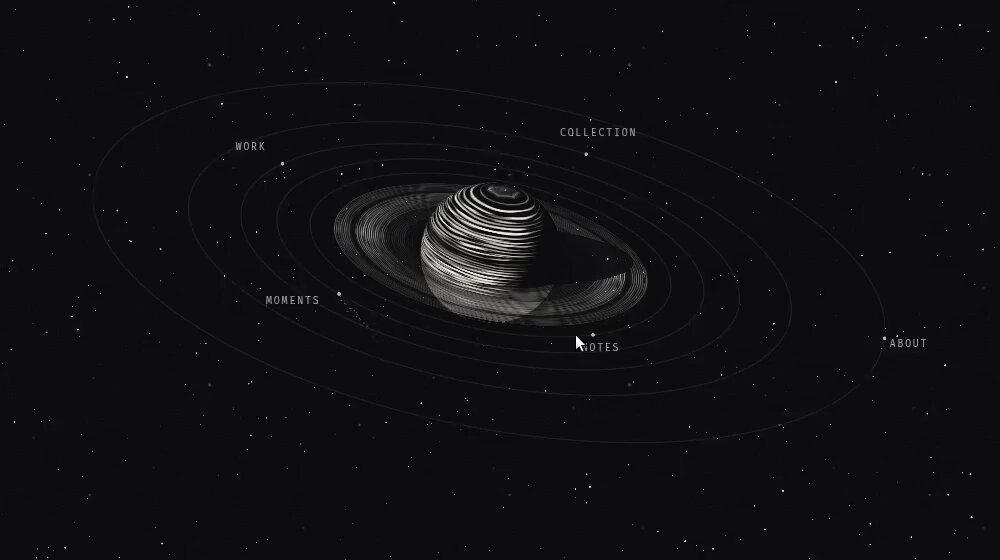
Pioneering implementation of Chrome's native HTML-in-Canvas feature by Taiwanese developer Koimsurai, rasterizing DOM text cards directly within a WebGPU canvas. Slashing main-thread CPU usage by 70%, DOM typography now dynamically reacts to gravitational field shaders, warping around celestial rings like tidal cosmic dust. 💡 **Quick Take:** The wall between HTML and WebGPU dissolves: main-thread CPU overhead drops 70% as live web typography seamlessly bends to shader gravitational fields!
 16 Likes
Hyper-realistic eye rendering with raymarched irises in the browser
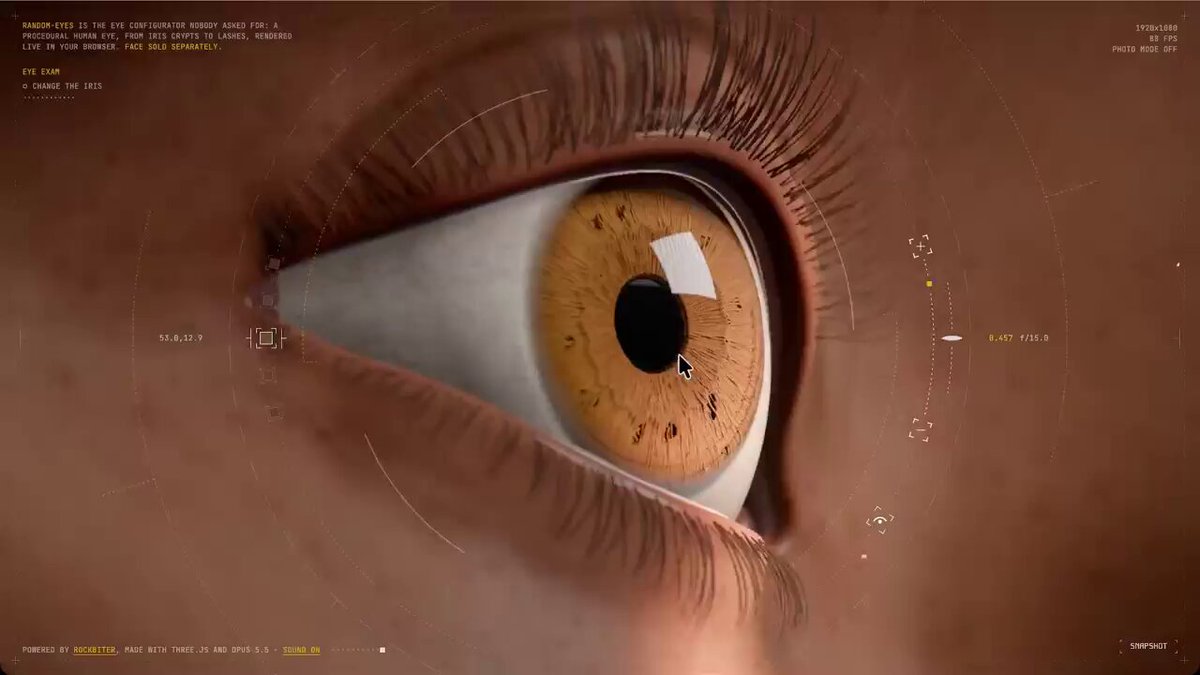
Hyper-realistic ocular rendering in the browser by graphics specialist Gianluca Lomarco. Abandoning flat texture tricks, it renders a true 3D volumetric iris via raymarching through micro-fibers, calculating physically accurate dual-surface corneal refractions. 💡 **Quick Take:** Dispensing with flat texture shortcuts, volumetric raymarching and dual corneal refractions capture the very soul of the eye in a masterwork of web graphics.
 8 Likes
DesignPass, a library of 3D and WebGL UI components for React
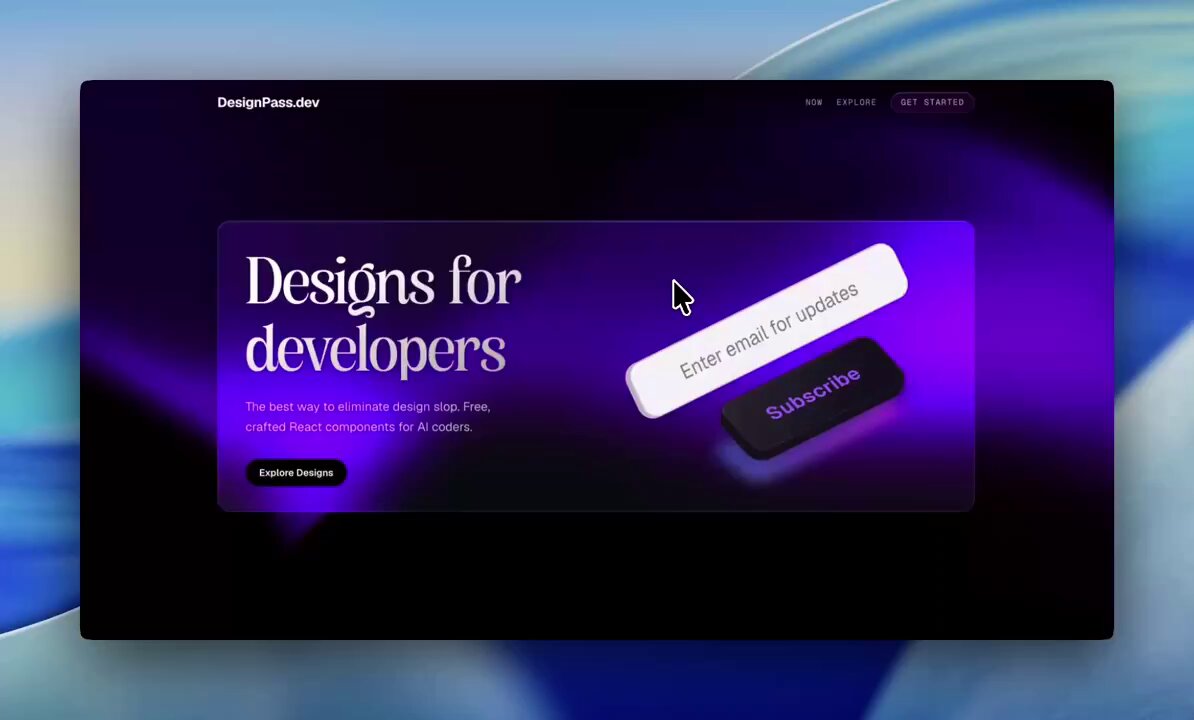
A curated spotlight on DesignPass, an online UI component repository tailored for Next.js and React ecosystems. It features a rich collection of 3D and WebGL motion components—from interactive 3D micro-interaction buttons to immersive fluid simulation backgrounds. Developers can tweak shader parameters and lighting angles in real time in the browser, then copy production-ready shader and component code with a single click. 💡 **Highlight:** A WYSIWYG WebGL creative component toolkit that seamlessly brings complex 3D fluids and custom shaders into modern React workflows.
 1,913 Likes
Three.js Official Release R187
Milestone Three.js r187 release introducing native Meshlet geometry pipeline, overhauled WebGPU node materials, and TSL syntax upgrades for high-poly scenes.
 80 Likes
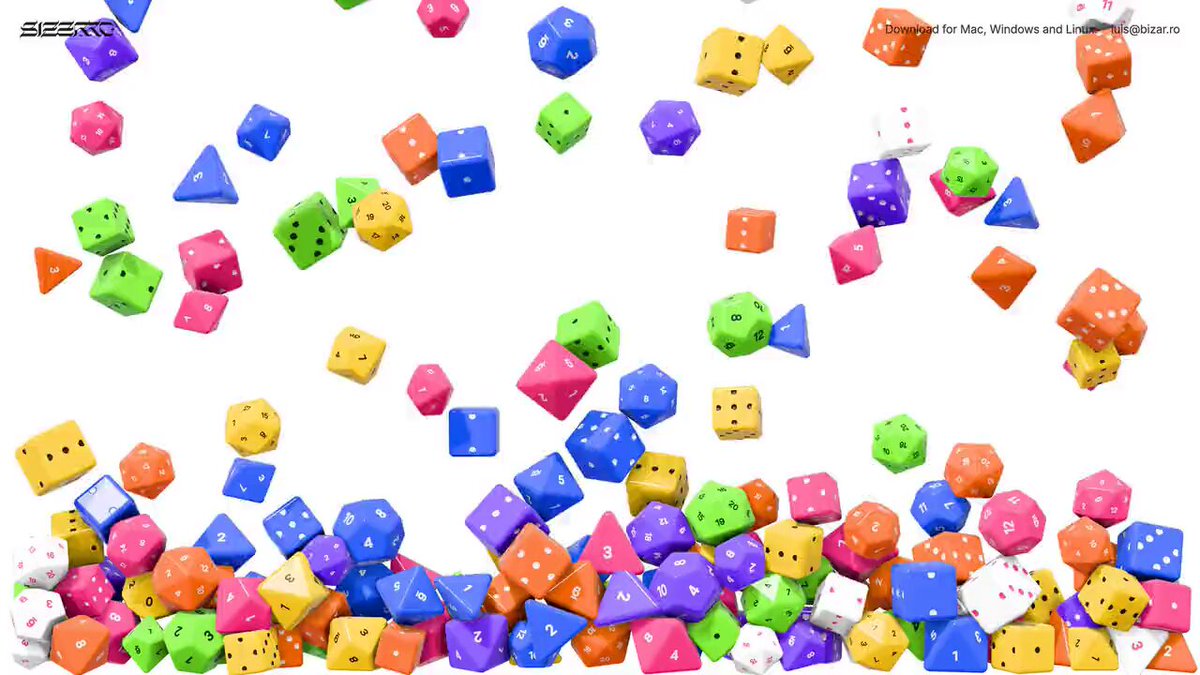
Luis Bizarro builds a GPU rigid-body cube simulation in WebGPU
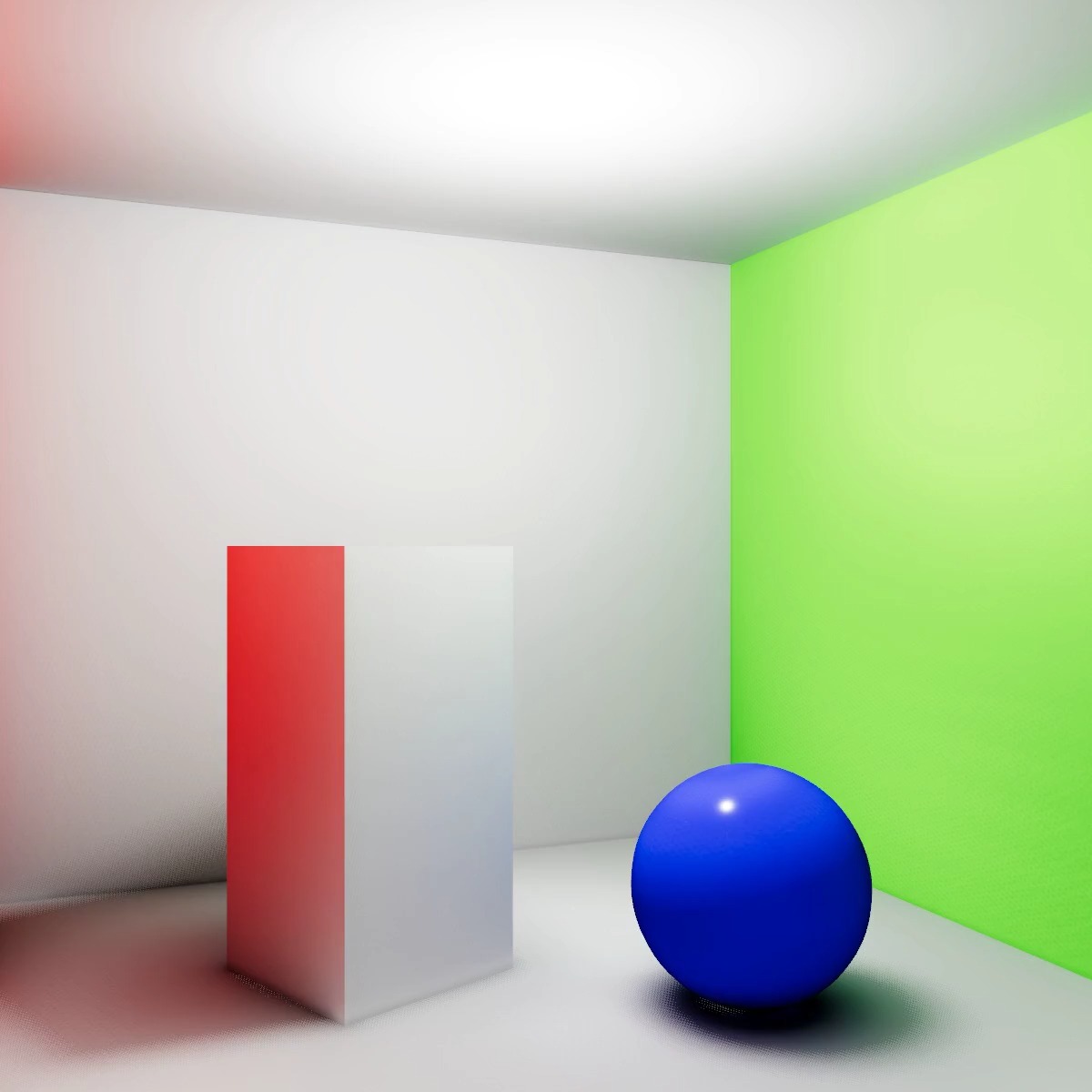
Creative frontend and graphics engineer Luis Bizarro presents a GPU-driven rigid-body simulation built with WebGPU and WGSL. Focusing on dynamic 3D cube collisions and spatial bin packing, the entire pipeline—broadphase grid acceleration, narrowphase collision detection, and position Verlet integration—runs inside compute shaders, handling hundreds of falling dice with negligible CPU overhead. 💡 **Highlight:** End-to-end compute shader physics demonstrates WebGPU's immense performance advantage for compute-heavy collision dynamics.
Related Three.js Examples
More projects that share this one's topics
 15 Likes
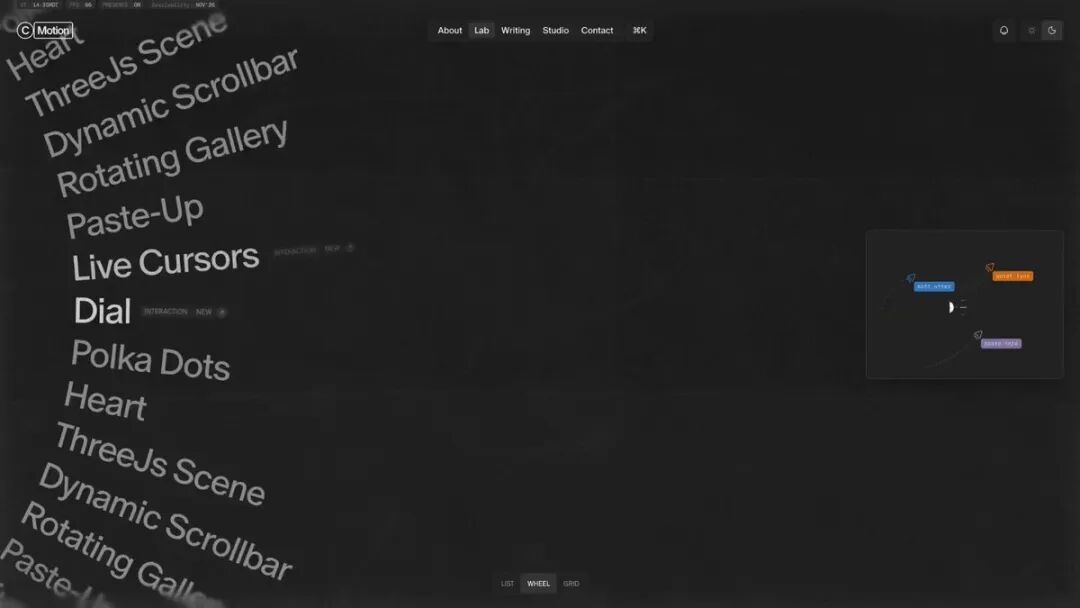
Crnacura's Seam Transitions for Codrops, a WebGL scroll study
Codrops contributor crnacura showcases 'Seam Transitions', a cutting-edge web motion study focused on the boundaries where page sections meet during scrolling. Using WebGL vertex displacement shaders, the seam dynamically stretches, ripples, and folds like organic fabric, replacing rigid horizontal dividers with continuous fluid transitions. 💡 **Highlight:** Transforming microscopic layout seams into organic, elastic canvases with lightweight shaders that lend websites a tactile, breathing feel.
 26 Likes
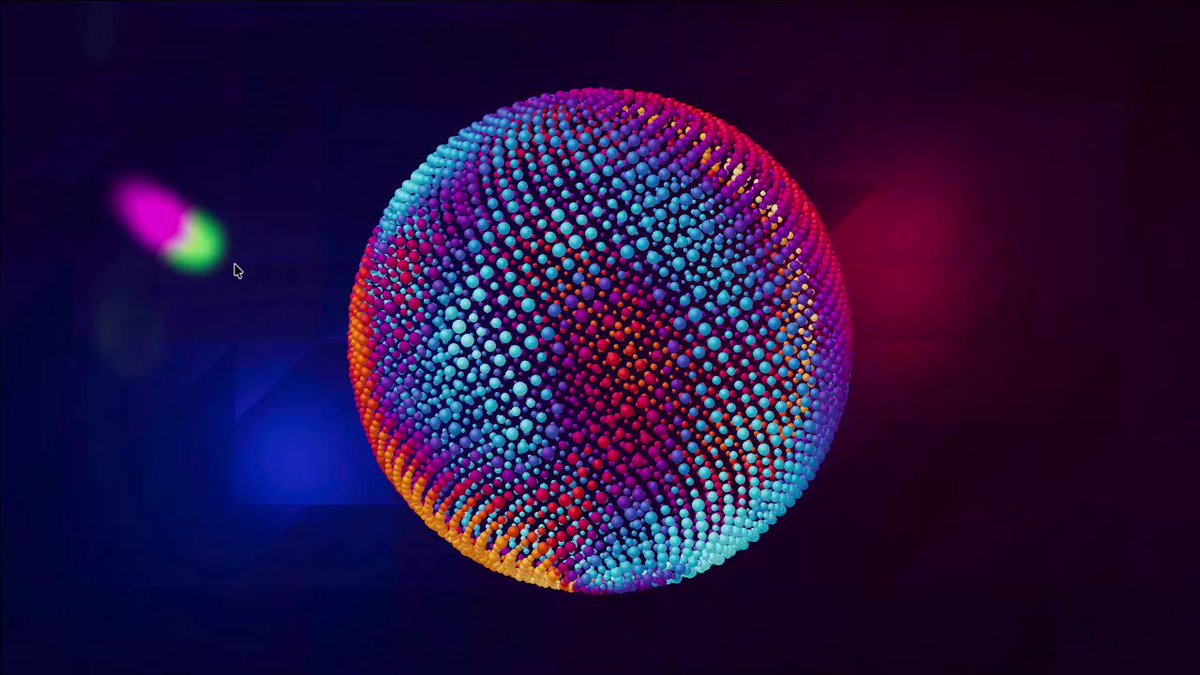
GSAP highlights Carter Ogunsola's portfolio with WebGL fluid shaders
GSAP highlights Carter Ogunsola's avant-garde portfolio site, orchestrating GSAP ScrollTrigger, Flip layout transitions, and Three.js WebGL fluid displacement shaders. Blending editorial magazine typography with 3D fluid distortions, the layout creates a tactile, responsive browsing experience. 💡 **Highlight:** A masterclass in merging GSAP scroll timelines with Three.js fluid shaders, setting a premier benchmark for creative brand typography.
 503 Likes
Artem Korenevych's three-fluid-fx, drop-in fluid effects for Three.js
three-fluid-fx is a drop-in 2D fluid solver for Three.js by Artem Korenevych, for GLSL/WebGL and TSL/WebGPU. It adds cursor-driven overlays, distortion, reveal masks and GPGPU particle displacement, with more than 20 post-processing effects.
 15 Likes
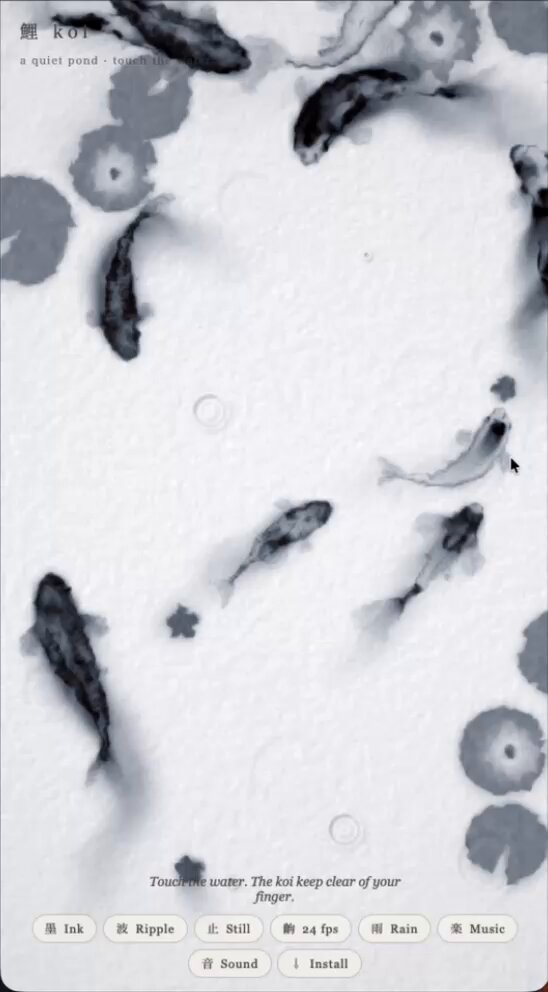
Codevember Zen Koi Pond
Artistic 3D koi pond simulation driven by Boids flocking algorithms with real-time post-processing filters for ink-wash, watercolor, and photorealism.