
Crnacura's Seam Transitions for Codrops, a WebGL scroll study
By @crnacura • Curated • 15 likes on X
 Open Live Demo ↗
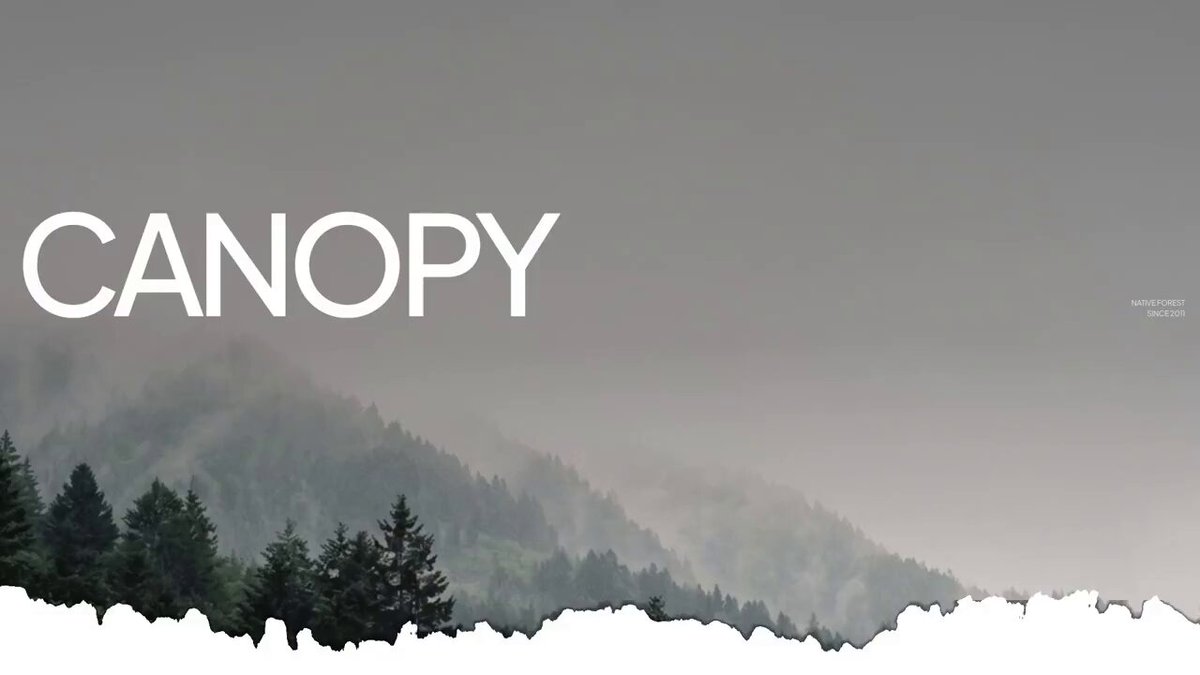
Codrops contributor crnacura showcases 'Seam Transitions', a cutting-edge web motion study focused on the boundaries where page sections meet during scrolling. Using WebGL vertex displacement shaders, the seam dynamically stretches, ripples, and folds like organic fabric, replacing rigid horizontal dividers with continuous fluid transitions.
💡 **Highlight:** Transforming microscopic layout seams into organic, elastic canvases with lightweight shaders that lend websites a tactile, breathing feel.
More Three.js Shaders
Projects curated around the same time in this topic
 80 Likes
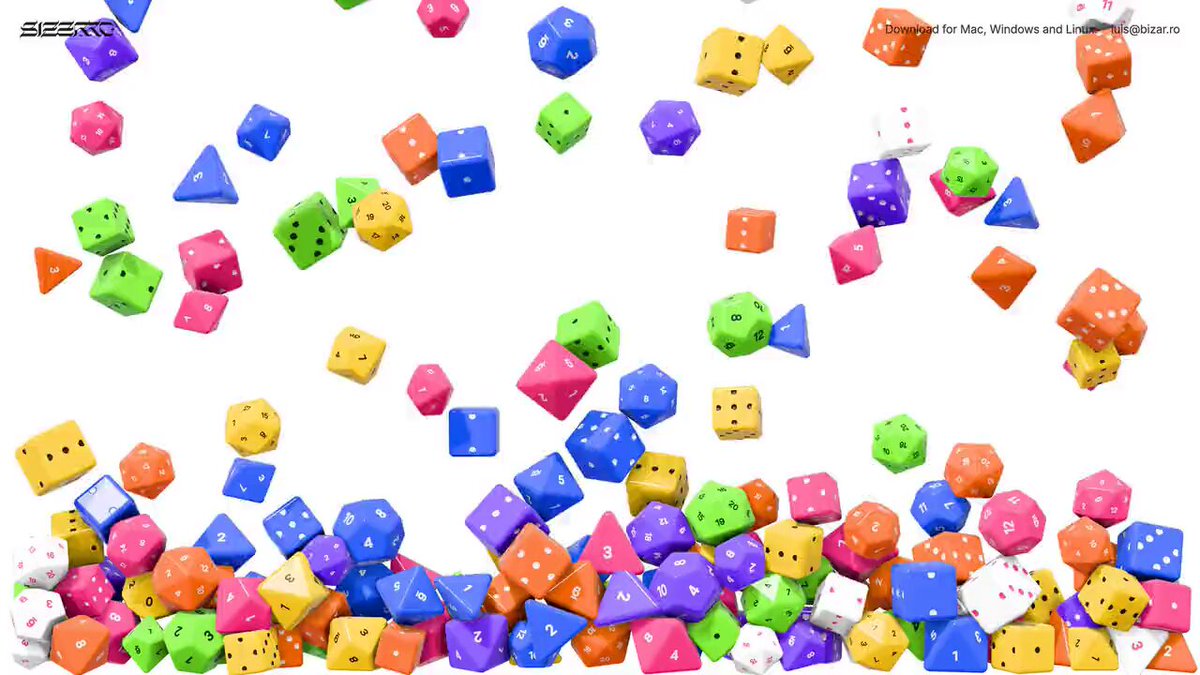
Luis Bizarro builds a GPU rigid-body cube simulation in WebGPU
Creative frontend and graphics engineer Luis Bizarro presents a GPU-driven rigid-body simulation built with WebGPU and WGSL. Focusing on dynamic 3D cube collisions and spatial bin packing, the entire pipeline—broadphase grid acceleration, narrowphase collision detection, and position Verlet integration—runs inside compute shaders, handling hundreds of falling dice with negligible CPU overhead. 💡 **Highlight:** End-to-end compute shader physics demonstrates WebGPU's immense performance advantage for compute-heavy collision dynamics.
 24 Likes
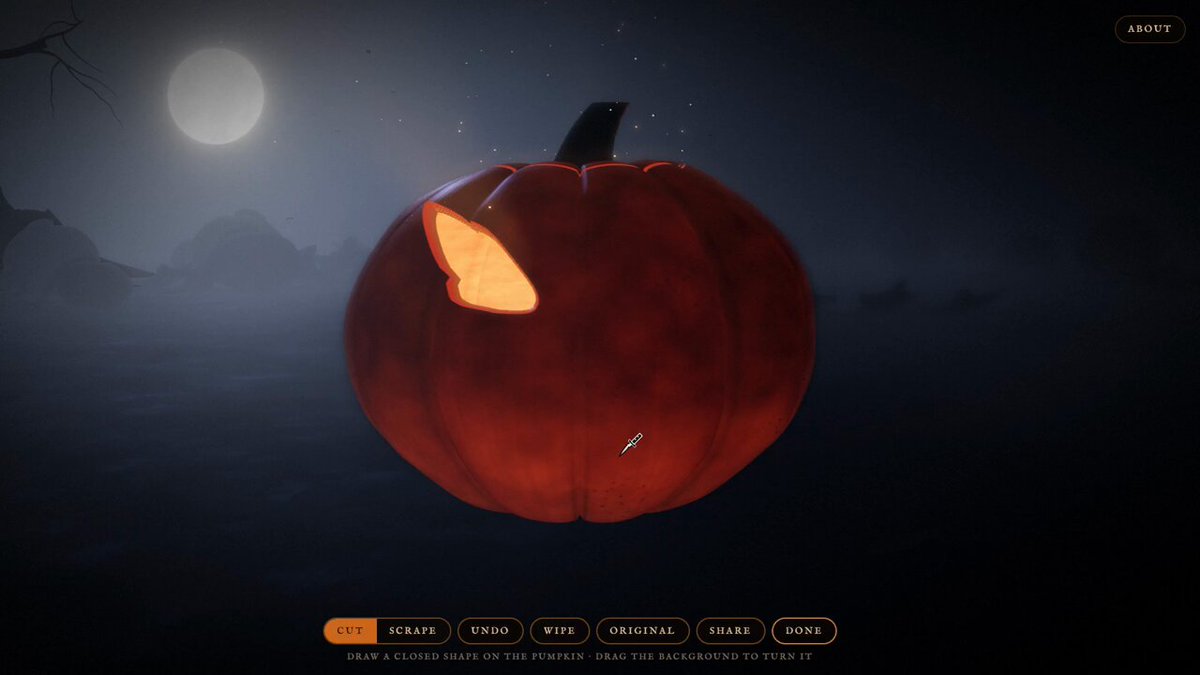
Jake Whiteley's pumpkin-carving experiment with WebGPU TSL
An interactive Halloween pumpkin-carving experiment powered by Three.js, WebGPU TSL shaders, and three-bvh-csg. Users can carve custom cuts and perforations into the pumpkin mesh in real time, with inner candlelight immediately streaming through newly hollowed geometry. 💡 **Highlight:** High-performance Constructive Solid Geometry (CSG) booleans running under WebGPU merge festive seasonal fun with cutting-edge real-time mesh carving.
 20 Likes
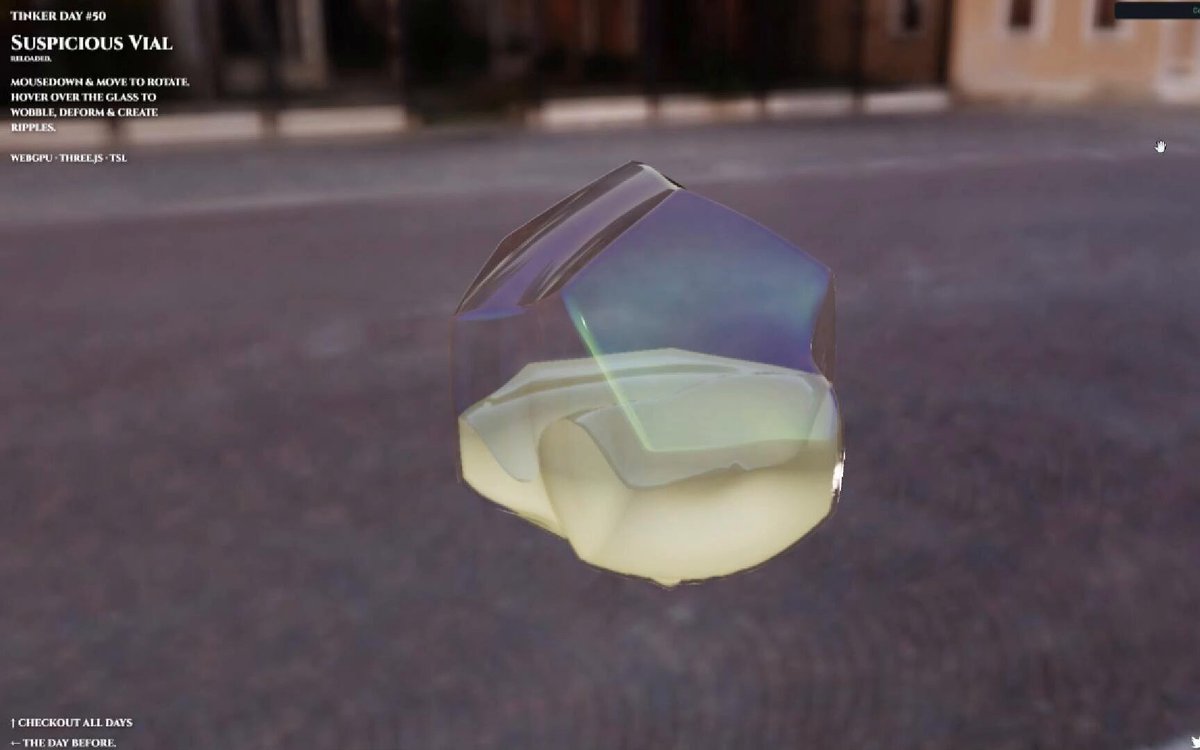
Classic Pure-glsl Potion Bottle Shader Modernized into WebGPU
A classic pure-GLSL potion bottle shader modernized into WebGPU using Three Shading Language (TSL). The port improves upon the original with thick glass surface refraction, spring-damped wobble elasticity, and buoyant liquid sloshing dynamics. 💡 **Highlight:** A textbook demonstration of migrating legacy GLSL into modular node-based TSL shaders, delivering rich dielectric refraction and fluid momentum.
 16 Likes
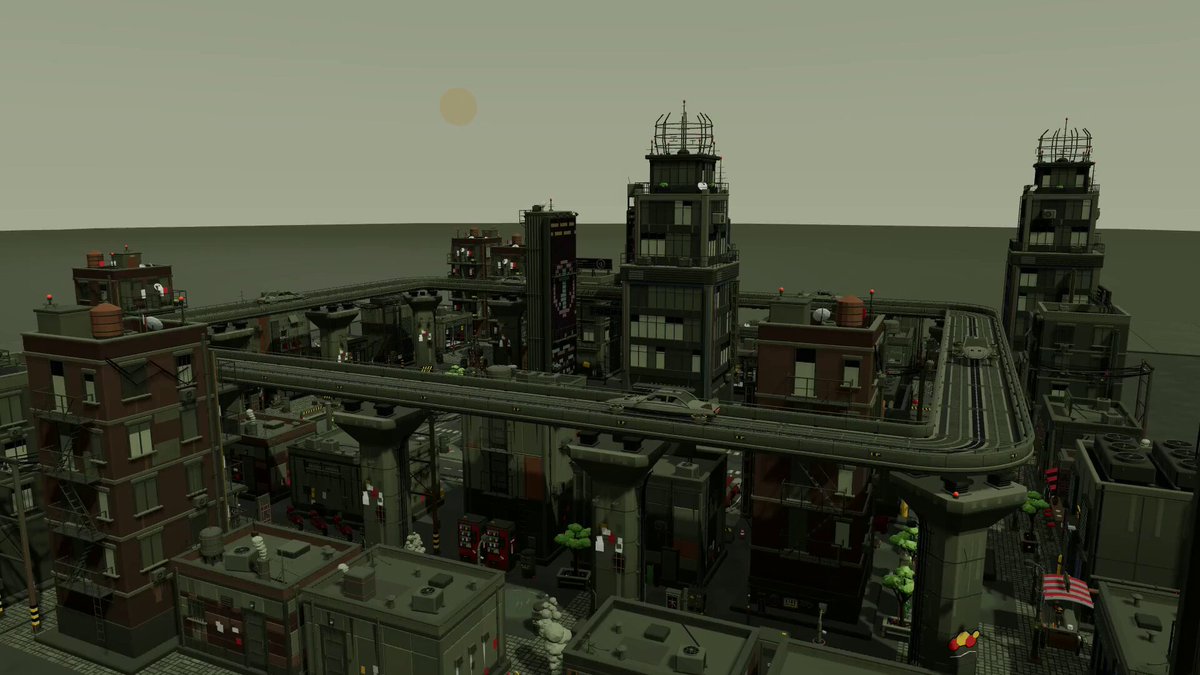
ThreeJS Assets builds a cyberpunk kit with neon but no bloom pass
The Three.js Assets team unveils an optimized cyberpunk 3D kit designed specifically for WebGL. Instead of relying on expensive full-screen post-processing bloom passes, each neon tube, window emission, and billboard display is modeled with carefully tuned emissive geometry and falloff gradients. 💡 **Highlight:** Replacing costly bloom passes with geometry-based emission techniques provides a battery-friendly, high-performance cyberpunk nightscape for low-end and mobile devices.
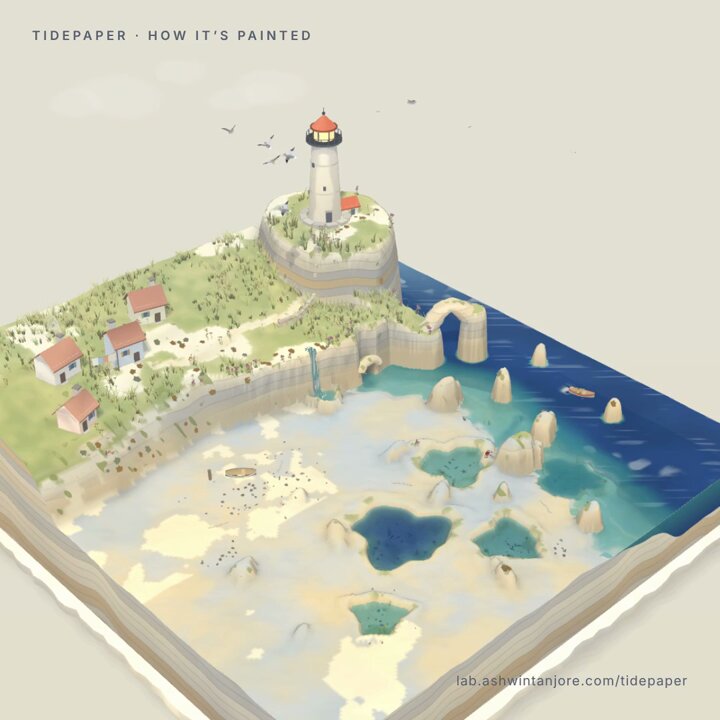
Tidepaper, an interactive watercolour coastline in the browser
Tidepaper by Ashwin Tanjore is an interactive watercolour coastline that runs in the browser: you can move the tide, change the weather and tap the tide pools. It is a single HTML file with no images; the paper, the bleed and the ink are all WebGPU shaders. He made it with Claude Opus 5.5.
 15 Likes
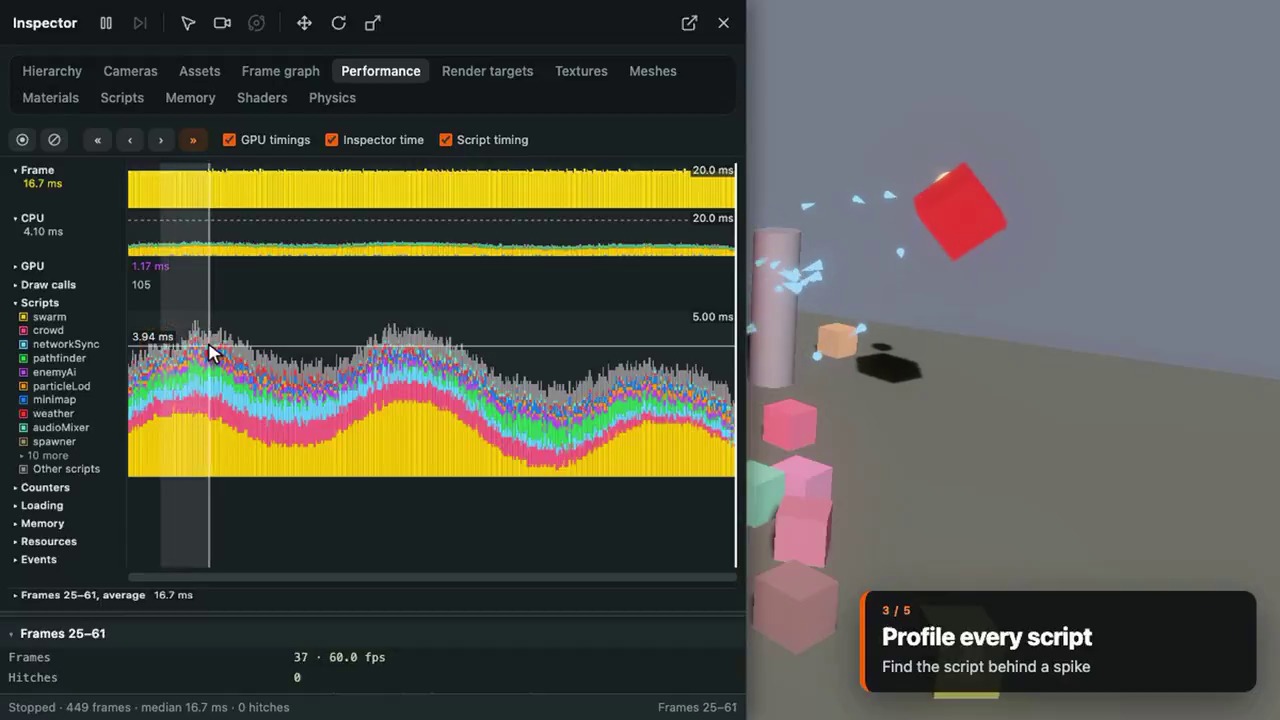
PlayCanvas adds a built-in performance profiler to its inspector
PlayCanvas VP Martin Valigursky introduces a built-in Performance Profiler inside the PlayCanvas inspector. It captures per-frame CPU and GPU timelines, tallies draw calls, tracks asset loading latencies, and renders interactive flame graphs to pinpoint script and shader bottlenecks in seconds. 💡 **Highlight:** Per-frame flame graphs and GPU workload visualization provide the missing diagnostic piece for optimizing high-end web games and 3D applications.
 1,216 Likes
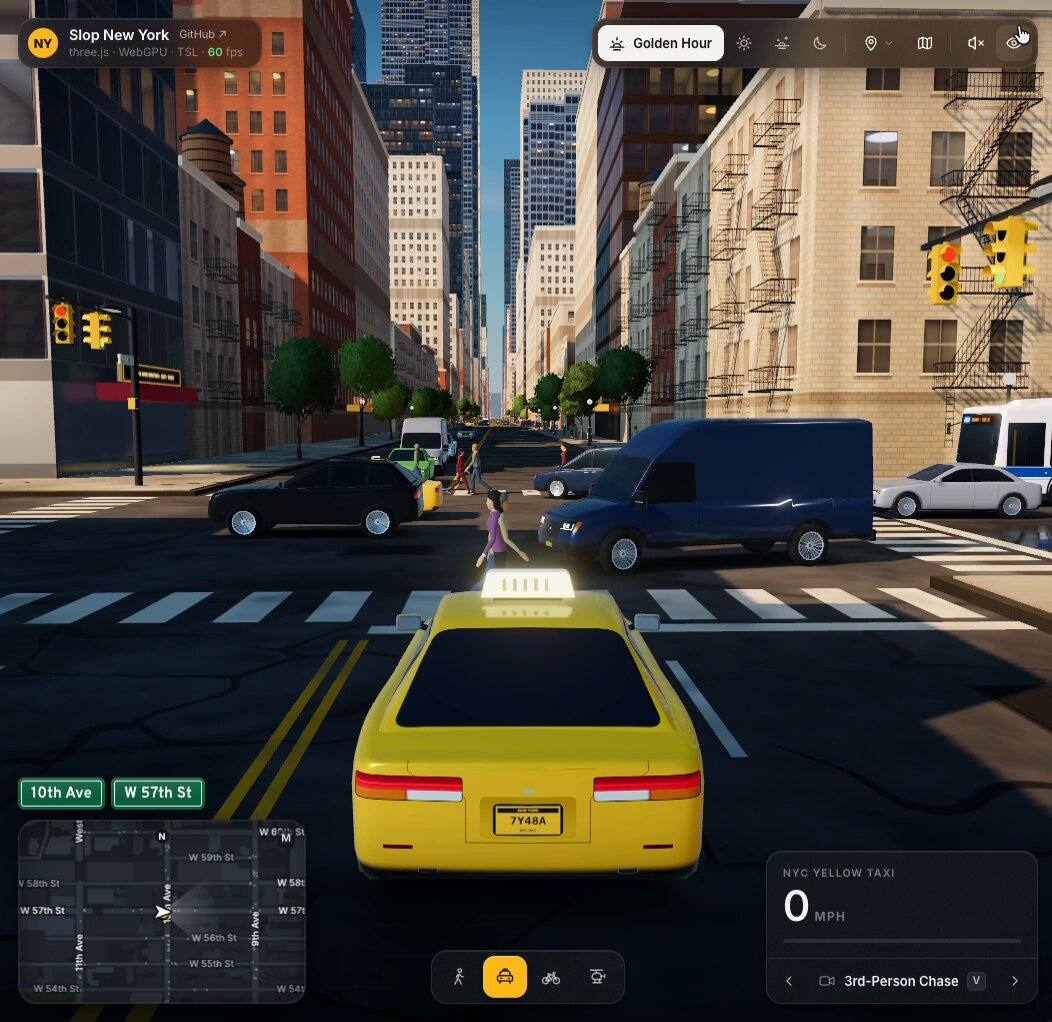
mrdoob's Slop New York, a drivable procedural Manhattan
Slop New York is mrdoob's GTA-style procedural Manhattan, from 125th Street to Battery Park, built with the Three.js WebGPURenderer and TSL. The latest version is more fun to drive around; the city and cars are generated at load time from a 2.2 MB download.
 122 Likes
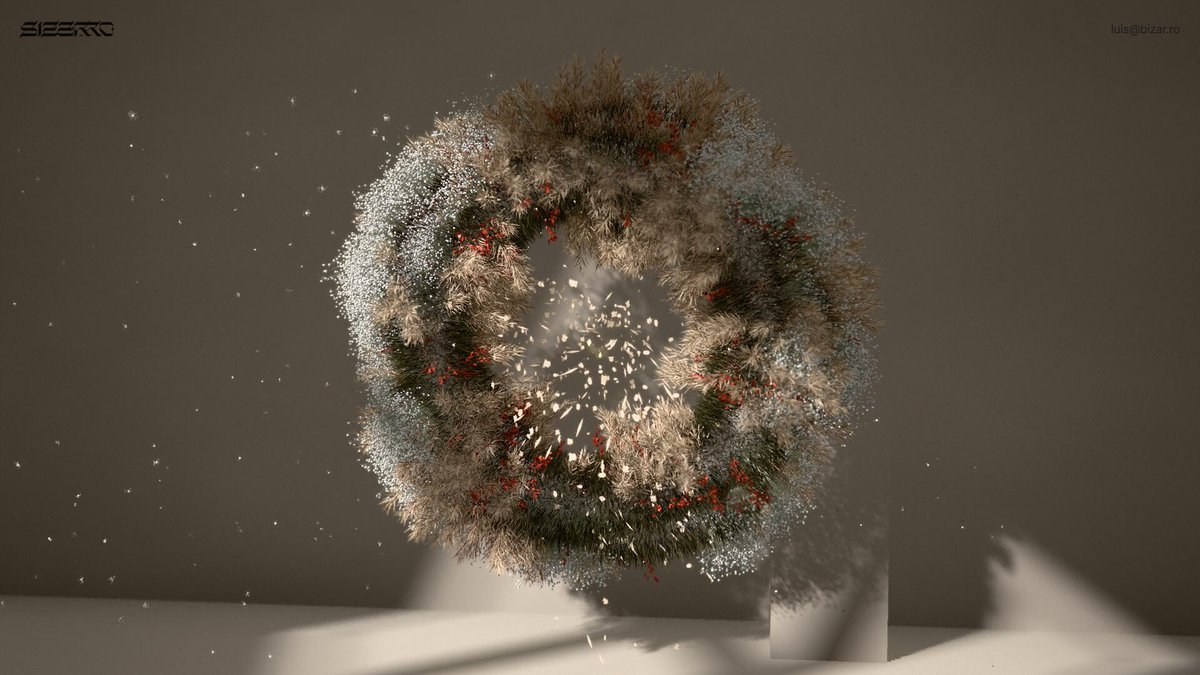
Luis Bizarro's photorealistic nature study in WebGPU and WGSL
Creative coder Luis Bizarro unveils a photorealistic nature rendering study driven by WebGPU and WGSL. Simulating blooming petals, wind-blown grass blades, contact shadows, and suspended airborne dust particles, the native WGSL pipeline captures the golden warmth of an afternoon garden. 💡 **Highlight:** Seamless coordination between WebGPU compute shaders and graphics pipelines simulates thousands of oscillating foliage blades with atmospheric lighting.
Related Three.js Examples
More projects that share this one's topics
 37 Likes
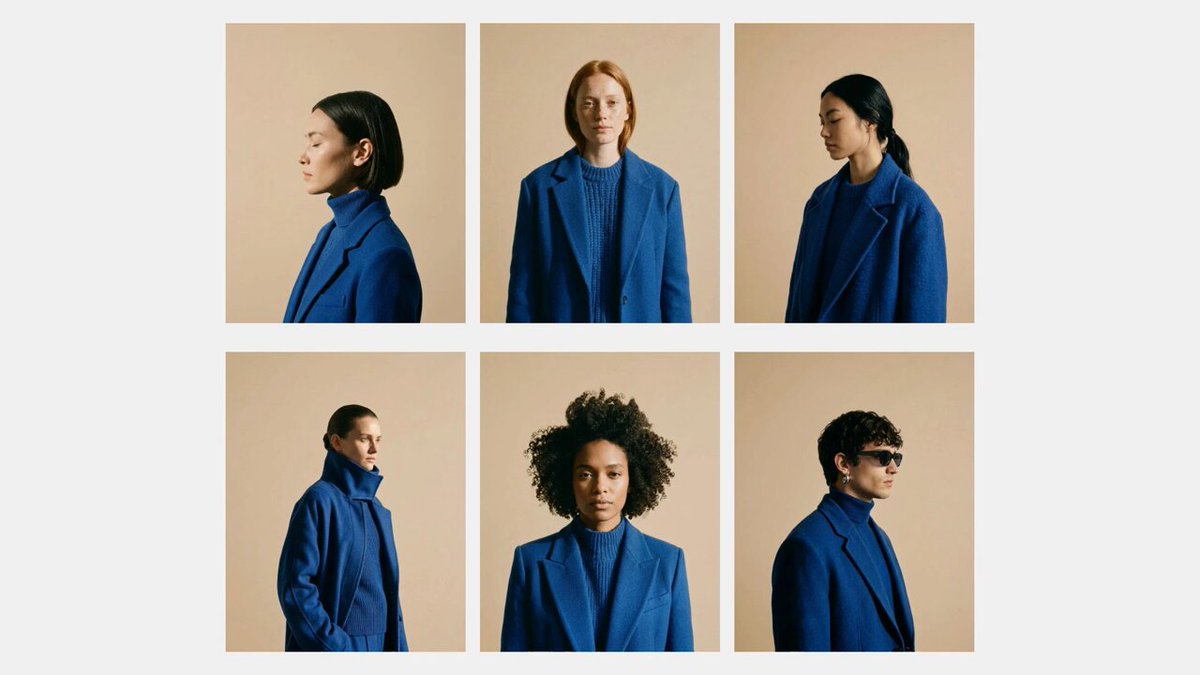
Codrops Lookbook Hover Effects: 8 WebGL Hover Interactions
"Lookbook Hover Effects" open-sourced by Codrops, featuring 8 distinct WebGL hover interactions tailored for fashion catalogs. Moving over cards triggers fluid liquid-glass distortion, realistic paper tearing with curling peels, or cathode-ray TV static transitions, fusing GSAP easing with custom fragment shaders. 💡 **Quick Take:** Liquid glass, curling paper peels, and retro cathode-ray static: Codrops elevates e-commerce lookbook hover micro-interactions to gallery-level digital art.
 8 Likes
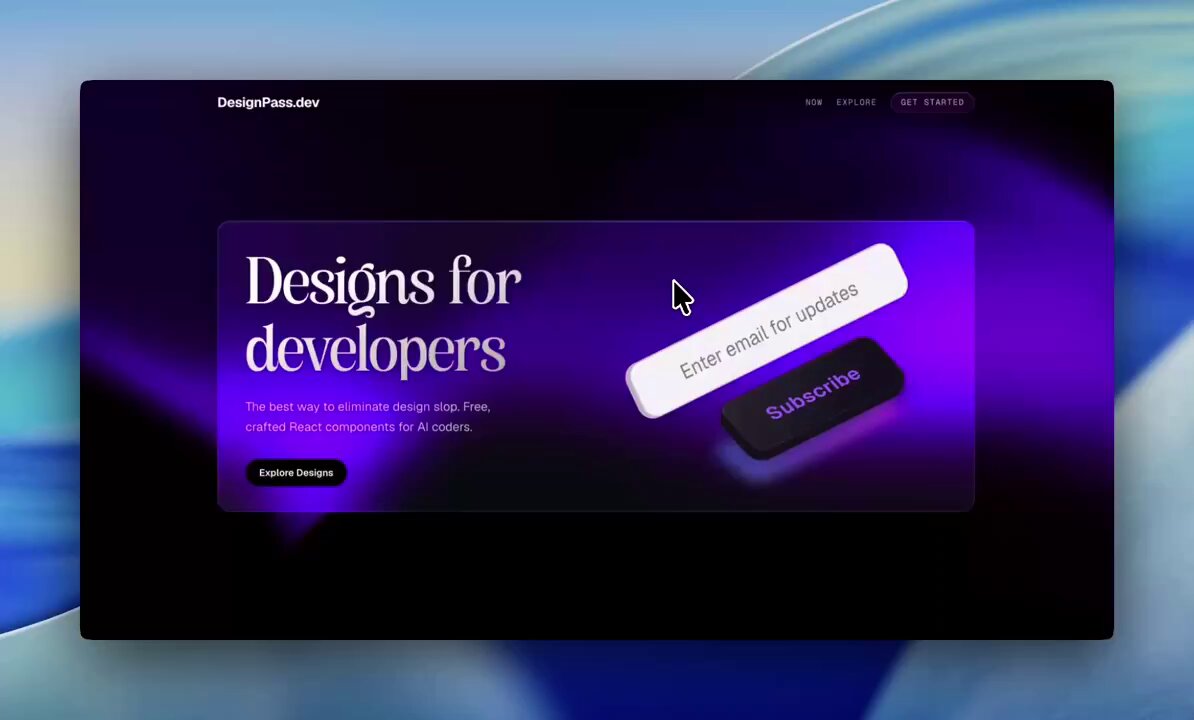
DesignPass, a library of 3D and WebGL UI components for React
A curated spotlight on DesignPass, an online UI component repository tailored for Next.js and React ecosystems. It features a rich collection of 3D and WebGL motion components—from interactive 3D micro-interaction buttons to immersive fluid simulation backgrounds. Developers can tweak shader parameters and lighting angles in real time in the browser, then copy production-ready shader and component code with a single click. 💡 **Highlight:** A WYSIWYG WebGL creative component toolkit that seamlessly brings complex 3D fluids and custom shaders into modern React workflows.
 26 Likes
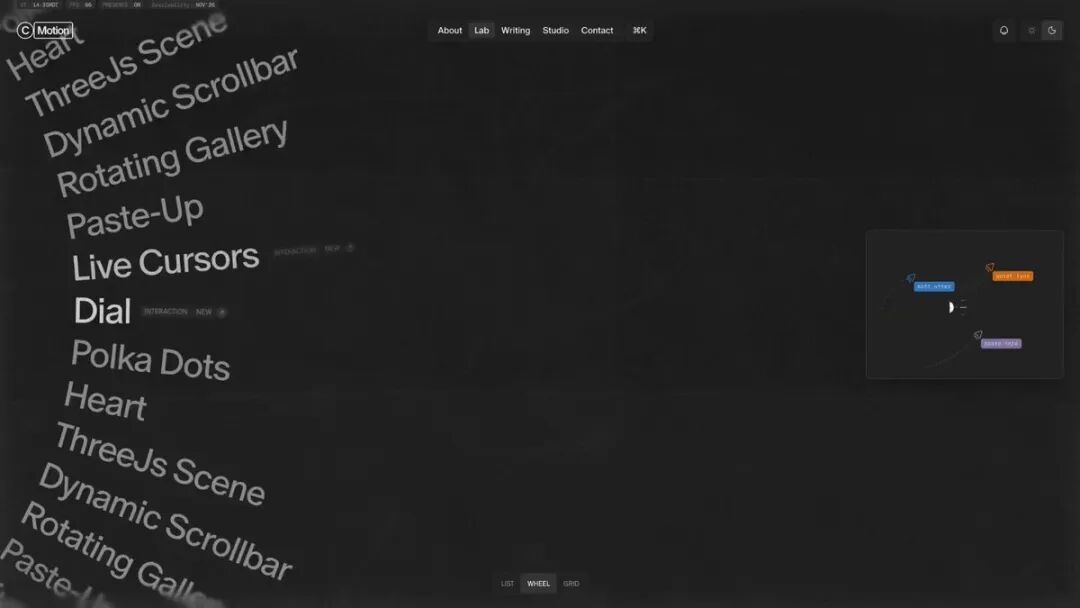
GSAP highlights Carter Ogunsola's portfolio with WebGL fluid shaders
GSAP highlights Carter Ogunsola's avant-garde portfolio site, orchestrating GSAP ScrollTrigger, Flip layout transitions, and Three.js WebGL fluid displacement shaders. Blending editorial magazine typography with 3D fluid distortions, the layout creates a tactile, responsive browsing experience. 💡 **Highlight:** A masterclass in merging GSAP scroll timelines with Three.js fluid shaders, setting a premier benchmark for creative brand typography.
 20 Likes
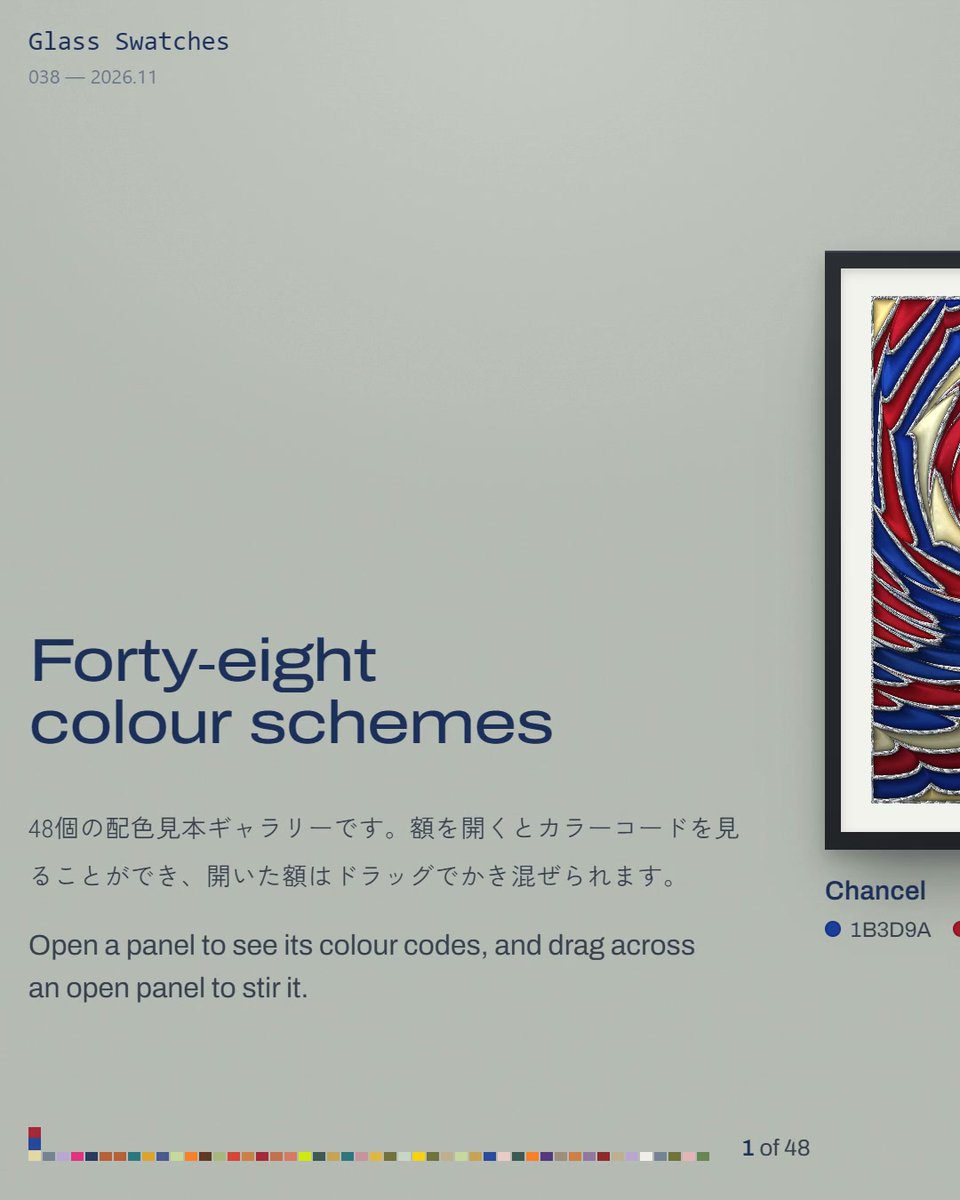
TONASY turns 48 color palettes into a WebGL 2 glass gallery
"Glass Swatches" (Motion Pieces #38) by Japanese creative developer TONASY, crafted in WebGL 2, GLSL, and TypeScript. 48 curated palettes are encapsulated within 3D glass specimen tiles, allowing users to inspect hex codes and drag cards together to mix their refractive liquid colors. 💡 **Quick Take:** 48 curated palettes preserved in WebGL 2 glass frames, blending optical refraction and color-mixing micro-interactions with refined Japanese aesthetics.