
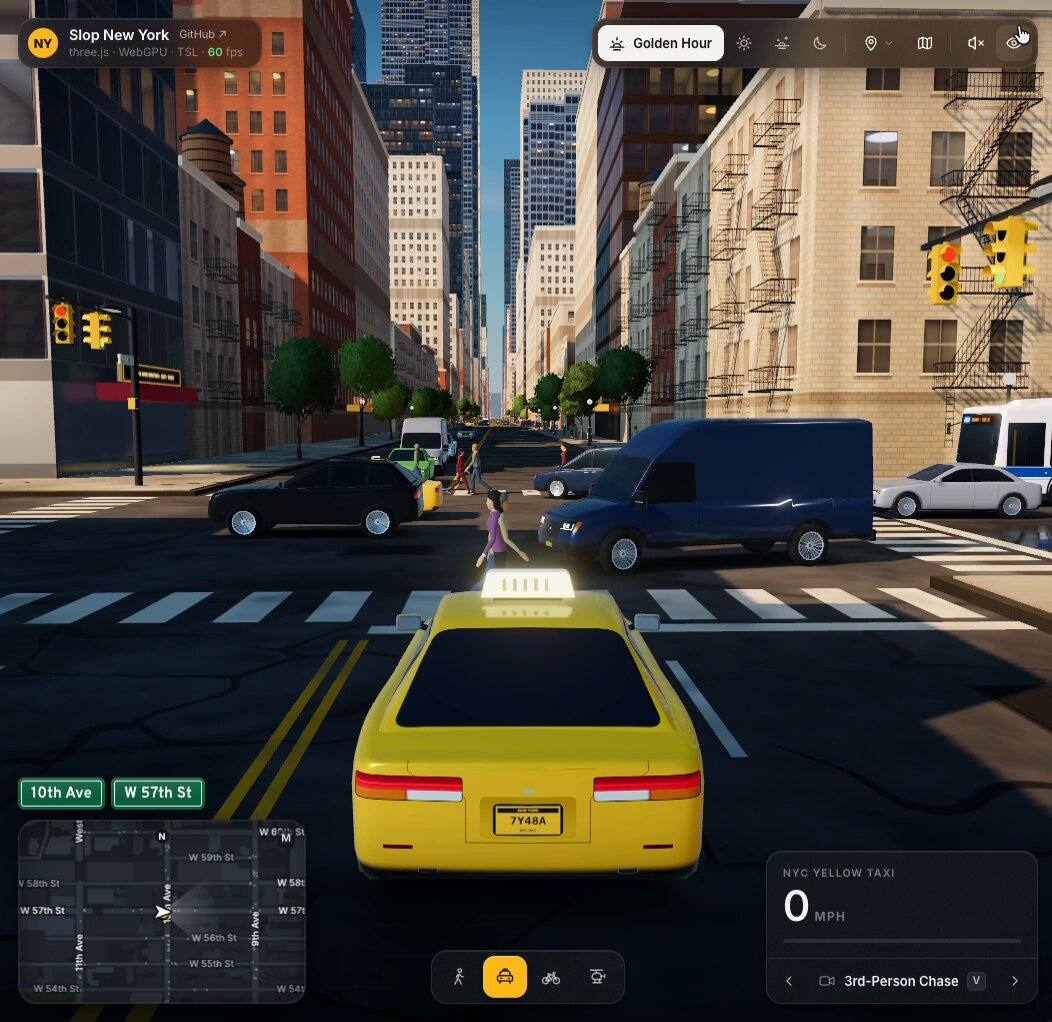
mrdoob's Slop New York, a drivable procedural Manhattan
By @mrdoob • Curated • 1,216 likes on X
 Open Live Demo ↗
Slop New York is mrdoob's GTA-style procedural Manhattan, from 125th Street to Battery Park, built with the Three.js WebGPURenderer and TSL. The latest version is more fun to drive around; the city and cars are generated at load time from a 2.2 MB download.
More from @mrdoob
Other projects by mrdoob
 137 Likes
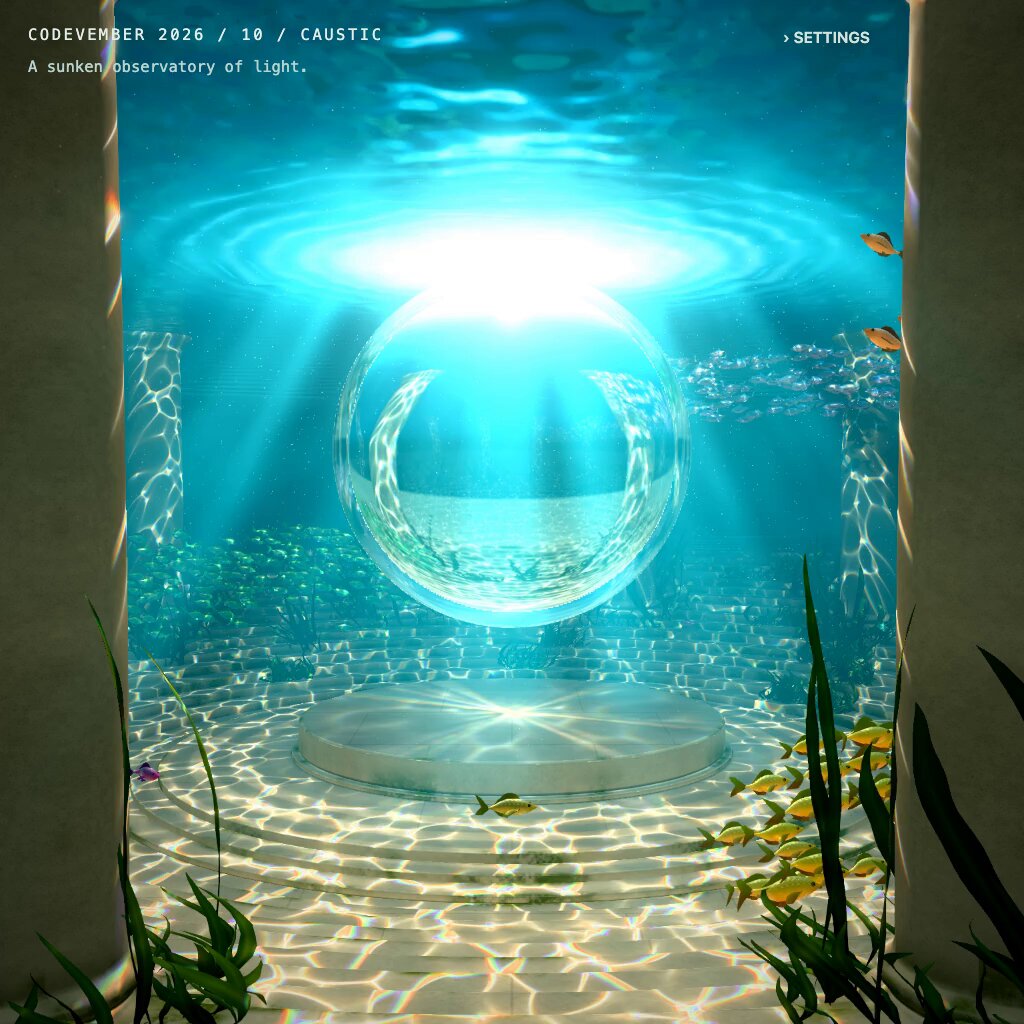
mrdoob releases Caustic for Codevember 2026
Three.js creator Ricardo Cabello (mrdoob) released Caustic for Codevember 2026, recreating hypnotic underwater refraction and caustic lighting.
 538 Likes
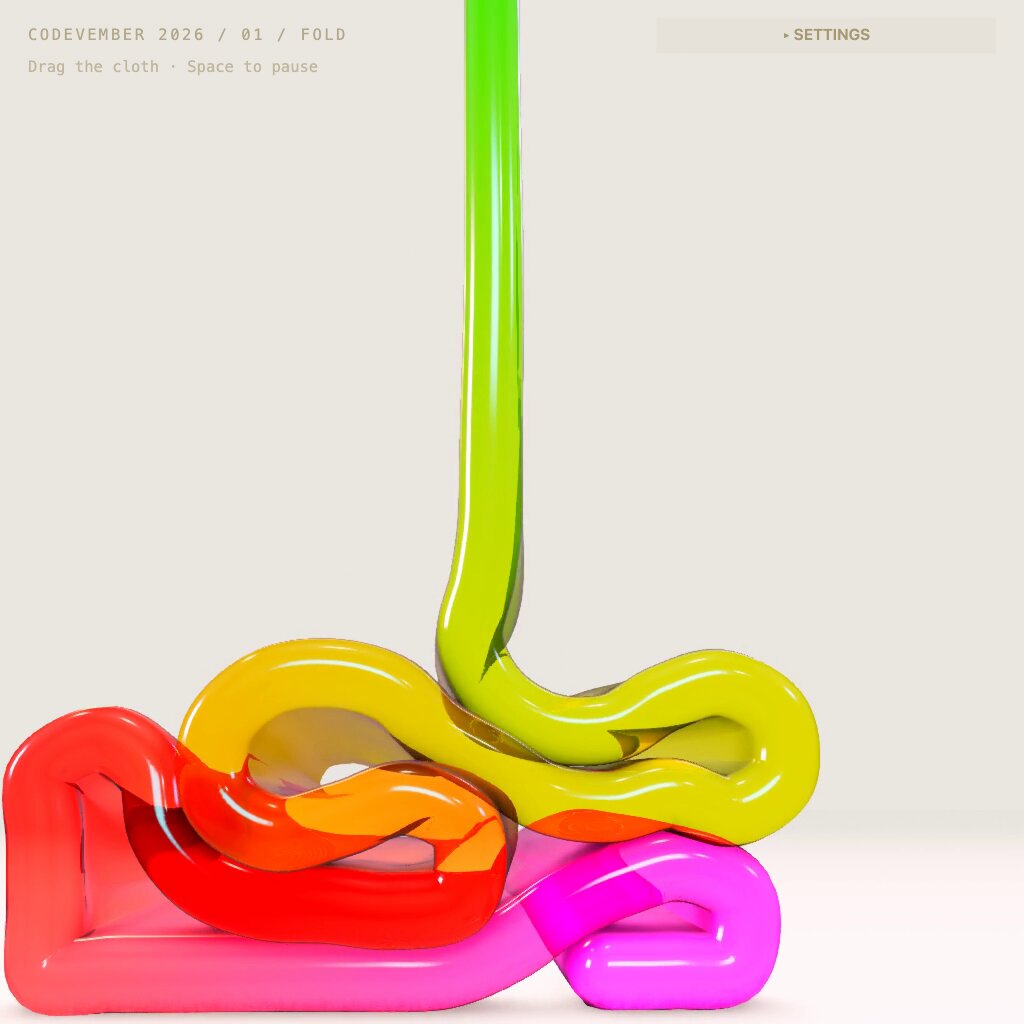
Codevember 2026 / 01 / Fold
Three.js creator mrdoob's dynamic origami polyhedron transformation with elegant topology matrix transformations and smooth normal reconstruction.
 2,144 Likes
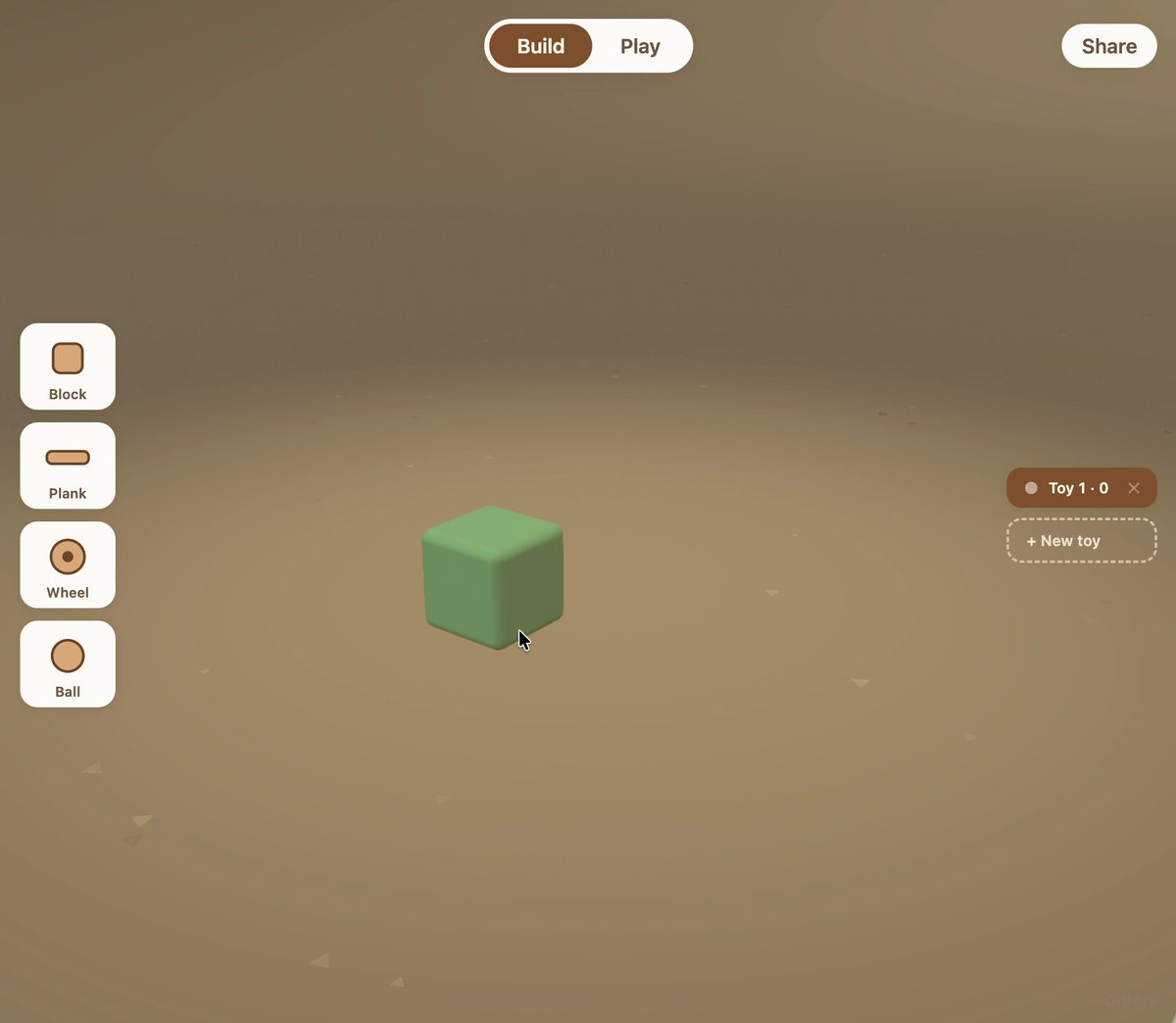
mrdoob makes a wooden toy maker with Fable and box3d.js
mrdoob made a toy maker with Claude Fable in a morning: snap wooden pieces together, make parts spin and watch your toy come alive. It uses box3d.js by Erin Catto and Isaac Mason for physics, and you can make your own toy or remix his.
 433 Likes
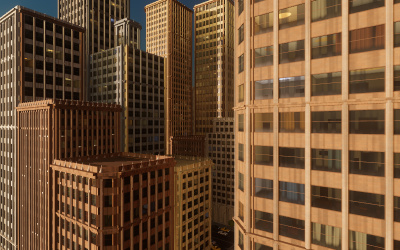
mrdoob's City Generator example adds store interiors and people
mrdoob keeps improving the official Three.js City Generator example: store interiors, better cars, trees and people, and new camera controls, with SSAO removed. The whole city is generated in about two seconds from a 4 MB download and runs at 40 FPS on a MacBook Air M1.
More Three.js Shaders
Projects curated around the same time in this topic
 16 Likes
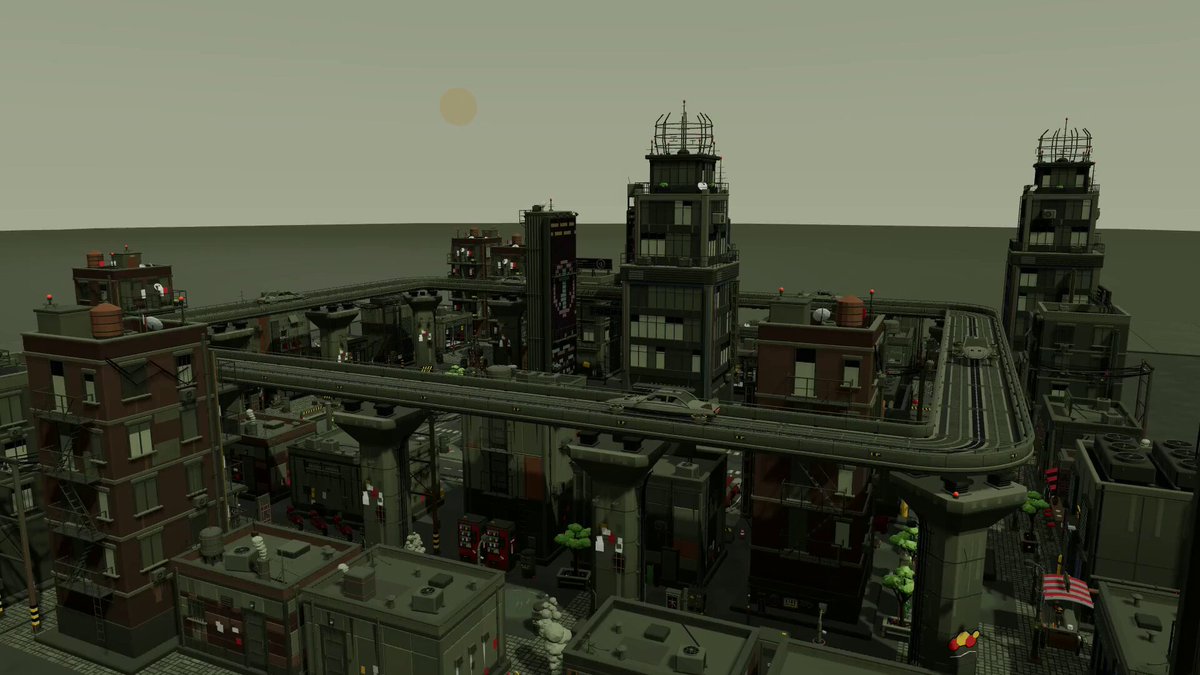
ThreeJS Assets builds a cyberpunk kit with neon but no bloom pass
The Three.js Assets team unveils an optimized cyberpunk 3D kit designed specifically for WebGL. Instead of relying on expensive full-screen post-processing bloom passes, each neon tube, window emission, and billboard display is modeled with carefully tuned emissive geometry and falloff gradients. 💡 **Highlight:** Replacing costly bloom passes with geometry-based emission techniques provides a battery-friendly, high-performance cyberpunk nightscape for low-end and mobile devices.
 15 Likes
Crnacura's Seam Transitions for Codrops, a WebGL scroll study
Codrops contributor crnacura showcases 'Seam Transitions', a cutting-edge web motion study focused on the boundaries where page sections meet during scrolling. Using WebGL vertex displacement shaders, the seam dynamically stretches, ripples, and folds like organic fabric, replacing rigid horizontal dividers with continuous fluid transitions. 💡 **Highlight:** Transforming microscopic layout seams into organic, elastic canvases with lightweight shaders that lend websites a tactile, breathing feel.
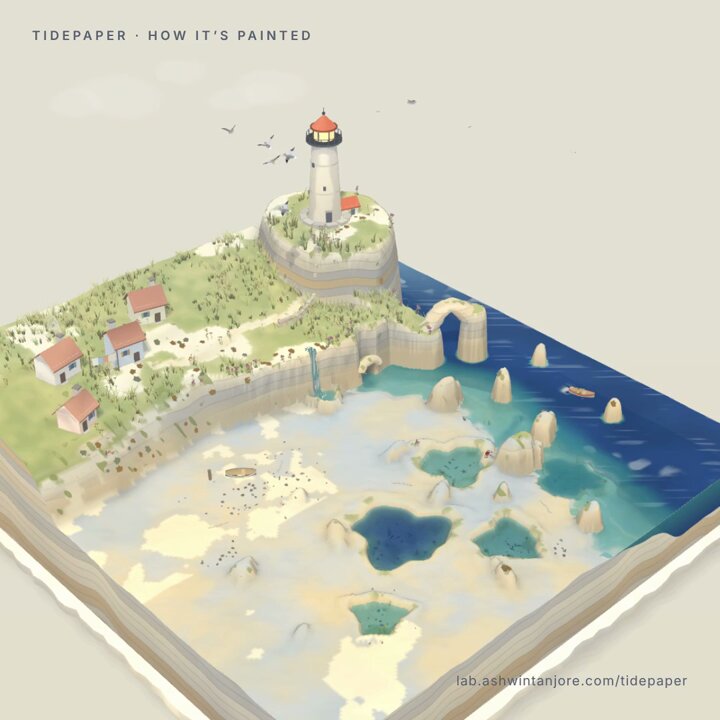
Tidepaper, an interactive watercolour coastline in the browser
Tidepaper by Ashwin Tanjore is an interactive watercolour coastline that runs in the browser: you can move the tide, change the weather and tap the tide pools. It is a single HTML file with no images; the paper, the bleed and the ink are all WebGPU shaders. He made it with Claude Opus 5.5.
 15 Likes
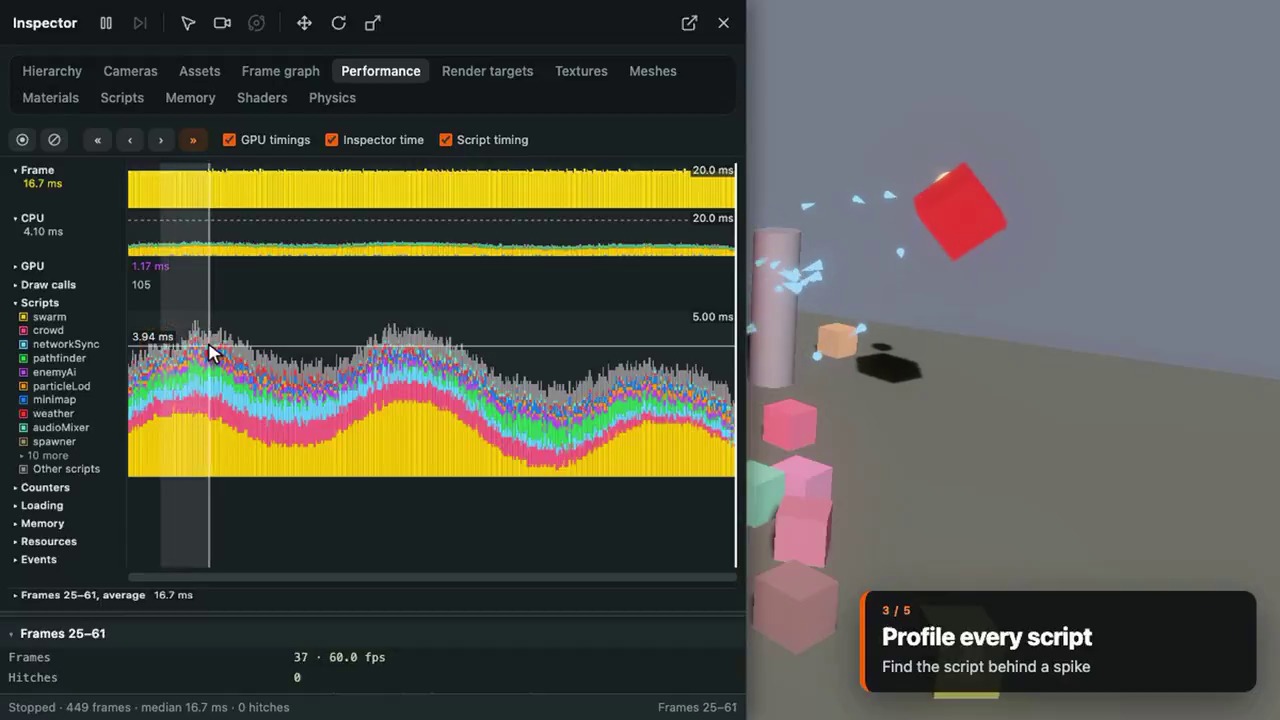
PlayCanvas adds a built-in performance profiler to its inspector
PlayCanvas VP Martin Valigursky introduces a built-in Performance Profiler inside the PlayCanvas inspector. It captures per-frame CPU and GPU timelines, tallies draw calls, tracks asset loading latencies, and renders interactive flame graphs to pinpoint script and shader bottlenecks in seconds. 💡 **Highlight:** Per-frame flame graphs and GPU workload visualization provide the missing diagnostic piece for optimizing high-end web games and 3D applications.
 122 Likes
Luis Bizarro's photorealistic nature study in WebGPU and WGSL
Creative coder Luis Bizarro unveils a photorealistic nature rendering study driven by WebGPU and WGSL. Simulating blooming petals, wind-blown grass blades, contact shadows, and suspended airborne dust particles, the native WGSL pipeline captures the golden warmth of an afternoon garden. 💡 **Highlight:** Seamless coordination between WebGPU compute shaders and graphics pipelines simulates thousands of oscillating foliage blades with atmospheric lighting.
 36 Likes
Martin Valigursky lights planets with Gaussian splats in PlayCanvas
PlayCanvas VP Martin Valigursky demonstrates volumetric planetary lighting using Gaussian Splats. Without proxy geometry, 3DGS point sets cast directly into directional shadow depth maps while interacting with atmospheric scattering shaders to generate dramatic volumetric crepuscular rays over micro-planet terrain. 💡 **Highlight:** Integrating Gaussian Splats directly into engine shadow maps and volumetric fog marks a pivotal milestone toward production-ready 3DGS gaming.
 6 Likes
Creative WGSL Piece Built on Webgpu
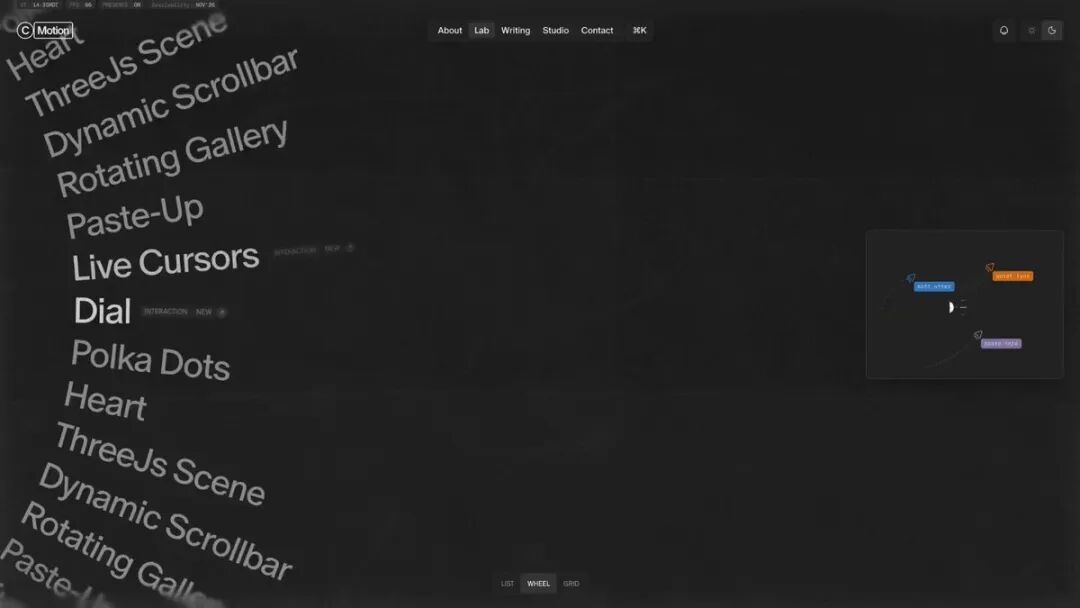
Generative artist sib shares 'Flowing Cells', a creative WGSL piece built on WebGPU. Utilizing differential wave equations, the compact shader simulates organic cellular membrane deformation, diffusion, mitosis, and luminous surface oscillation within an ambient fluid medium. 💡 **Highlight:** Elegant differential calculus running in WGSL compute transforms abstract math into a pulsating, living microscopic realm.
 26 Likes
GSAP highlights Carter Ogunsola's portfolio with WebGL fluid shaders
GSAP highlights Carter Ogunsola's avant-garde portfolio site, orchestrating GSAP ScrollTrigger, Flip layout transitions, and Three.js WebGL fluid displacement shaders. Blending editorial magazine typography with 3D fluid distortions, the layout creates a tactile, responsive browsing experience. 💡 **Highlight:** A masterclass in merging GSAP scroll timelines with Three.js fluid shaders, setting a premier benchmark for creative brand typography.
Related Three.js Examples
More projects that share this one's topics
 22 Likes
Slop Singapore, a Three.js city sim with self-driving navigation
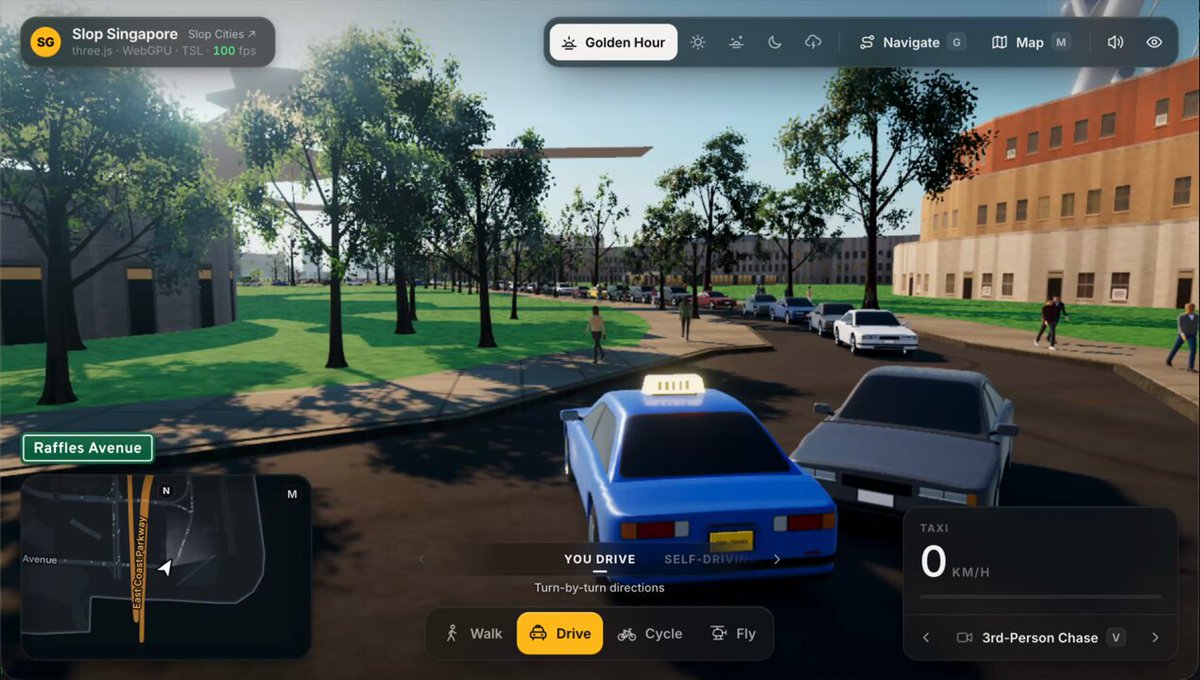
Slop Singapore is a city simulation built with Three.js where you can walk, drive, cycle or fly through real Singapore streets. The latest clip from BlurSpline shows turn-by-turn navigation and a self-driving mode, including a reckless one. The code is on GitHub.
 148 Likes
Greggman builds a zero-dependency procedural WebGPU metropolis
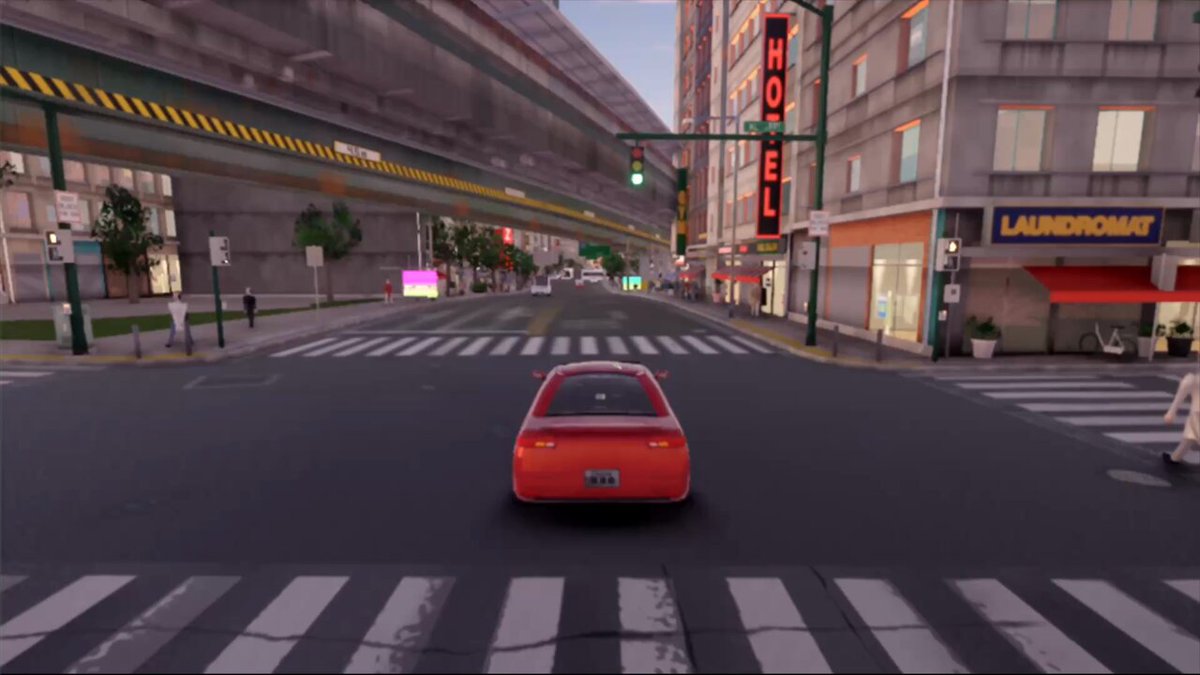
Zero-dependency procedural WebGPU metropolis by WebGL pioneer greggman, packing thousands of traffic vehicles, glowing tail-light trails, bridges, and weather precipitation into under 500KB of code.
 36 Likes
Wei Built a DJ-able Three.js Island Portfolio
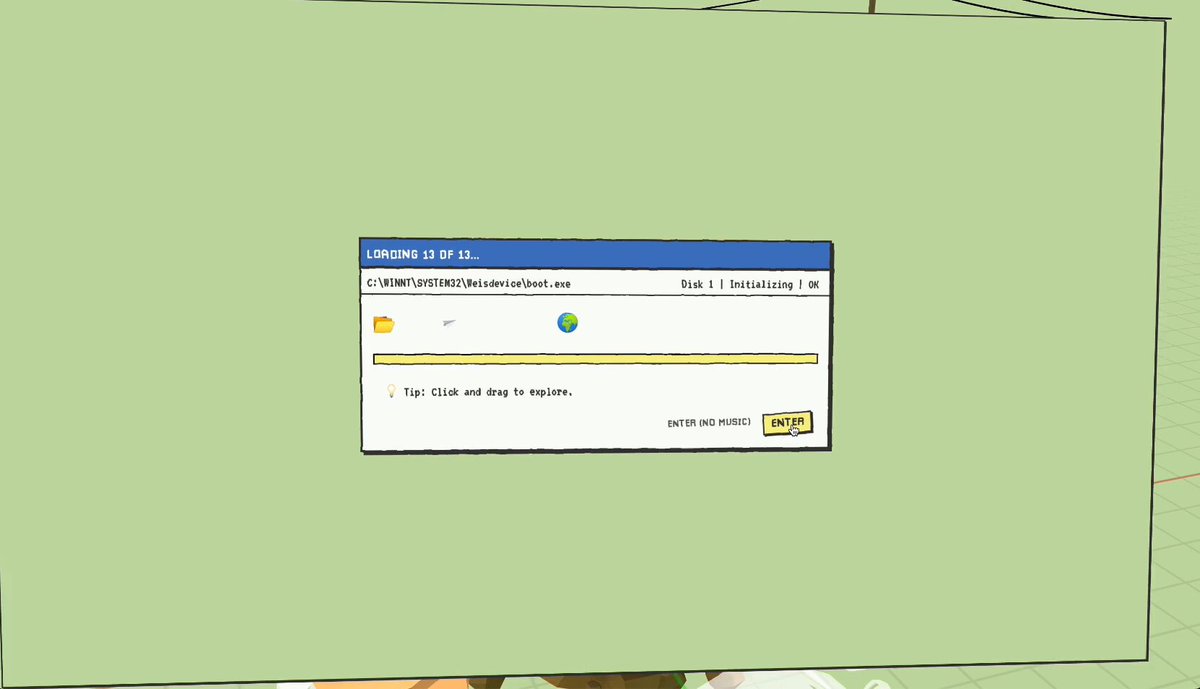
Wei ( @BeachSad2 ) built a portfolio you can actually DJ on. It is a tiny Three.js island with a half-broken robot, a Gameboy, and a deck that hands you cursed loops instead of clean ones. https://webgpu.com/daily/weisdevice-threejs-island #threejs #webgl #creativecoding #glsl #webdev
 358 Likes
Spark Engineering Team Introduces Spark Radix, an Experimental
WebVR pioneer Diego Marcos introduces Spark Radix, an experimental WebGPU 3D Gaussian Splatting engine architected to integrate seamlessly with Three.js. Radix bridges neural radiance representations with standard scene-graph pipelines, letting web developers render high-fidelity real-world scans directly in browsers. 💡 **Highlight:** Native Three.js compatibility drastically lowers the barrier for web developers adopting 3D Gaussian Splatting.