
Classic Pure-glsl Potion Bottle Shader Modernized into WebGPU
By @_pwd_ • Curated • 20 likes on X
 Open Live Demo ↗
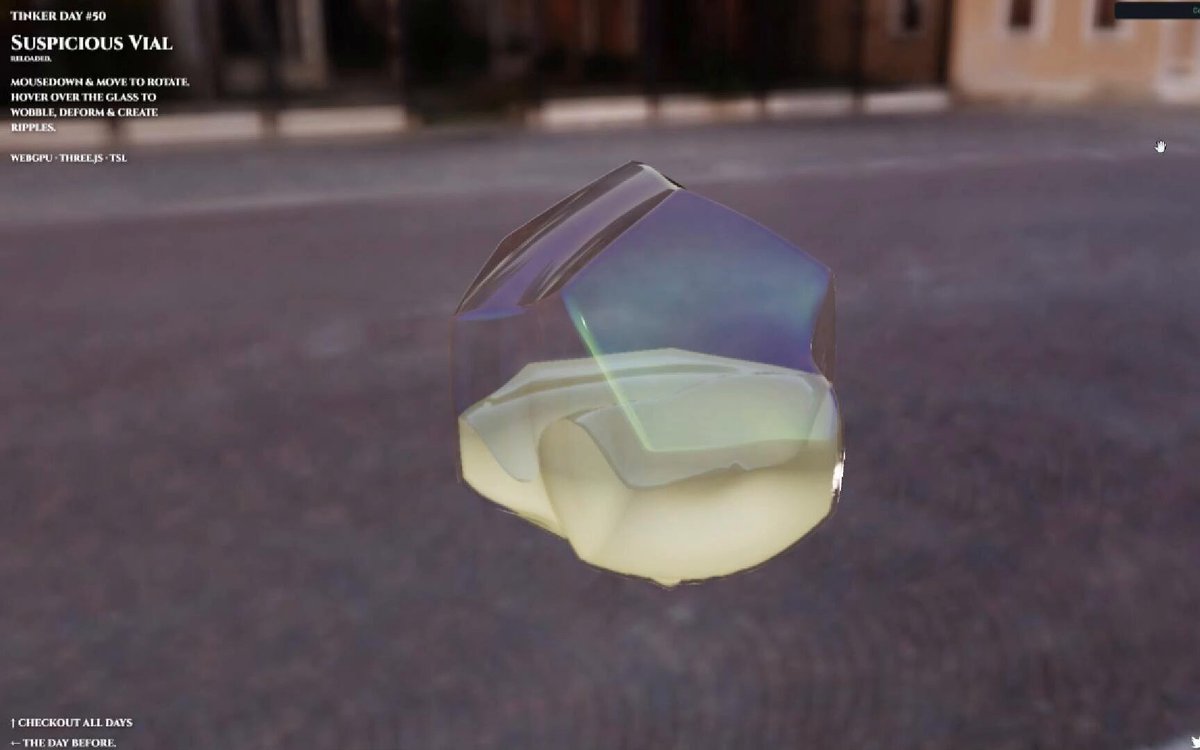
A classic pure-GLSL potion bottle shader modernized into WebGPU using Three Shading Language (TSL). The port improves upon the original with thick glass surface refraction, spring-damped wobble elasticity, and buoyant liquid sloshing dynamics.
💡 **Highlight:** A textbook demonstration of migrating legacy GLSL into modular node-based TSL shaders, delivering rich dielectric refraction and fluid momentum.
More from @_pwd_
Other projects by Frank Reitberger
 87 Likes
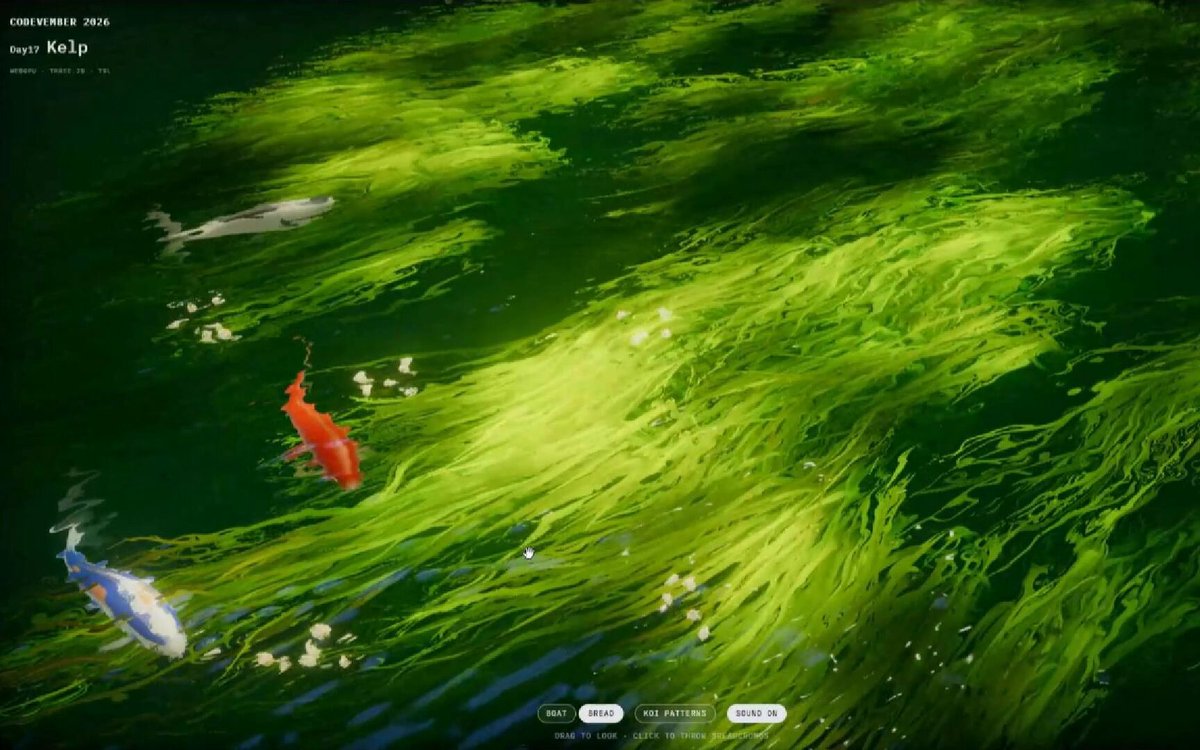
Frank Reitberger simulates an underwater kelp forest in WebGPU
Kelp is Frank Reitberger's Codevember 2026 day 17 piece: koi swim through a swaying underwater kelp forest, with on-screen controls to drag, add patterns and turn the sound on. It is built with Three.js, WebGPU and TSL shaders and runs live in the browser.
 15 Likes
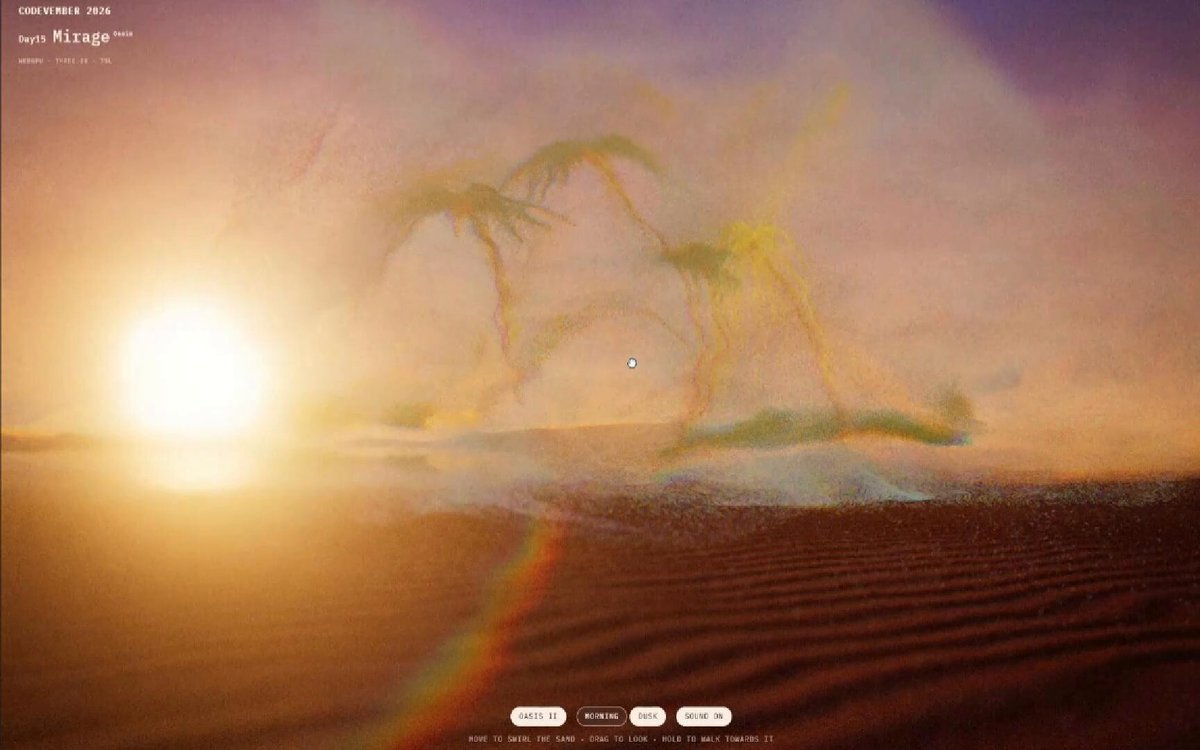
Frank Reitberger built Mirage for Codevember Day 15
Frank Reitberger built Mirage for Codevember Day 15 using Three.js TSL and WebGPU, featuring vibrant procedural light refraction and iridescent shader art.
 15 Likes
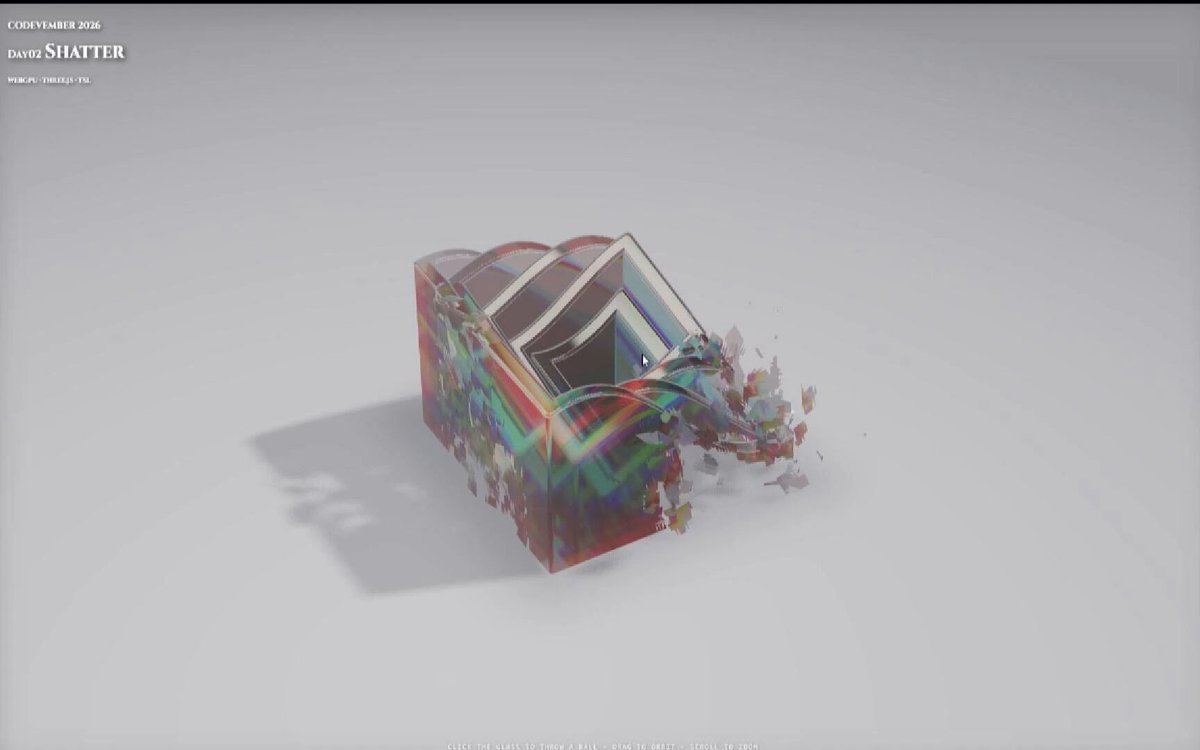
Frank Reitberger's WebGPU fracture and shockwave demo with audio
Audiovisual polygonal fracture and energy shockwave demo powered by WebGPU and WGSL, pushing raw GPU compute performance with dynamic shatter physics and synchronized audio-reactive particles.
 229 Likes
Ember Flow: Curl Noise in WebGPU and TSL
Ember flow. #threejs A little bit of evening exploring Curl-noise in WebGPU & TSL. Live: https://dasprinzip.com/tinker/day40/ Get the code here: https://github.com/prinzipiell/tsl #indiedev #gamedev #creativecoding #shaders #wgsl #webgpu #glsl #webgl #3d #tsl
More Three.js Shaders
Projects curated around the same time in this topic
 8 Likes
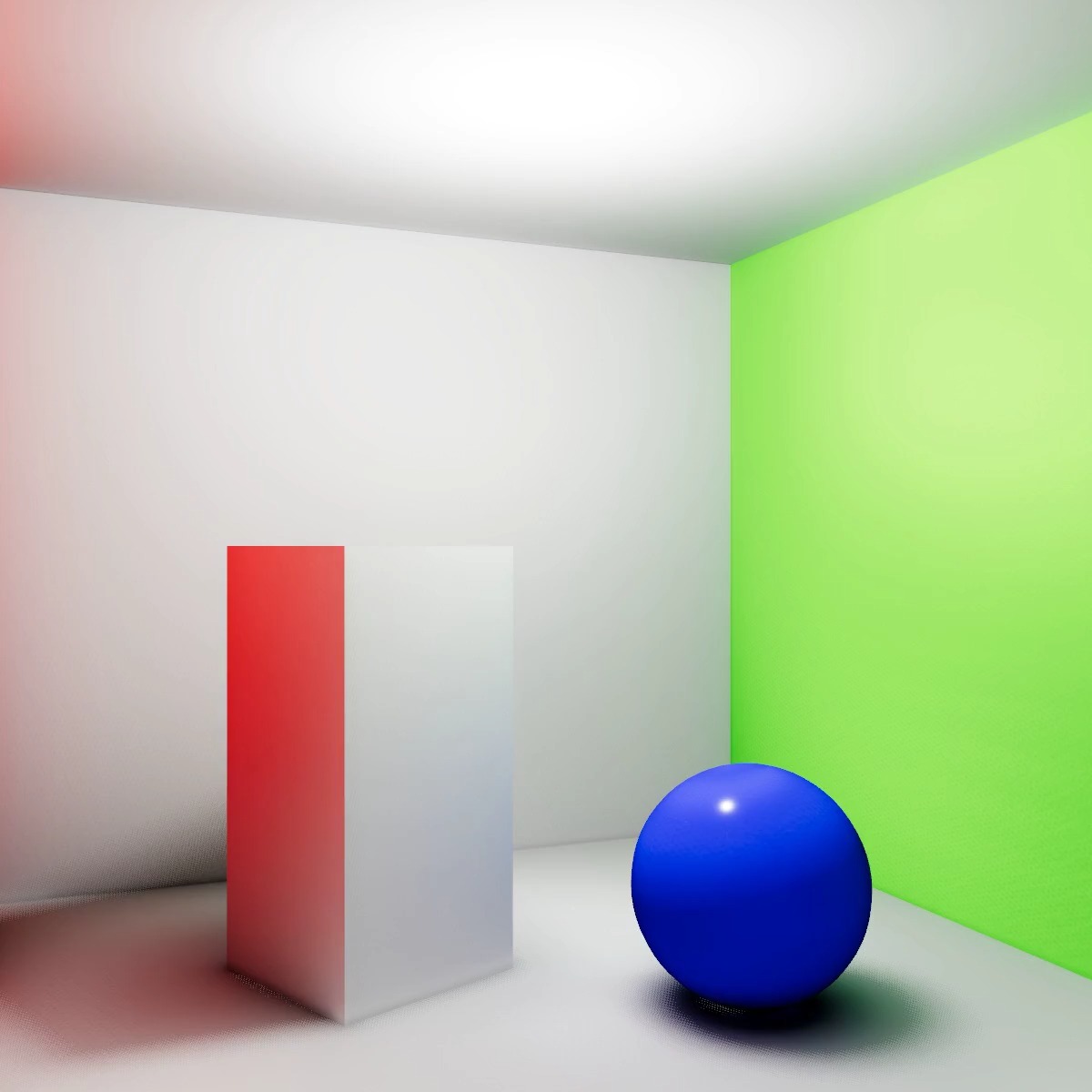
DesignPass, a library of 3D and WebGL UI components for React
A curated spotlight on DesignPass, an online UI component repository tailored for Next.js and React ecosystems. It features a rich collection of 3D and WebGL motion components—from interactive 3D micro-interaction buttons to immersive fluid simulation backgrounds. Developers can tweak shader parameters and lighting angles in real time in the browser, then copy production-ready shader and component code with a single click. 💡 **Highlight:** A WYSIWYG WebGL creative component toolkit that seamlessly brings complex 3D fluids and custom shaders into modern React workflows.
 1,913 Likes
Three.js Official Release R187
Milestone Three.js r187 release introducing native Meshlet geometry pipeline, overhauled WebGPU node materials, and TSL syntax upgrades for high-poly scenes.
 80 Likes
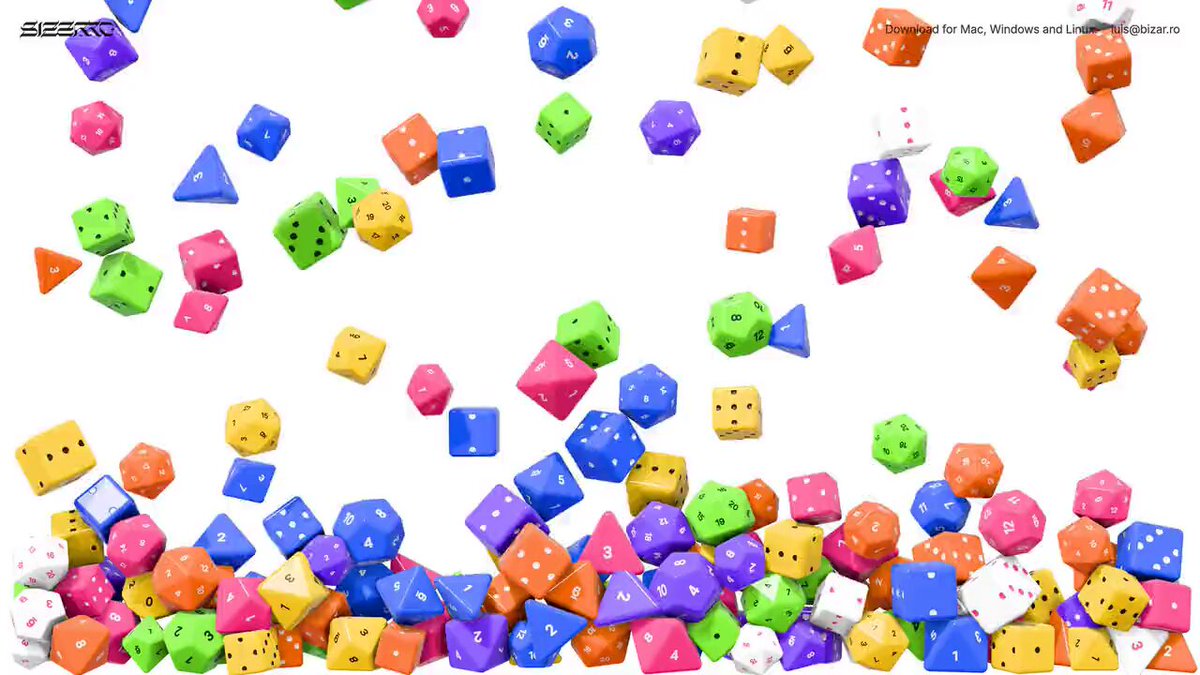
Luis Bizarro builds a GPU rigid-body cube simulation in WebGPU
Creative frontend and graphics engineer Luis Bizarro presents a GPU-driven rigid-body simulation built with WebGPU and WGSL. Focusing on dynamic 3D cube collisions and spatial bin packing, the entire pipeline—broadphase grid acceleration, narrowphase collision detection, and position Verlet integration—runs inside compute shaders, handling hundreds of falling dice with negligible CPU overhead. 💡 **Highlight:** End-to-end compute shader physics demonstrates WebGPU's immense performance advantage for compute-heavy collision dynamics.
 24 Likes
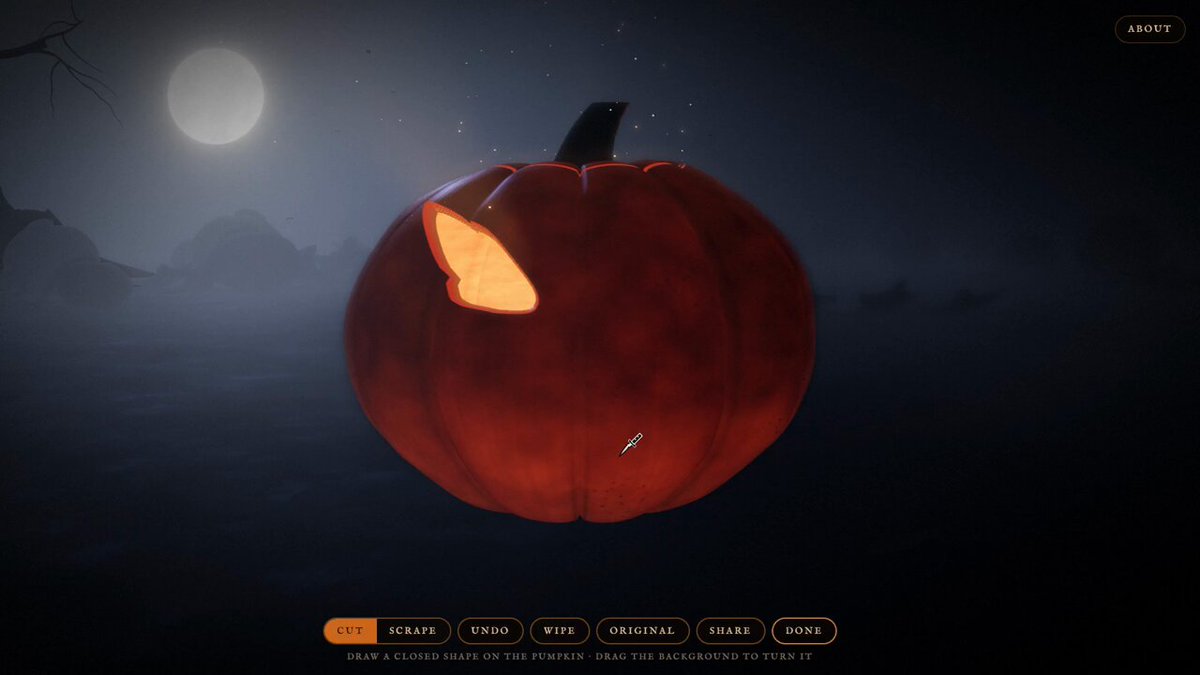
Jake Whiteley's pumpkin-carving experiment with WebGPU TSL
An interactive Halloween pumpkin-carving experiment powered by Three.js, WebGPU TSL shaders, and three-bvh-csg. Users can carve custom cuts and perforations into the pumpkin mesh in real time, with inner candlelight immediately streaming through newly hollowed geometry. 💡 **Highlight:** High-performance Constructive Solid Geometry (CSG) booleans running under WebGPU merge festive seasonal fun with cutting-edge real-time mesh carving.
 16 Likes
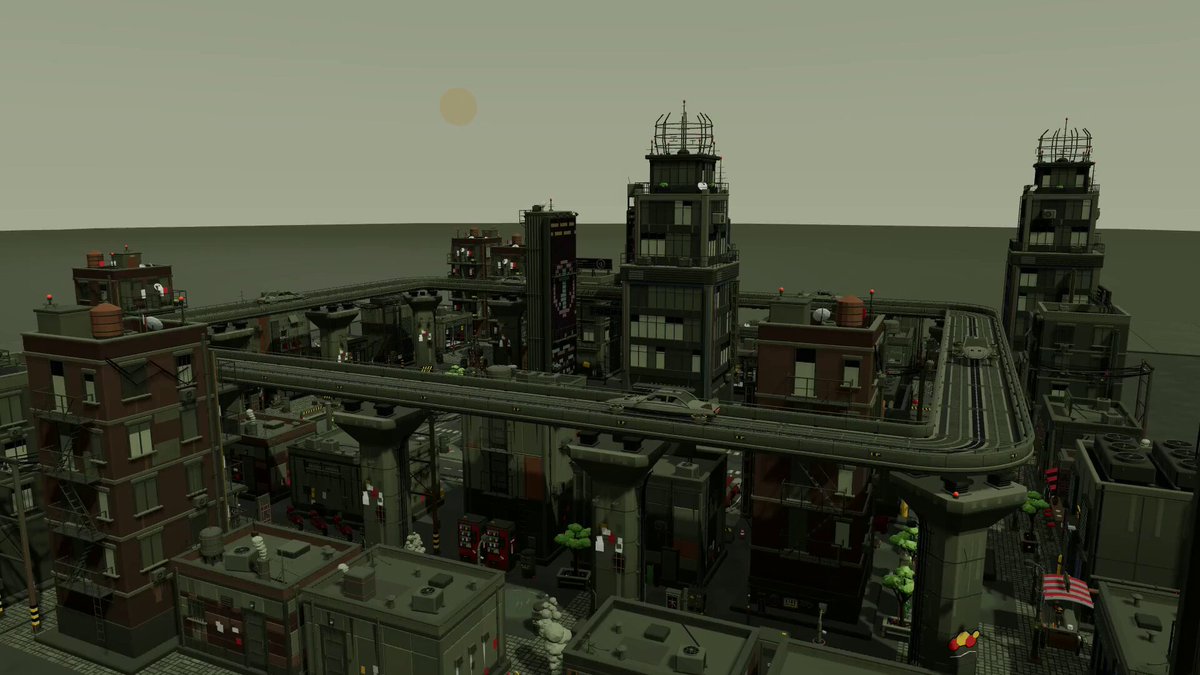
ThreeJS Assets builds a cyberpunk kit with neon but no bloom pass
The Three.js Assets team unveils an optimized cyberpunk 3D kit designed specifically for WebGL. Instead of relying on expensive full-screen post-processing bloom passes, each neon tube, window emission, and billboard display is modeled with carefully tuned emissive geometry and falloff gradients. 💡 **Highlight:** Replacing costly bloom passes with geometry-based emission techniques provides a battery-friendly, high-performance cyberpunk nightscape for low-end and mobile devices.
 15 Likes
Crnacura's Seam Transitions for Codrops, a WebGL scroll study
Codrops contributor crnacura showcases 'Seam Transitions', a cutting-edge web motion study focused on the boundaries where page sections meet during scrolling. Using WebGL vertex displacement shaders, the seam dynamically stretches, ripples, and folds like organic fabric, replacing rigid horizontal dividers with continuous fluid transitions. 💡 **Highlight:** Transforming microscopic layout seams into organic, elastic canvases with lightweight shaders that lend websites a tactile, breathing feel.
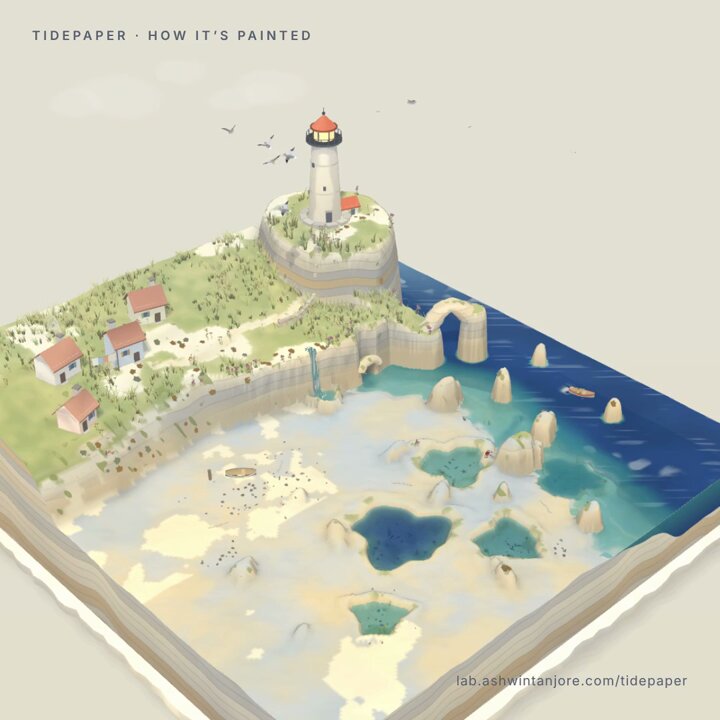
Tidepaper, an interactive watercolour coastline in the browser
Tidepaper by Ashwin Tanjore is an interactive watercolour coastline that runs in the browser: you can move the tide, change the weather and tap the tide pools. It is a single HTML file with no images; the paper, the bleed and the ink are all WebGPU shaders. He made it with Claude Opus 5.5.
 15 Likes
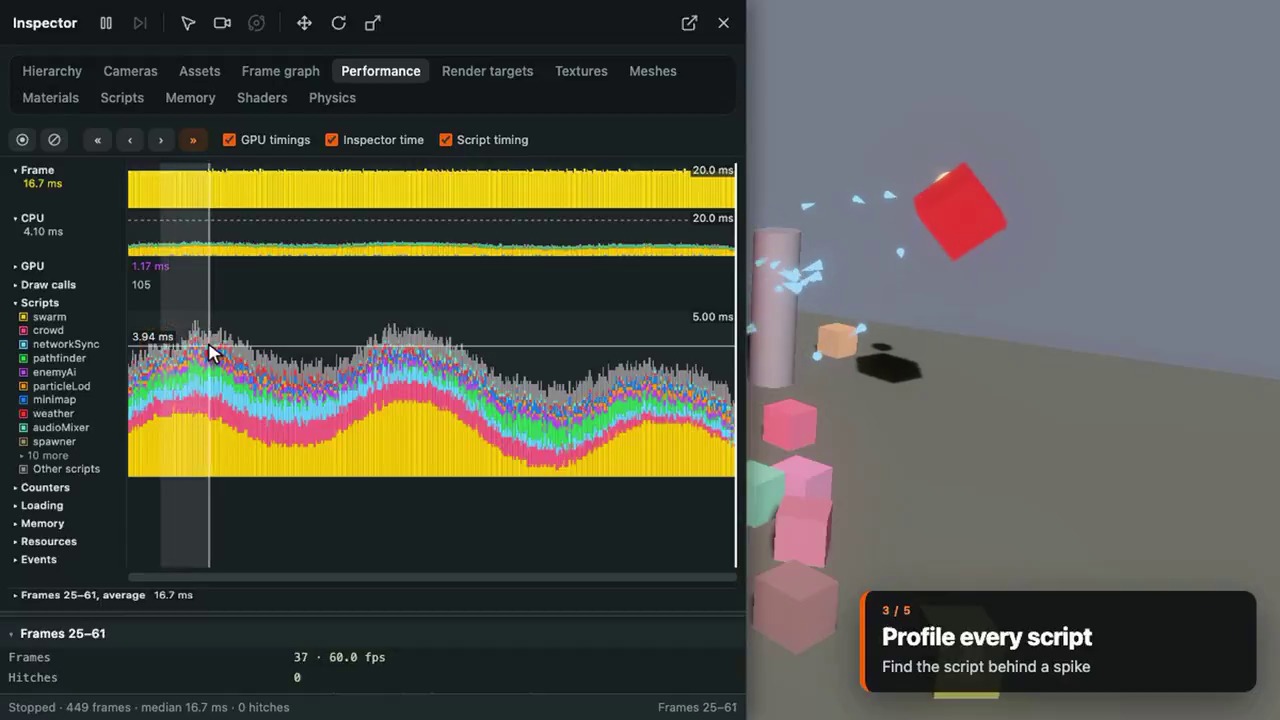
PlayCanvas adds a built-in performance profiler to its inspector
PlayCanvas VP Martin Valigursky introduces a built-in Performance Profiler inside the PlayCanvas inspector. It captures per-frame CPU and GPU timelines, tallies draw calls, tracks asset loading latencies, and renders interactive flame graphs to pinpoint script and shader bottlenecks in seconds. 💡 **Highlight:** Per-frame flame graphs and GPU workload visualization provide the missing diagnostic piece for optimizing high-end web games and 3D applications.
Related Three.js Examples
More projects that share this one's topics
 47 Likes
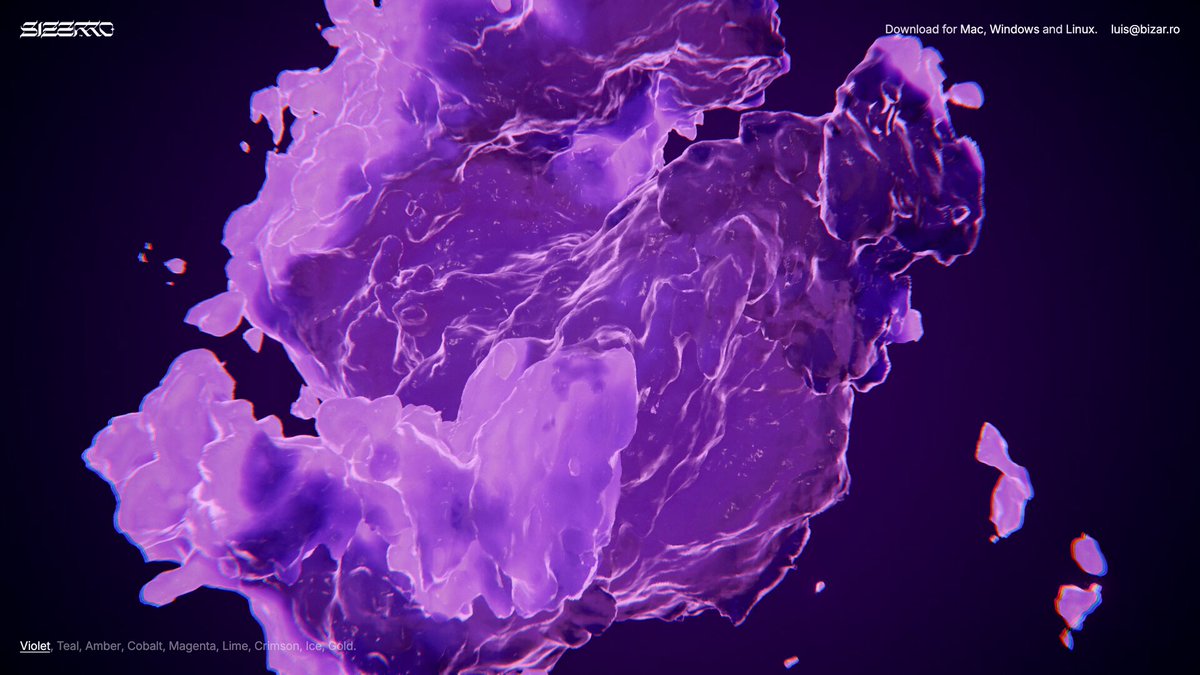
Luis Bizarro builds Gooey, a WebGPU gel with subsurface scattering
"Gooey", an interactive WebGPU and native WGSL shader experiment by Luis Bizarro, implementing realistic subsurface scattering (SSS) for a translucent, gelatinous fluid feel. Dragging the gel surface triggers spring-damped elastic deformations and tactile ripple waves. 💡 **Quick Take:** WGSL subsurface scattering meets soft-body physics, producing an irresistible, tactile jello-like interactive sensation!
 6 Likes
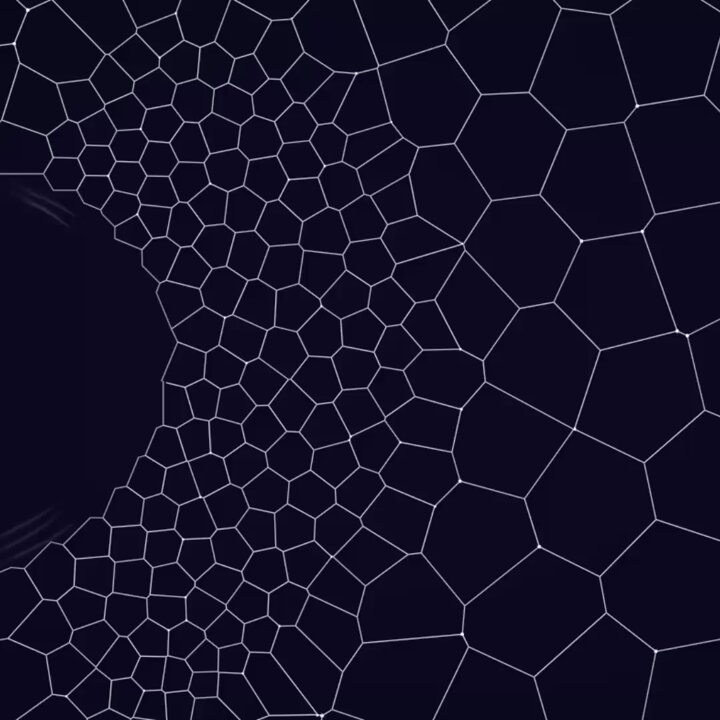
Creative WGSL Piece Built on Webgpu
Generative artist sib shares 'Flowing Cells', a creative WGSL piece built on WebGPU. Utilizing differential wave equations, the compact shader simulates organic cellular membrane deformation, diffusion, mitosis, and luminous surface oscillation within an ambient fluid medium. 💡 **Highlight:** Elegant differential calculus running in WGSL compute transforms abstract math into a pulsating, living microscopic realm.
 14 Likes
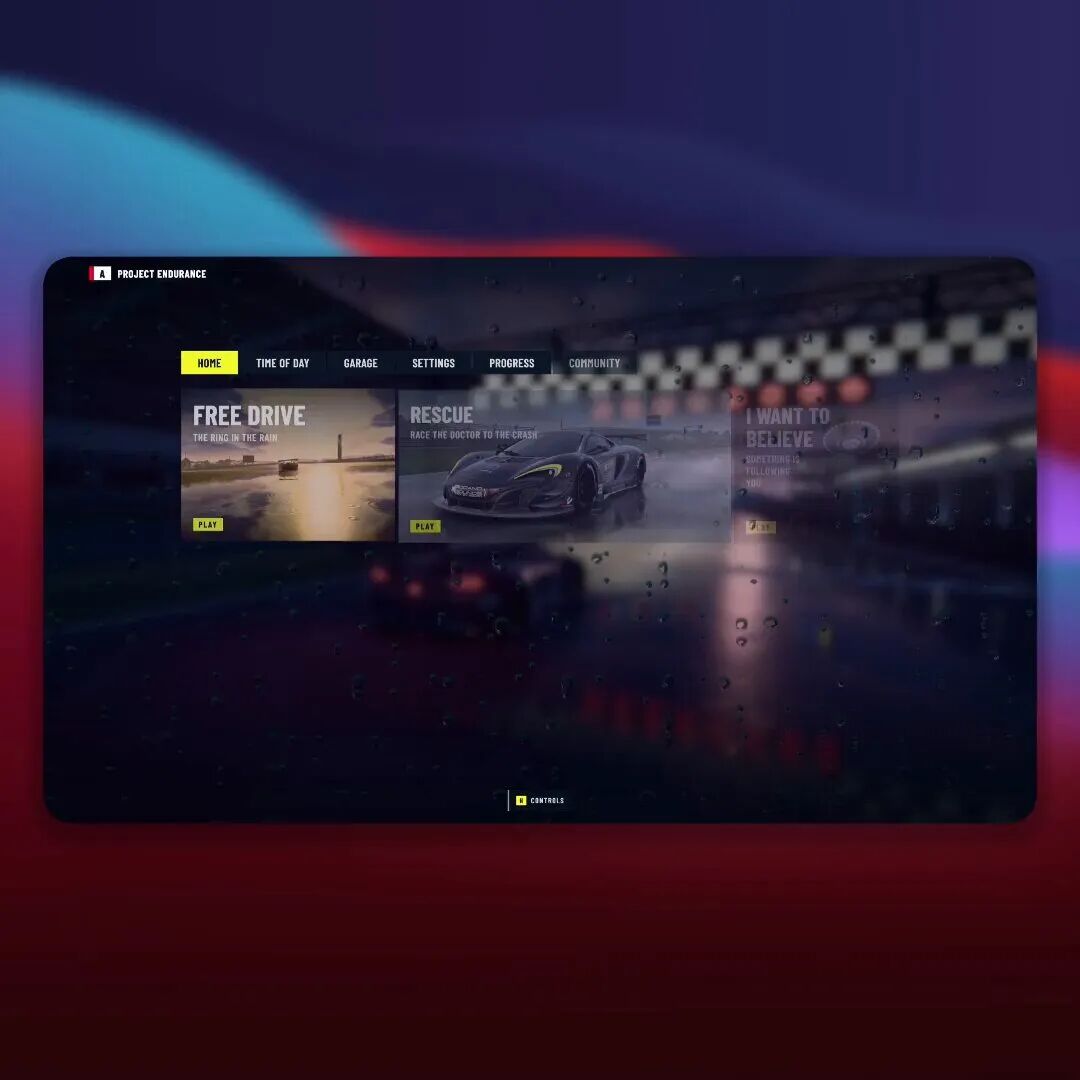
Anderson Mancini's Project Endurance, a GT3 racetrack in WebGPU
Celebrated Web3D creator Anderson Mancini unveiled Project Endurance, recreating a rain-drenched GT3 racetrack directly inside a single browser tab. Built upon Three.js, WebGPU, TSL (Three.js Shading Language), and the Rapier physics engine, it renders hyper-realistic dynamic rain spray, wet asphalt reflections, and tire grip physics. 💡 **Highlight:** The graphical high-water mark for web-based racing, where WebGPU and TSL compute shaders fully unleash wet-surface physically based reflections.
 543 Likes
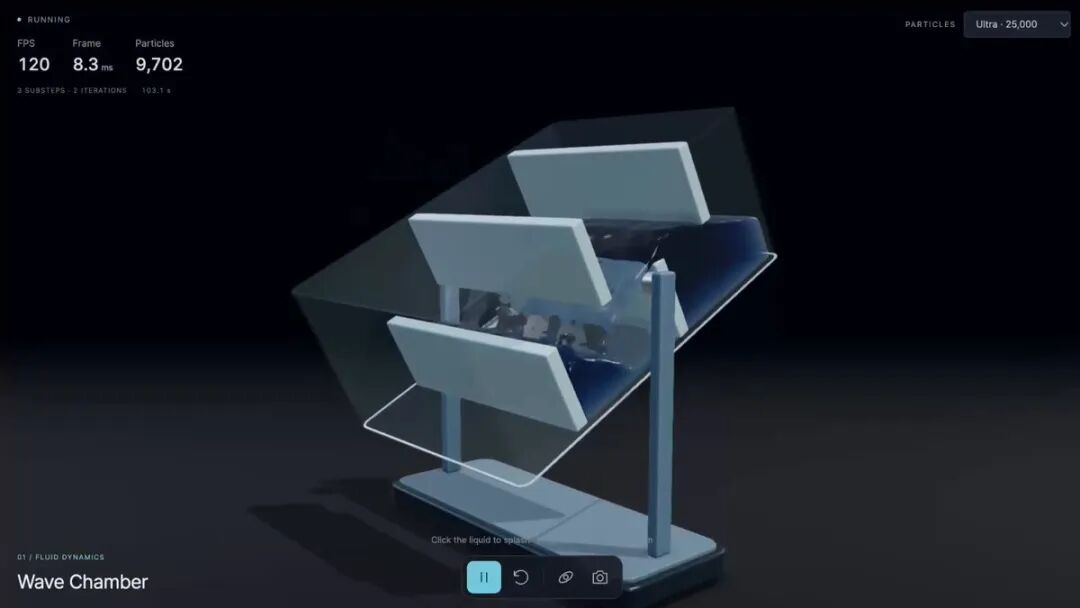
Dan Greenheck Open-sources Three.js Particle Fluids for WebGPU
Dan Greenheck open-sources Three.js Particle Fluids, an exceptional WebGPU-accelerated physics engine. Harnessing native compute shaders, it delivers real-time SPH fluid dynamics, rigid-body collisions, soft-body viscoelastic solvers, and dynamic cloth tearing in the browser, complete with live interactive demos and full source code on GitHub.